
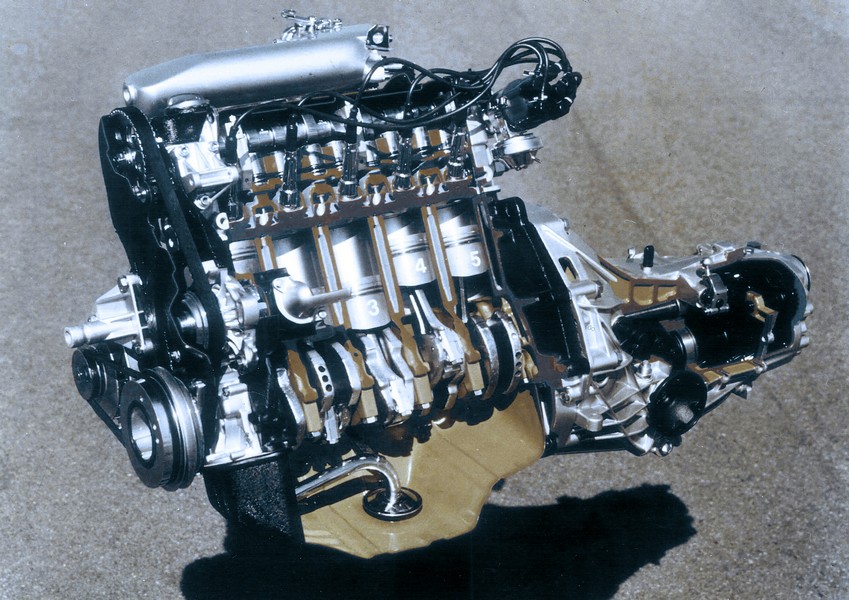
Audi celebrerà nel 2026 il cinquantesimo anniversario del motore a cinque cilindri. Il marchio dei quattro anelli introdusse questa architettura nel 1976 sulla seconda generazione dell’Audi 100. Da allora il progetto è stato sviluppato con numerose evoluzioni, tra cui turbocompressori, sistemi di depurazione dei gas di scarico, distribuzione a quattro valvole, versioni da competizione e varianti diesel. Oggi questa tradizione prosegue con il 2.5 TFSI montato sull’Audi RS 3.
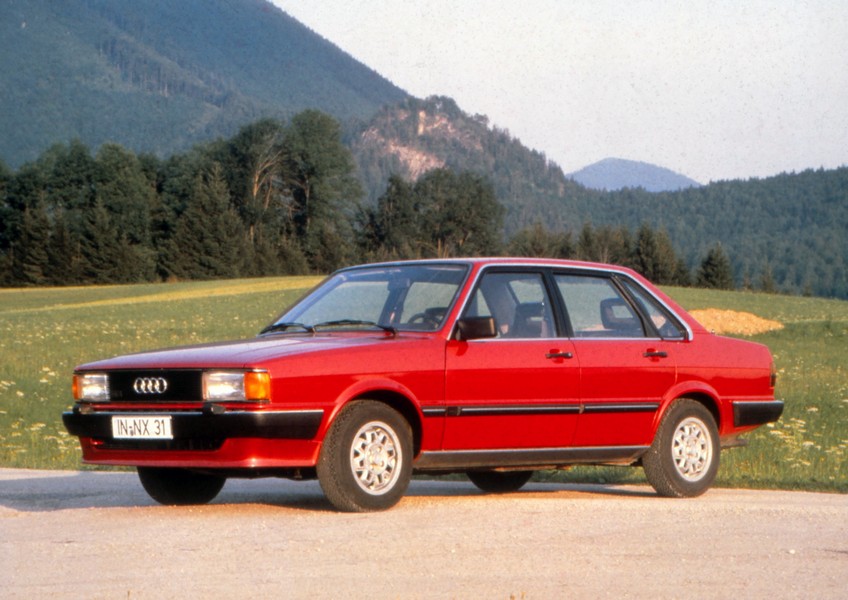
In April 1978, the five-cylinder carbureted version with an output of 85 kW (115 hp) replaces the basic twoliter four-cylinder version in the Audi 100 (C2). The new 1.9-liter unit produces maximum power at 5,400 revs and delivers 154 newton meters (113.58 lb-ft) of torque to the crankshaft at 3,700 rpm. The engine is used in the Audi 100 5 (C2), the Audi 80 CD (B2), the Audi Coupé GT 5S (B2) and in the Audi 100 (C3).
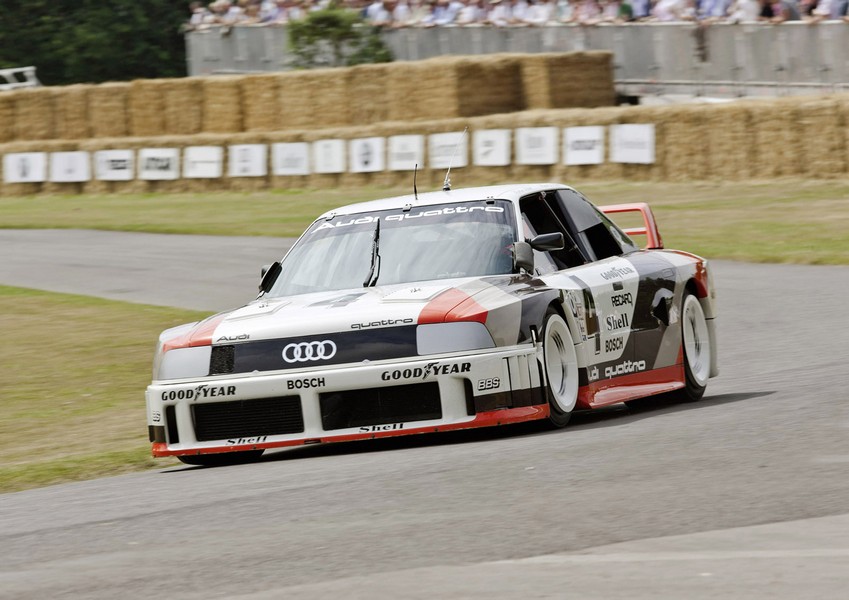
At the 1989 IMSA GTO in the USA, the Audi 90 quattro competes in its races with the most powerful fivecylinder works engine. The turbocharged aluminum engine is a 2.2-liter high-performance unit specially designed for racing. It develops 530 kW (720 hp) at 7,500 revolutions per minute and delivers 720 newton meters (531.04 lb-ft) of torque at 6,000 rpm. Overall, the Audi 90 quattro IMSA GTO wins seven races in the American touring car series in the 1989 season.
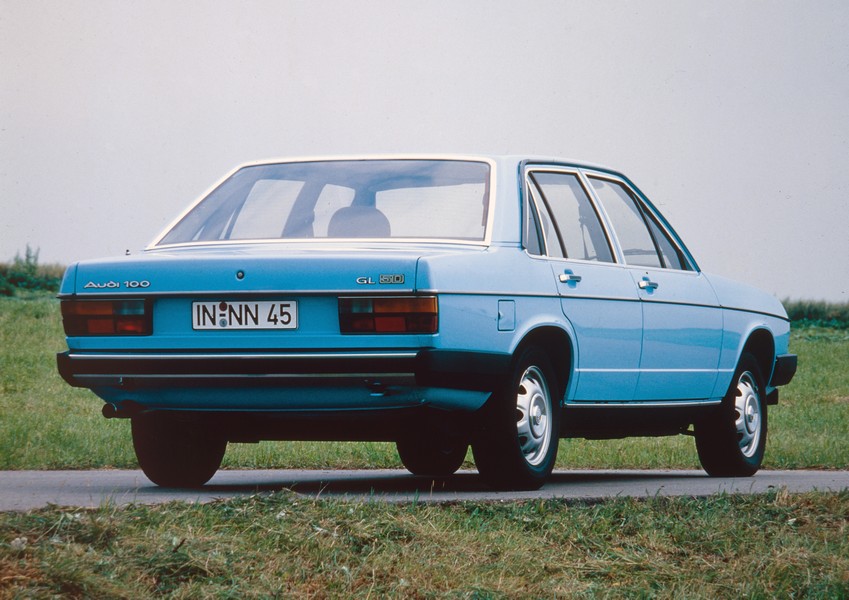
In 1978, Audi presents its first diesel model for the Audi 100 (C2). The five-cylinder naturally aspirated engine with a displacement of two liters develops 51 kW (70 hp) and 123 newton meters (90.72 lb-ft) of torque. It also powers the next-generation C3, propelling both the sedans and the Avant versions. From 1984, there is a turbocharged engine with an output of 64 kW (87 hp) and 172 newton meters (126.86 lb-ft) of torque.
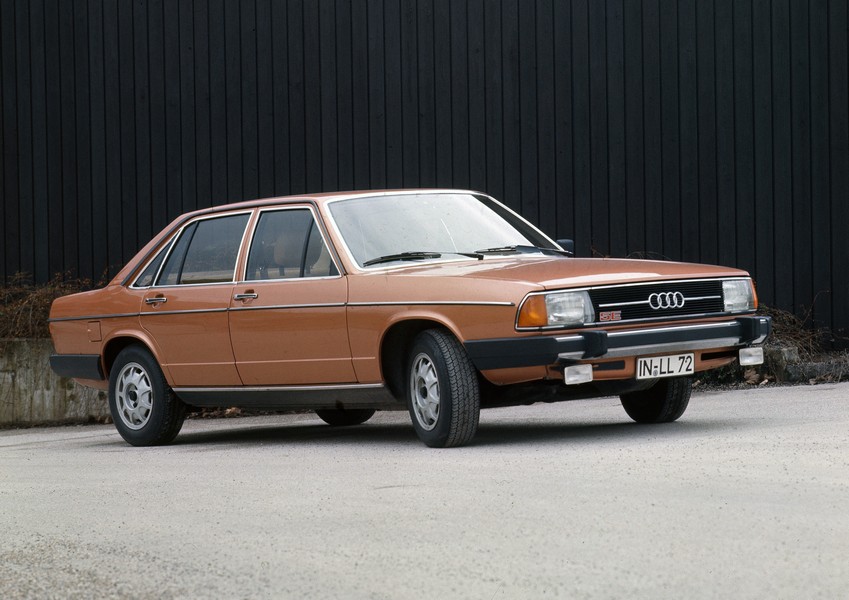
In August 1976, Audi introduces the second-generation Audi 100 (C2) in Luxembourg. For the first time, power is provided by a five-cylinder gasoline engine in a model from the brand with the four rings. The fuel-injected engine with a displacement of 2,144 cc develops 110 kW (136 hp) at 5,700 revolutions per minute. The maximum torque of 185 newton meters (136.45 lb-ft) is available at 4,200 rpm. The market launch of the Audi 100 (C2) follows in March 1977. From September 1979, the five-cylinder engine is also available in the Audi 200; from August 1982, it is fitted in the successor to the C2, the Audi 100 C3.
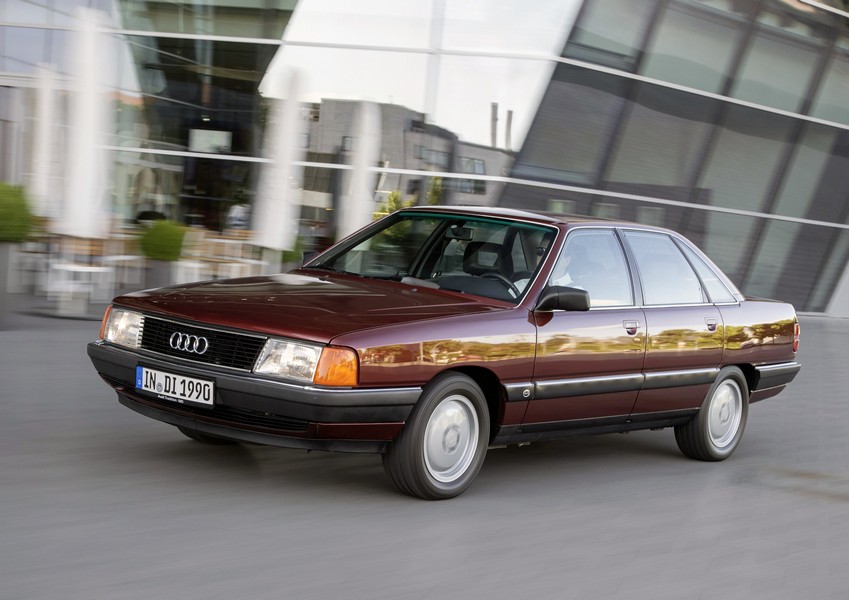
Audi presents another milestone in the automotive history in 1989 at the International Motor Show in Frankfurt am Main: the Audi 100 TDI. The first fivecylinder turbocharged diesel with direct injection for a production car produces 88 kW (120 hp) from a displacement of 2.5 liters and delivers 265 newton meters (195.45 lb-ft) of torque to the crankshaft. It is used in the C3 and in the C4 – from 1994 with an output of 103 kW (140 hp) and 290 newton meters (213.89 lb-ft) of torque.
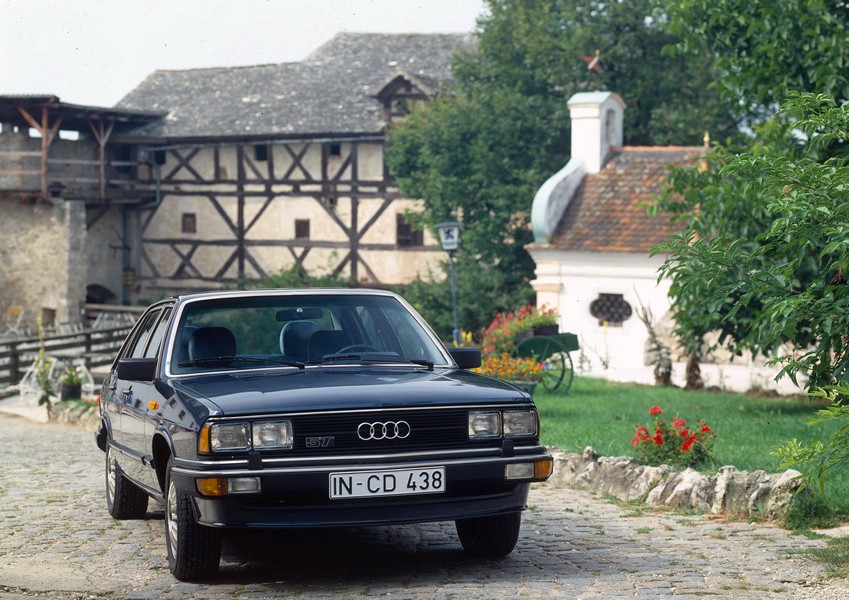
In 1980, the Audi 200 5T (C2) comes on to the market, which is powered by the first turbocharged gasoline engine from the brand with the four rings. From a displacement of 2,144 cc, the five-cylinder unit produces 125 kW (170 hp) at 5,300 revolutions per minute and 265 newton meters (195.45 lb-ft) of torque at 3,300 rpm. The Audi 200 5T (C2) is the first Audi in the luxury class and features the lavish equipment of the Audi 100 CD as standard.
Il primo cinque cilindri debuttò sull’Audi 100 (C2), conosciuta internamente come Tipo 43. Il modello doveva collocarsi più in alto sul mercato rispetto al predecessore e i motori quattro cilindri disponibili all’epoca non erano considerati sufficienti. Gli ingegneri valutarono quindi l’adozione di motori a cinque o sei cilindri in linea, ma questi ultimi furono scartati per ragioni di ingombro e distribuzione dei pesi. Si scelse quindi il cinque cilindri derivato dal progetto EA 827, con cilindrata di 2.144 cm³ e potenza di 136 CV. Le consegne dell’Audi 100 5E iniziarono nel marzo 1977.
Nel 1978 arrivò anche una versione diesel aspirata da due litri e 70 CV. L’anno successivo Audi presentò il primo cinque cilindri benzina turbocompresso, montato sull’Audi 200 5T, con 170 CV e 265 Nm di coppia.
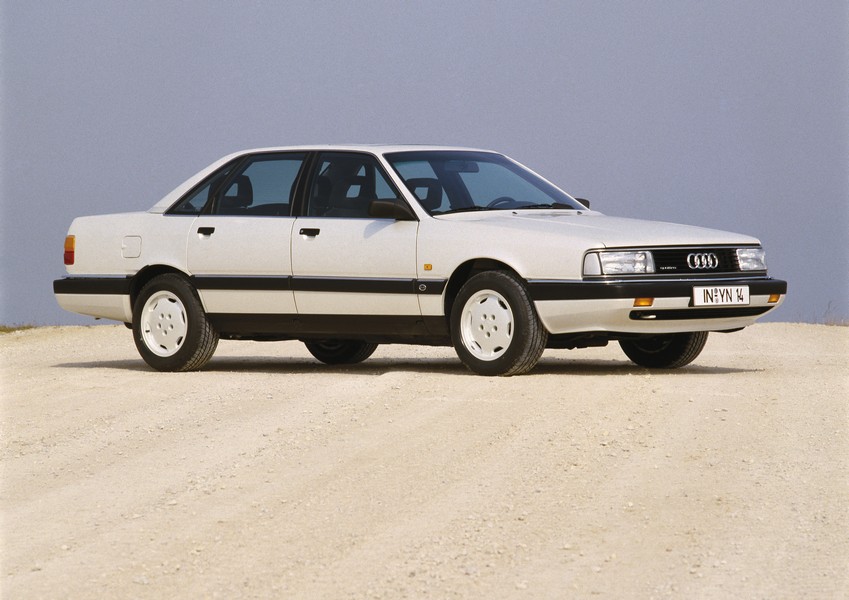
With two catalytic converters, four-valve technology, a closed tank venting system and a diagnostic system, this powerplant offers a very high standard of emissions control and technology. It is first available in the Audi 200 quattro 20V (C3), then in the Audi quattro 20V (B2) a year later and in the Audi S2 Coupe (B3) in 1990. The five-cylinder turbocharged engine has a displacement of 2,226 cc and delivers 162 kW (220 hp) at 5,700 revolutions per minute and 309 newton meters (227.91 lb-ft) of torque at 1,950 rpm.
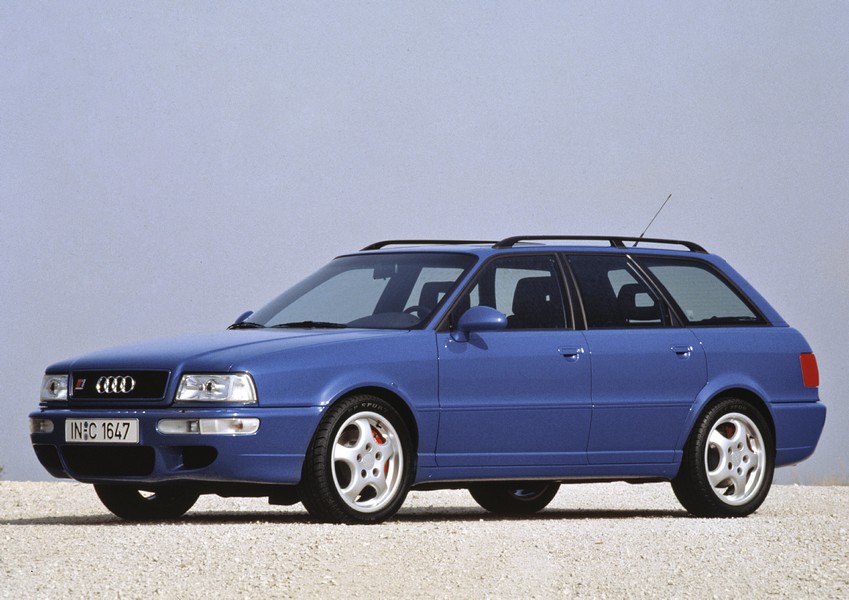
In 1994, the most powerful five-cylinder production engine built by Audi to date goes into action in the Audi Avant RS 2 (B4). With turbocharging, fuel injection and standard-fit emissions control, it produces 232 kW (315 hp) at 6,500 revolutions per minute from a displacement of 2,226 cc and delivers 410 newton meters (302.40 lb-ft) of torque at 3,000 rpm.
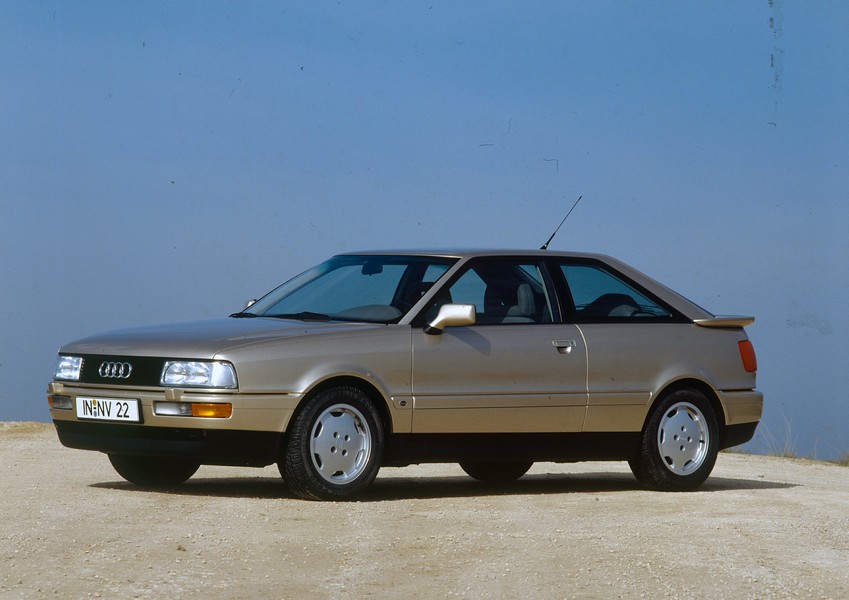
In 1984, a completely new development appears. Audi is the first manufacturer to optimize the five-cylinder engine with a fully electronic map-controlled ignition system and a catalytic converter as standard. From 2,309 cc, it produces 100 kW (136 hp) at 5,600 rpm and 188 newton meters (138.66 lb-ft) of torque at 3,500 revolutions per minute. The most widely used five-cylinder engine from Audi is found in the Audi 100 2.3E (C3), the Audi Coupe 2.3E (B3) and in the Audi 90 2.3 E (B3). From 1990, it also powers the Audi 100 2.3E (C4) and a year later the Audi 80 2.3E (B4) and the Audi Cabriolet 2.3E. Here, it delivers 98 kW (133 hp) at 5,600 revolutions per minute and 186 newton meters (137.19 lb-ft) at 4,000 rpm.
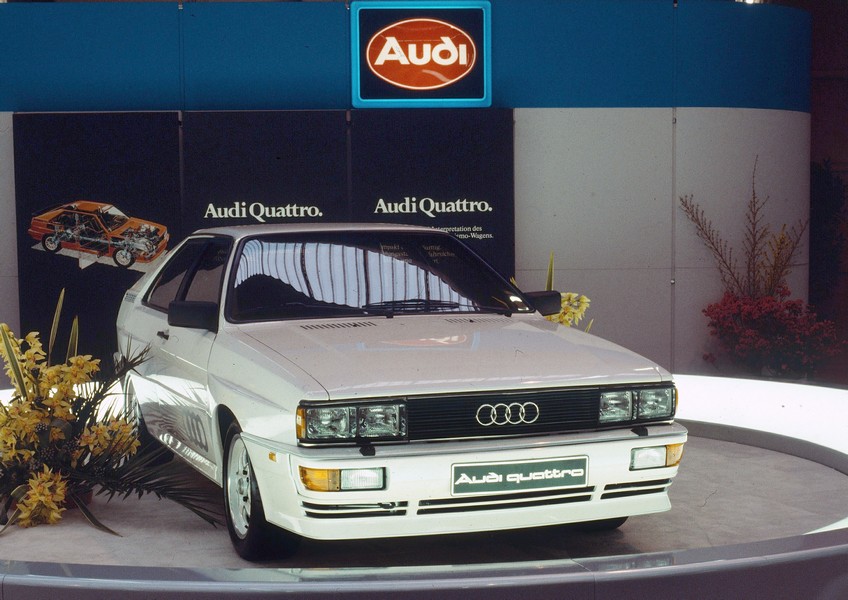
In 1980 at the Geneva Motor Show, Audi unveils the Audi quattro (B2), known as the “Ur-quattro” from the mid-1990s. It uses the powerplant from the Audi 200 5T (C2), but features an intercooler. As a result, the turbocharged engine achieves a higher output of 147 kW (200 hp) at 5,500 revolutions per minute and 285 newton meters (210.21 lb-ft) of torque at 3,500 rpm. The body of the Audi quattro is based on the Audi Coupe (B2), which in turn is based on the Audi 80. Flared fenders, bulkier bumpers and sills as well as a larger rear spoiler distinguish the Audi quattro from the Coupe.
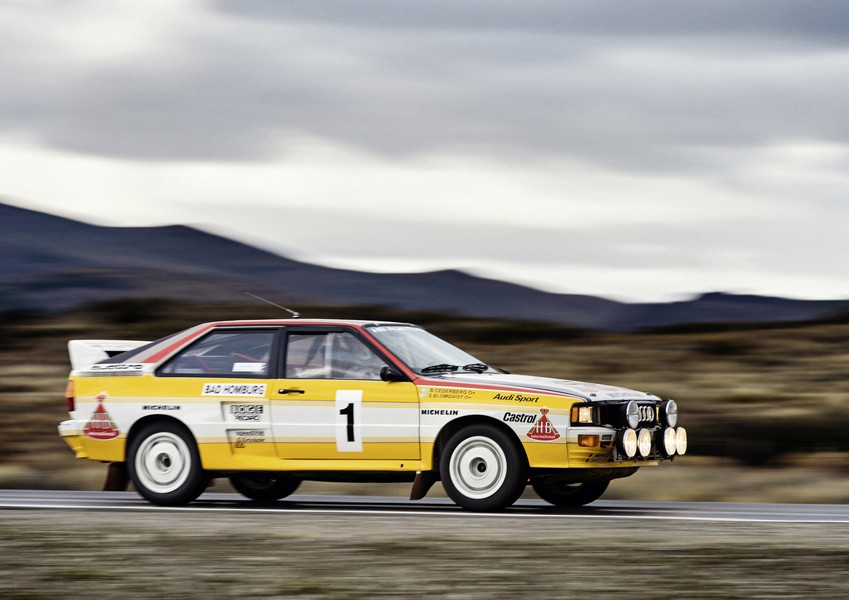
In the 1983 Corsica Rally, Audi competes for the first time with the Audi quattro A2, Group B. Its 2.1-liter turbocharged five-cylinder inline engine produces 265 kW (360 hp) at 6,500 revolutions per minute and delivers 450 newton meters (331.90 lb-ft) of torque at 4,000 rpm. At the end of the season, the Finn Hannu Mikkola wins the drivers’ title in this car. One year later, the Swede Stig Blomqvist replicates this success: he becomes world rally champion, while Audi wins the manufacturers’ world rally championship for the second time after 1982.
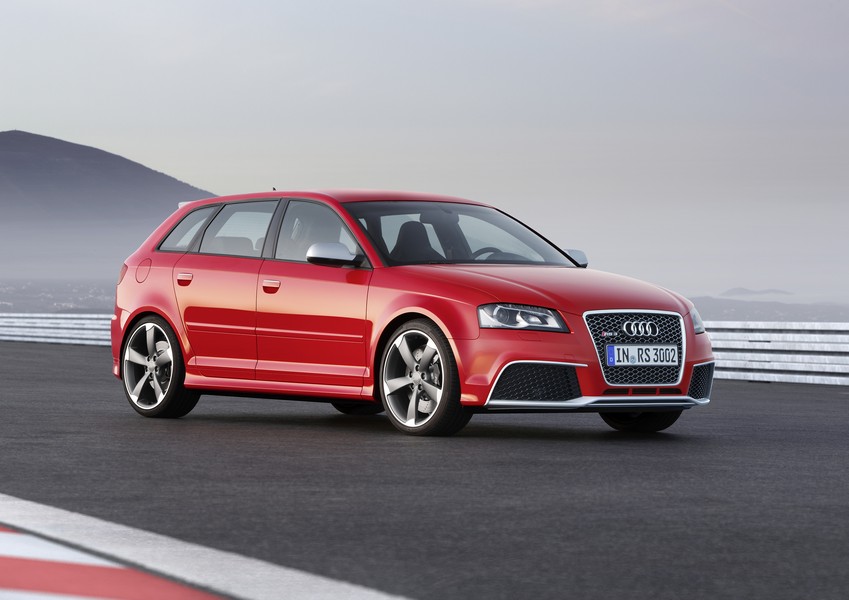
30 years after the first five-cylinder turbocharged gasoline engine was presented, Audi once again introduces a model with a five-cylinder gasoline engine and turbocharger at the Geneva Motor Show: the TT RS. The powerplant delivers 250 kW (340 hp) at 6,500 revolutions per minute from 2,480 cc and 450 newton meters (331.90 lb-ft) at 5,300 rpm. From 2011, this engine is also used in the RS 3 Sportback and from 2014 in the updated RS Q3. In the 2012 TT RS plus, the engine produces 265 kW (360 hp) at 6,700 revolutions per minute and develops 465 newton meters (342.97 lb-ft) of torque at 5,400 rpm.
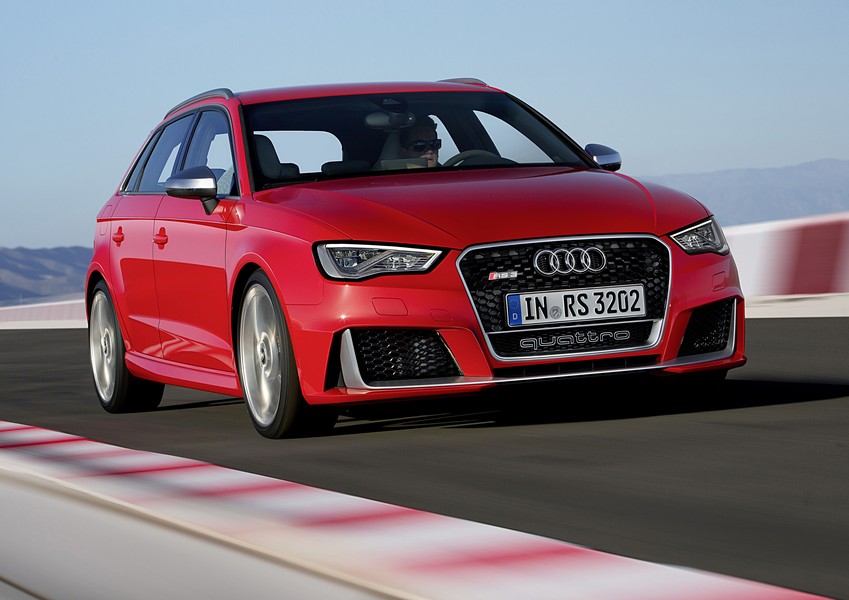
In the summer of 2015, the second-generation RS 3 Sportback* appears – the most powerful car in the premium compact segment with an output of 270 kW (367 hp). The combination of turbocharging and direct injection permits a high compression ratio of 10:1 and correspondingly good efficiency. The five-cylinder inline engine delivers a maximum of 465 newton meters (342.97 lb-ft) to the crankshaft. This torque is available from as low as 1,625 revolutions per minute and remains constant up to 5,550 rpm. Since spring 2016, Audi has been using the optimized version of the powerplant in the Audi RS Q3 performance* too.
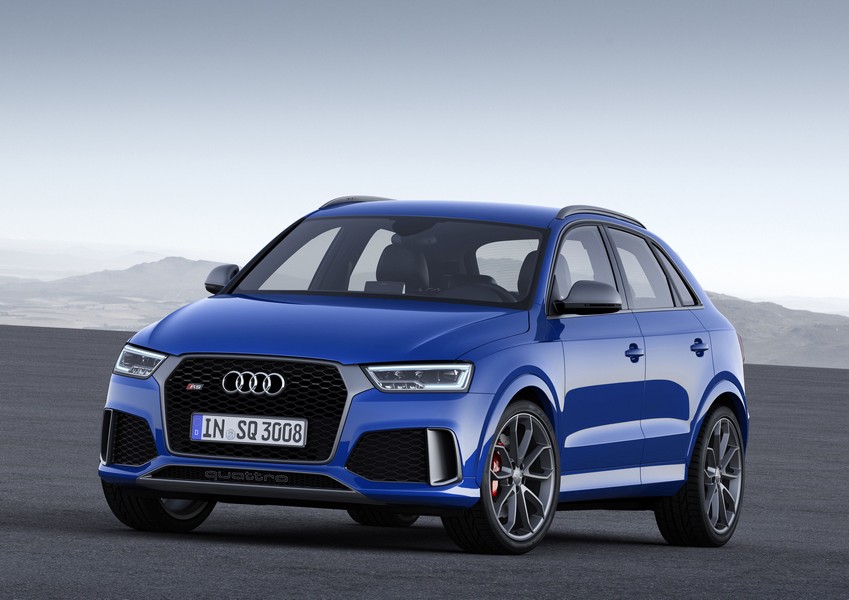
In the summer of 2015, the second-generation RS 3 Sportback* appears – the most powerful car in the premium compact segment with an output of 270 kW (367 hp). The combination of turbocharging and direct injection permits a high compression ratio of 10:1 and correspondingly good efficiency. The five-cylinder inline engine delivers a maximum of 465 newton meters (342.97 lb-ft) to the crankshaft. This torque is available from as low as 1,625 revolutions per minute and remains constant up to 5,550 rpm. Since spring 2016, Audi has been using the optimized version of the powerplant in the Audi RS Q3 performance* too.
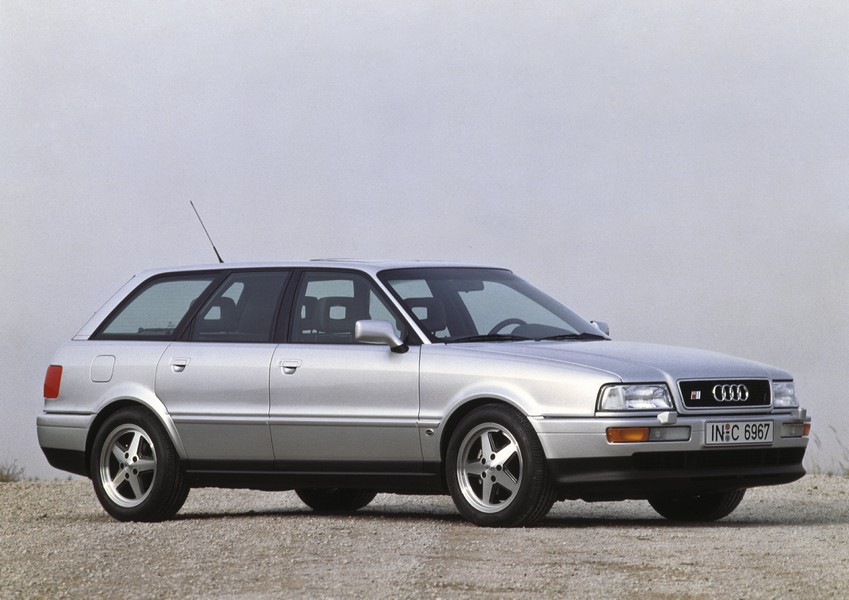
In the 1991 Audi S4, the Sport version of the Audi 100 (C4), a turbocharged 2.2-liter 20-valve five-cylinder inline engine is at work. It develops 169 kW (230 hp) at 5,900 rpm. Thanks to a brief increase in boost pressure, a peak torque of 350 newton meters (258.15) is achieved at 1,950 revolutions per minute. The engine also powers the Audi S2 Avant (B4) and the Audi S2 Coupé (B3). In 1994, the Audi S4 becomes known as the Audi S6.
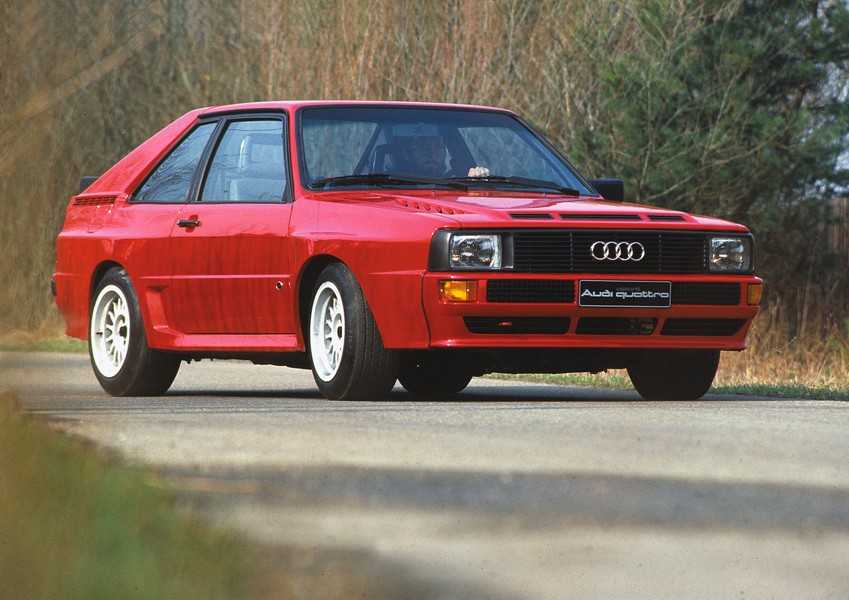
In September 1983, Audi presents the Audi Sport quattro (B2) at the International Motor Show in Frankfurt am Main. It is powered by a 2.1-liter highperformance engine with four-valve technology that produces 225 kW (306 hp) at 6,700 revolutions per minute. The maximum torque of 350 newton meters (258.15 lb-ft) is available at 3,700 rpm. Delivery commences in May 1984. The Audi Sport quattro (B2) is a special series limited to 214 vehicles, produced to meet homologation requirements for rallying. The rules stipulate that displacement must be limited to a maximum of 2,133 cc.
Il motore cinque cilindri divenne poi parte integrante della tecnologia dell’Audi quattro presentata nel 1980. Dotata di turbocompressore e trazione integrale permanente, la vettura erogava inizialmente 200 CV. Con questo modello Audi conquistò il titolo mondiale costruttori nel Campionato del Mondo Rally 1982, mentre nel 1983 il finlandese Hannu Mikkola vinse il titolo piloti.
Sempre nel 1983 venne presentata la Sport quattro, accorciata di 24 centimetri e con carreggiate più larghe. Era equipaggiata con un motore cinque cilindri a quattro valvole da 306 CV. Il modello costituì la base per la vettura da rally di Gruppo B, nella quale il motore arrivò a circa 450 CV. Nel 1984 Stig Blomqvist vinse il titolo mondiale piloti con l’Audi quattro A2 Gruppo B da 360 CV, mentre Audi conquistò nuovamente il campionato costruttori.
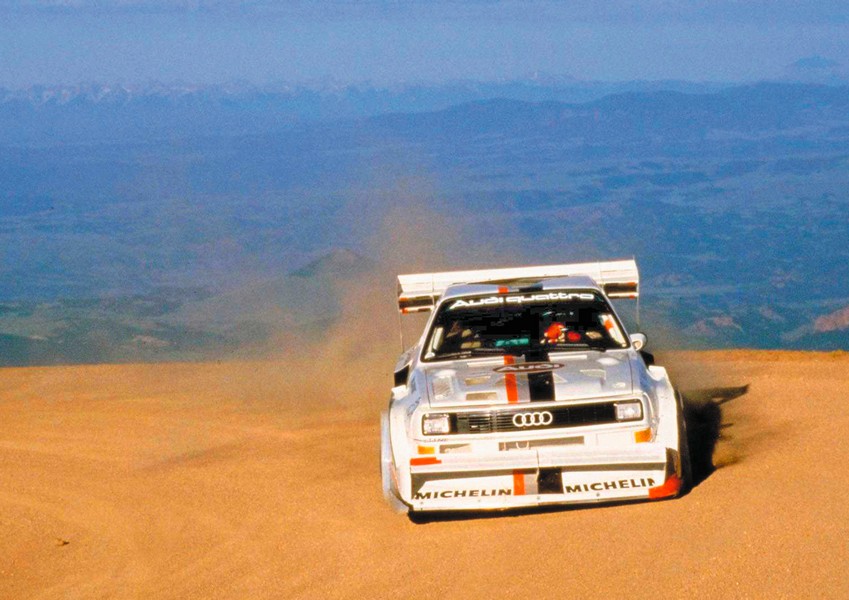
In 1987, Walter Röhrl wins the legendary Pikes Peak Hill Climb (USA) in the Audi Sport quattro S1 (E2), setting a new record. In 10 minutes and 47.85 seconds he conquers the almost 20-kilometer-long (12.43 mi) course with 156 bends and a difference in altitude of 1,439 meters (4721.13 ft). The 2.1-liter five-cylinder engine in the Audi Sport quattro S1 (E2) delivers 440 kW (598 hp) at 8,000 revolutions per minute and produces 590 newton meters (435.16 lb-ft) of torque at 5,500 rpm.
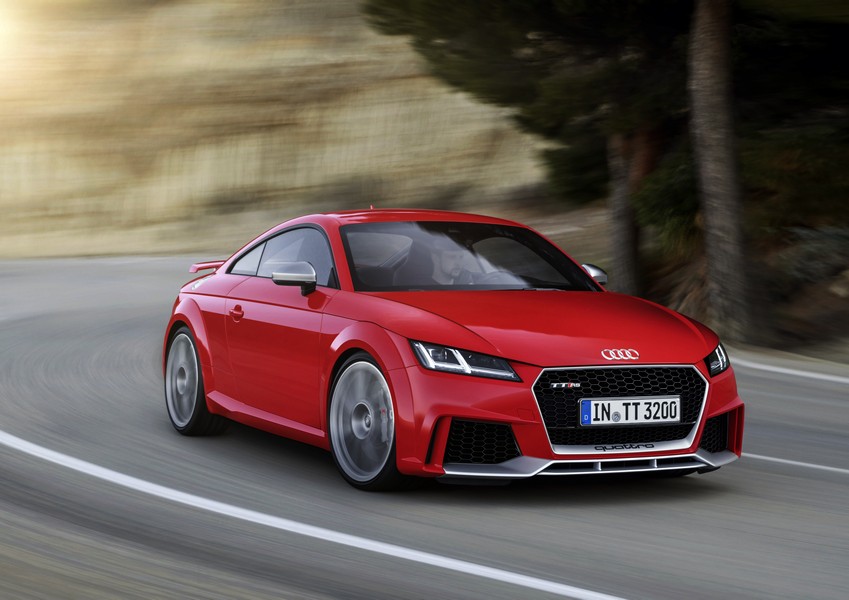
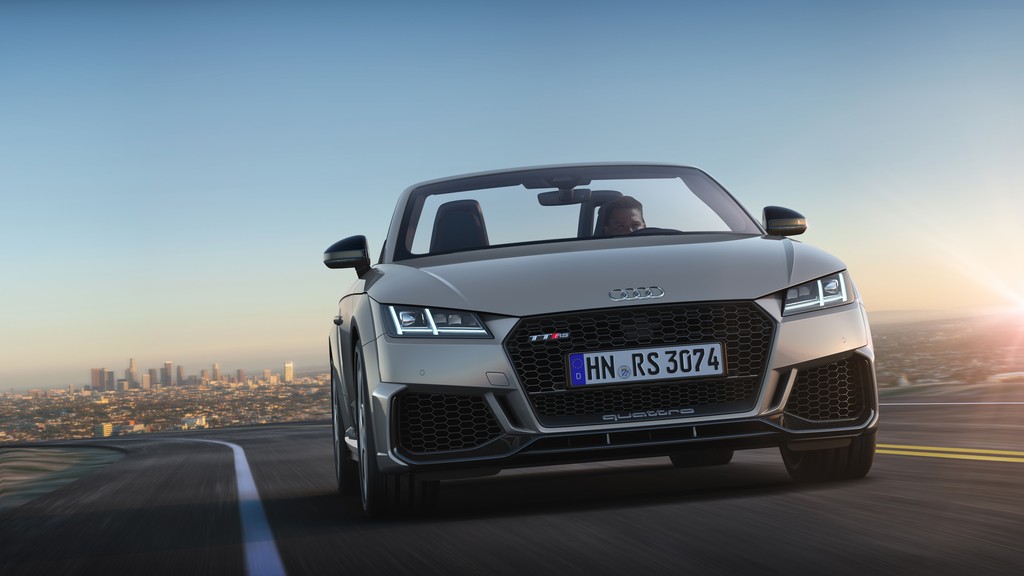
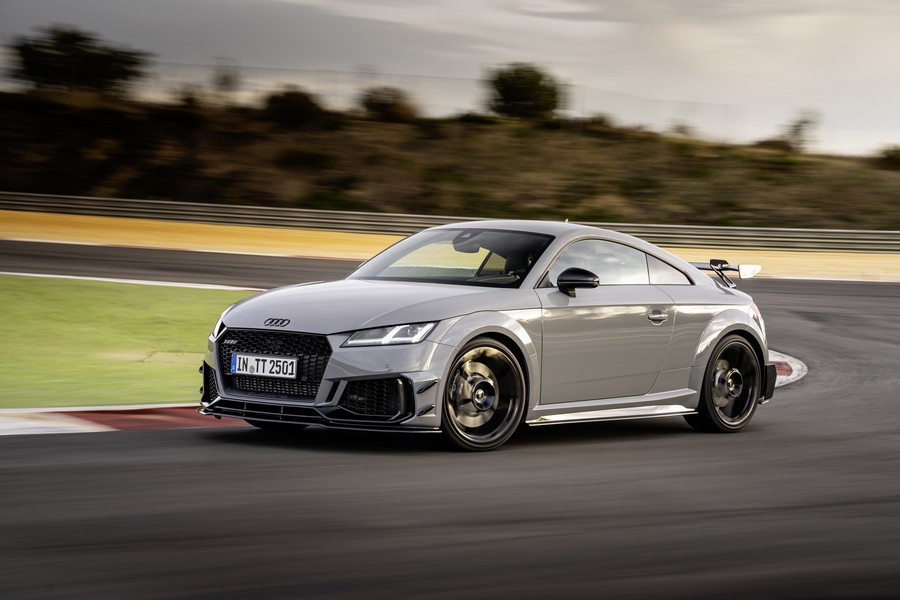
At the Beijing Motor Show in 2016, Audi presents the new TT RS Coupe* and the new TT RS Roadster*. The five-cylinder unit has been enhanced in every area – with lightweight construction measures, reduced internal friction, increased power delivery. From an unchanged displacement of 2,480 cc, the turbocharged engine gains a good 17 percent increase in performance. With an output of 294 kW (400 hp) it is more potent than ever before. The maximum torque of 480 newton meters (354.03 lb-ft) is available between 1,700 and 5,850 revolutions per minute. It ensures outstanding pulling power, which accompanies the unmistakable five-cylinder sound.
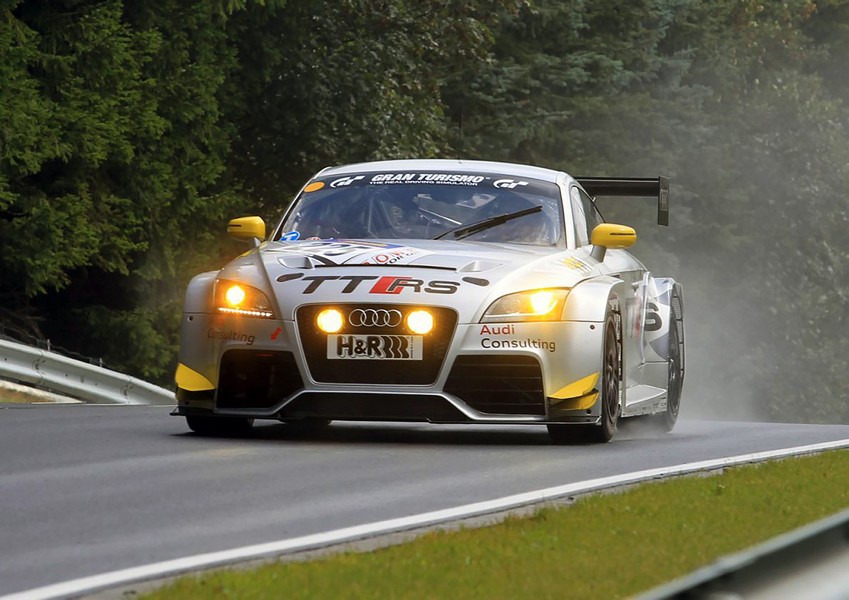
In 2010, Audi starts its motorsport activities with the TT RS. The racing car developed for endurance racing is powered by the five-cylinder engine from the production model. Following improvements to the intercooler and exhaust system, the powerplant delivers 280 kW (380 hp) at 5,800 revolutions per minute. The maximum torque of 500 newton meters (368.78 lb-ft) develops at 2,500 rpm. In the VLN Endurance Championship of 2010 and 2011, the frontwheel-drive racing car notches up several victories in the SP4T class up to 2.5 liters’ capacity. In August 2011, it clinches overall victory in the 6-hour race on the Nürburgring. Audi achieves further success with the
TT RS in the 24-hour race in the Eifel in 2011, where it takes class victory.
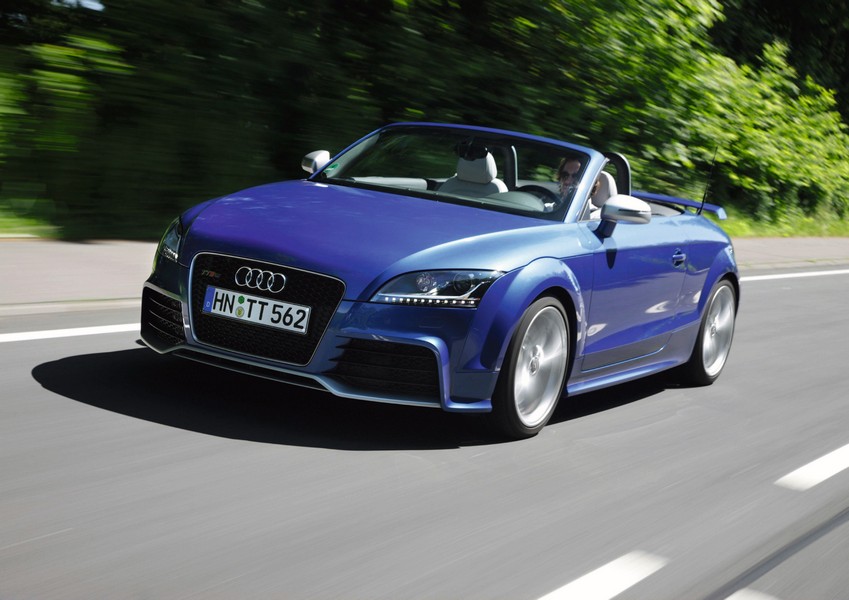
30 years after the first five-cylinder turbocharged gasoline engine was presented, Audi once again introduces a model with a five-cylinder gasoline engine and turbocharger at the Geneva Motor Show: the TT RS. The powerplant delivers 250 kW (340 hp) at 6,500 revolutions per minute from 2,480 cc and 450 newton meters (331.90 lb-ft) at 5,300 rpm. From 2011, this engine is also used in the RS 3 Sportback and from 2014 in the updated RS Q3. In the 2012 TT RS plus, the engine produces 265 kW (360 hp) at 6,700 revolutions per minute and develops 465 newton meters (342.97 lb-ft) of torque at 5,400 rpm.
Dopo l’uscita di scena del Gruppo B nel 1986, il cinque cilindri continuò a essere utilizzato in altre competizioni. Nel 1987 Walter Röhrl vinse la cronoscalata di Pikes Peak con l’Audi Sport quattro S1 E2 da circa 598 CV. Negli Stati Uniti il motore venne impiegato anche nella serie Trans-Am e nel campionato IMSA GTO, con potenze che arrivavano fino a circa 720 CV.
Nel 1989 Audi presentò al Salone di Francoforte l’Audi 100 TDI, dotata di un cinque cilindri turbodiesel a iniezione diretta da 2,5 litri e 120 CV con gestione elettronica del motore. Negli anni successivi la casa continuò a sviluppare i cinque cilindri benzina, fino all’arrivo nel 1994 dell’Avant RS2 da 315 CV.
Con l’introduzione dell’Audi A4 (B5) nel 1994 i motori cinque cilindri iniziarono progressivamente a uscire di scena nella gamma. I nuovi V6 li sostituirono gradualmente nella seconda metà degli anni Novanta. Gli ultimi cinque cilindri furono il 2.5 TDI dell’Audi A6 e il 2.2 turbo 20V dell’Audi S6, usciti di produzione nel 1997.
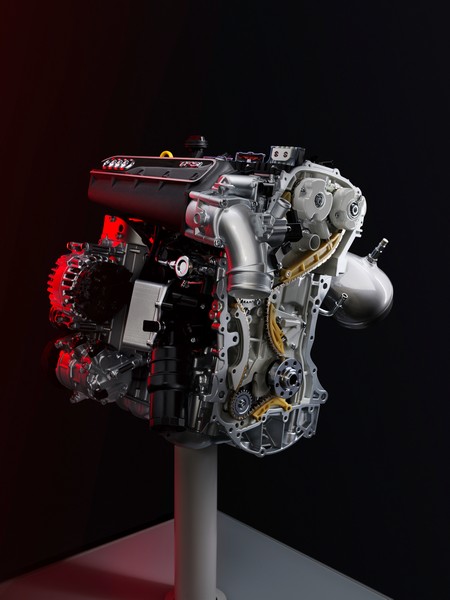
Il ritorno del cinque cilindri arrivò nel 2009 con l’Audi TT RS. Il motore 2.5 TFSI turbocompresso con iniezione diretta erogava 340 CV e venne adottato anche sulla RS 3 Sportback. Nel 2012 la TT RS plus raggiunse i 360 CV. Nel 2013 il cinque cilindri equipaggiò anche la RS Q3. Una nuova evoluzione del motore arrivò nel 2016: grazie a soluzioni di alleggerimento e alla riduzione degli attriti interni, la potenza salì a 400 CV con 480 Nm di coppia.
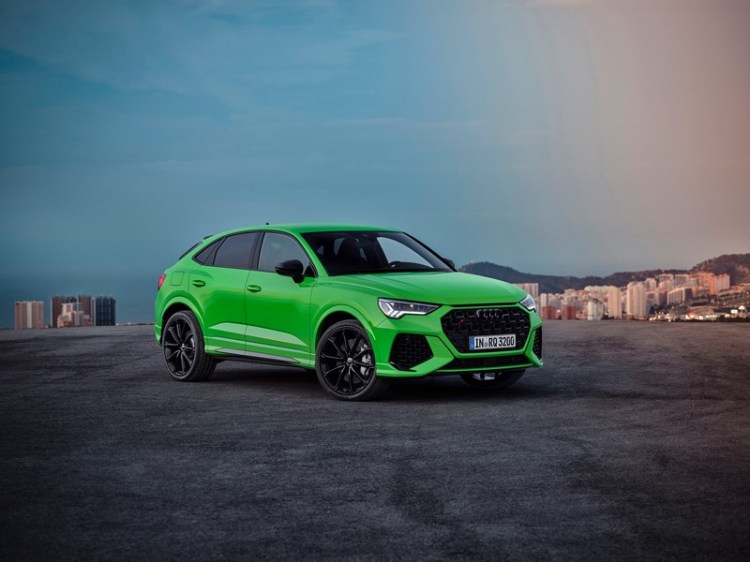
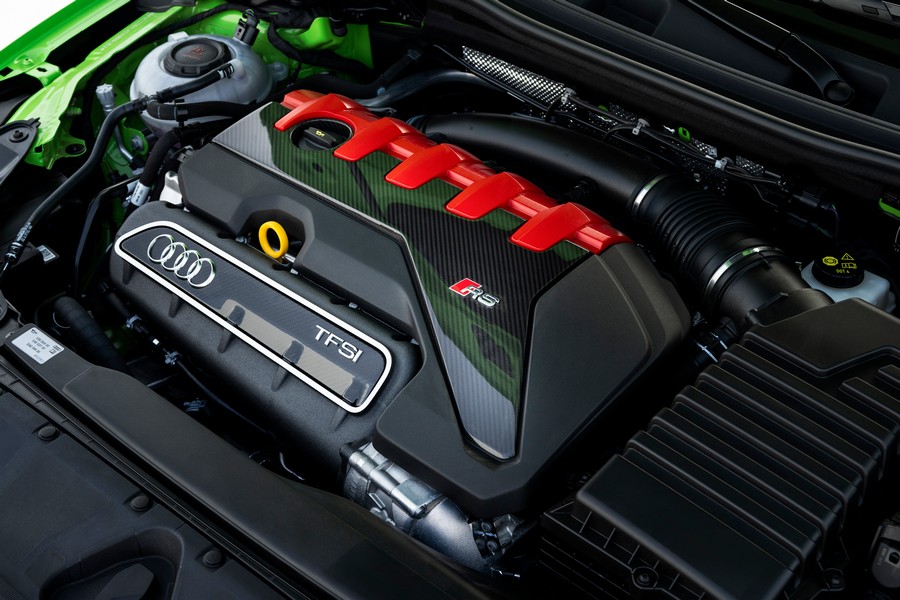
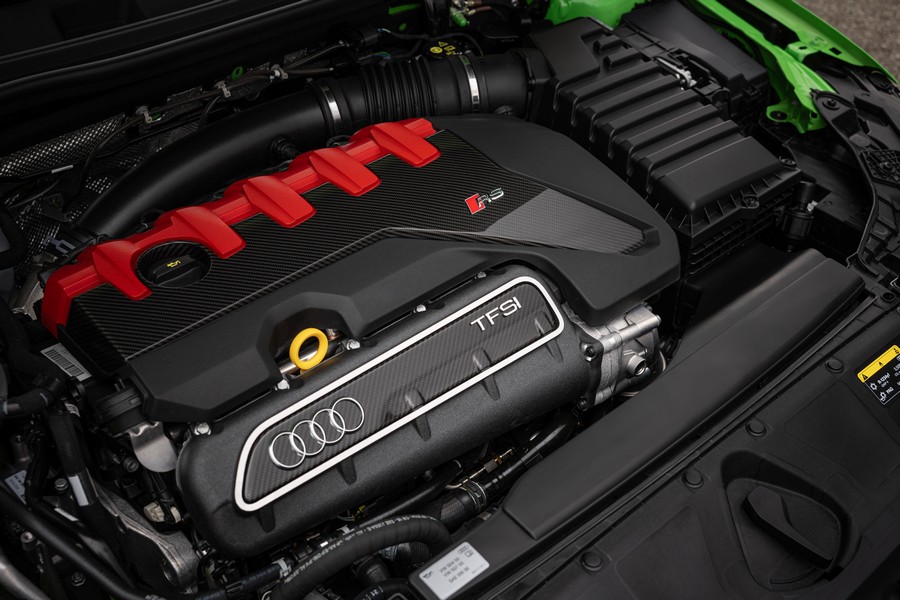
Dal 2021 l’Audi RS 3 utilizza una versione ulteriormente aggiornata del 2.5 TFSI. La compatta sportiva accelera da 0 a 100 km/h in 3,8 secondi e raggiunge una velocità massima di 250 km/h, che può arrivare a 290 km/h con il pacchetto RS Dynamic e i freni carboceramici. Il motore eroga 400 CV e 500 Nm di coppia disponibili tra 2.250 e 5.600 giri/min.
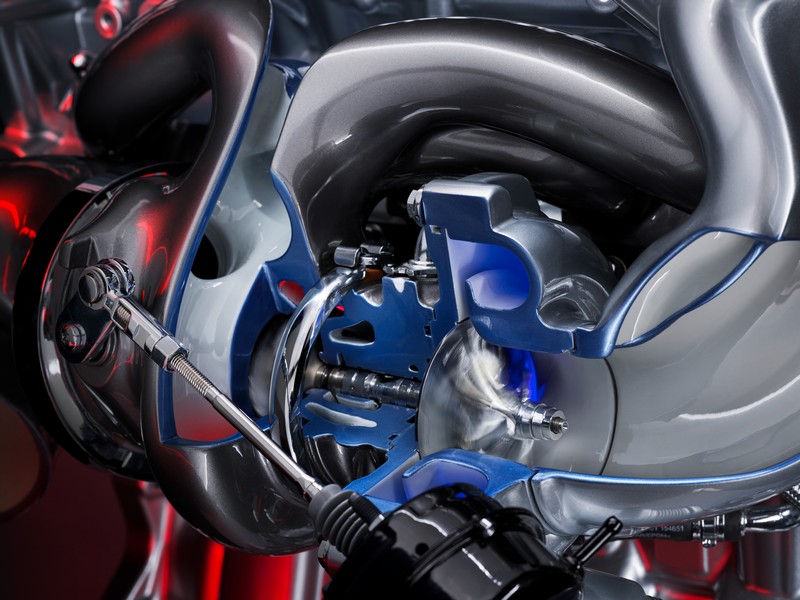
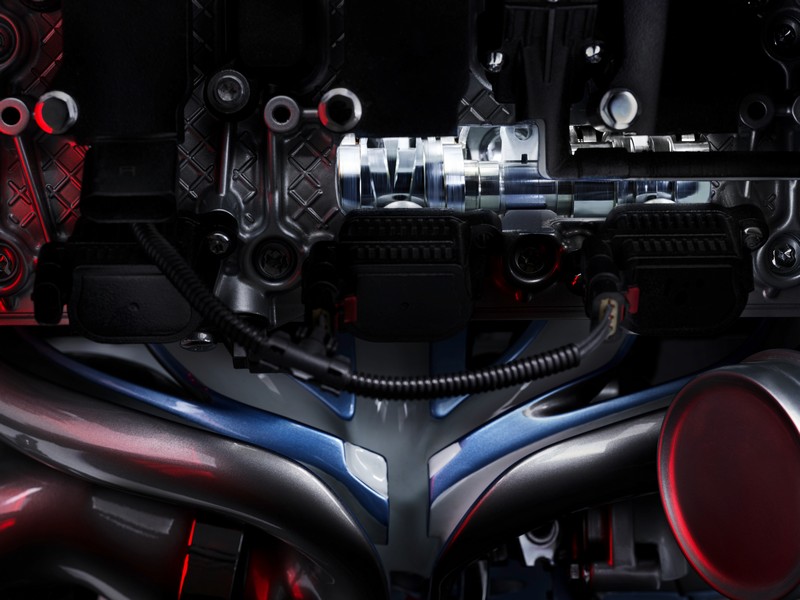
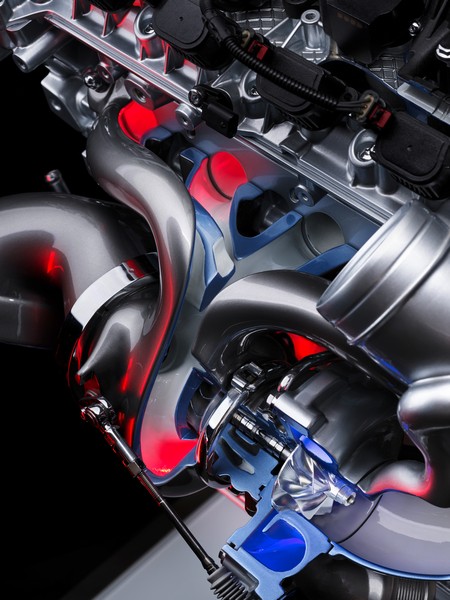
Una delle caratteristiche distintive del cinque cilindri è il suono. L’ordine di accensione 1-2-4-5-3 e l’intervallo di 144 gradi tra le accensioni determinano una sequenza irregolare che genera una sonorità inconfondibile. Anche la geometria del collettore di scarico contribuisce al risultato acustico.
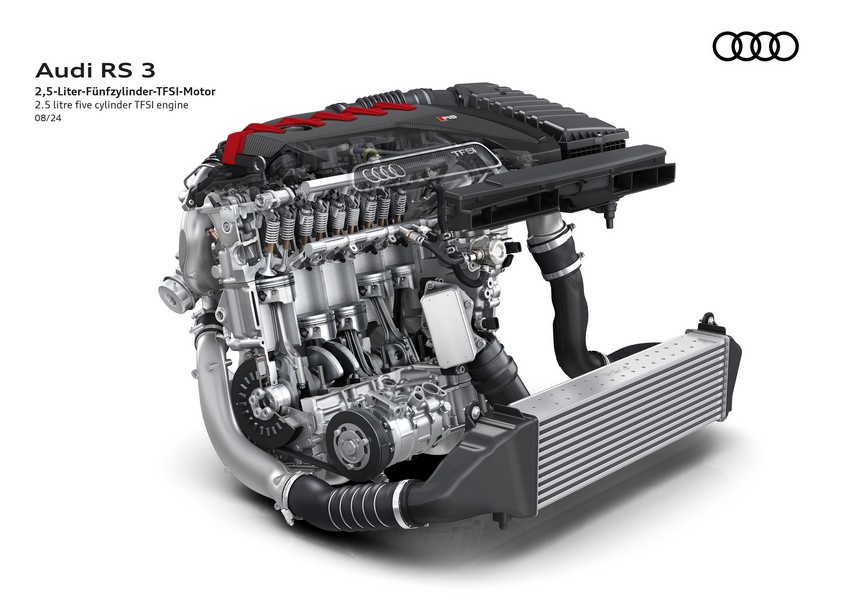
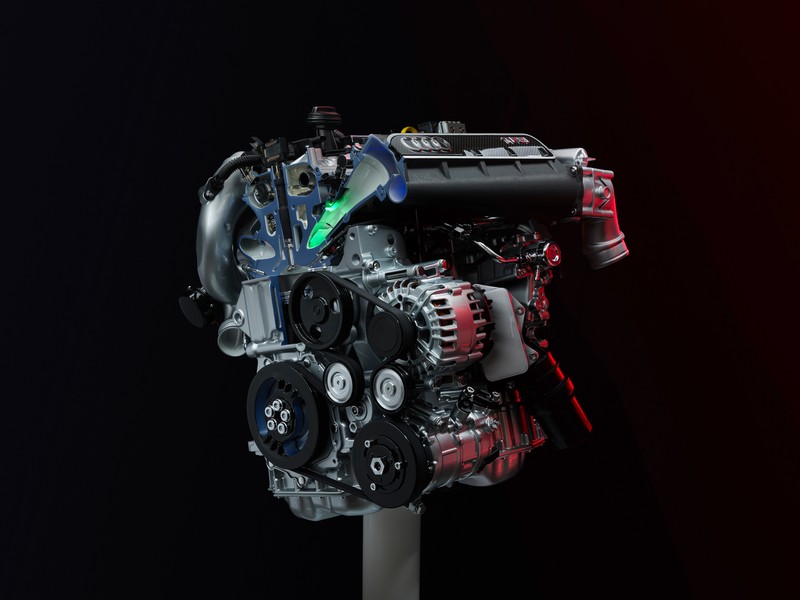
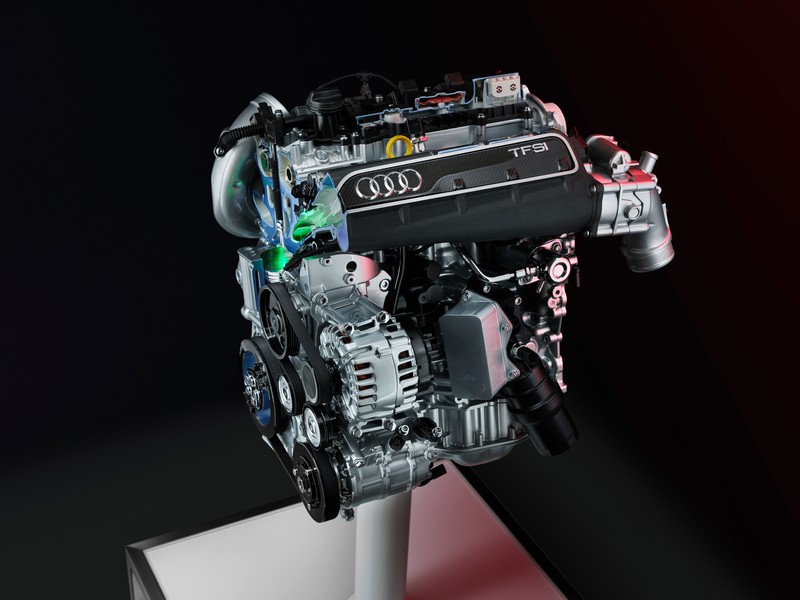
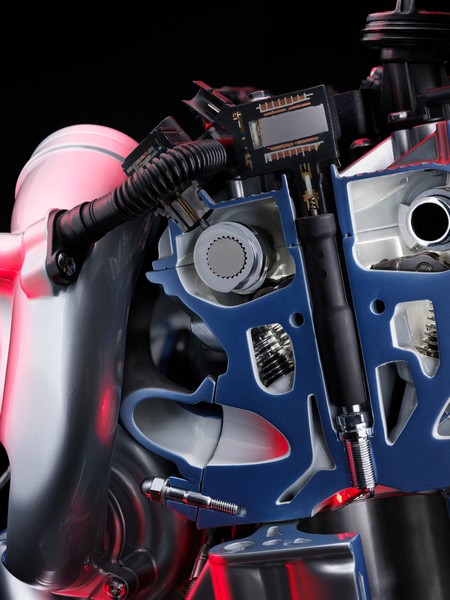
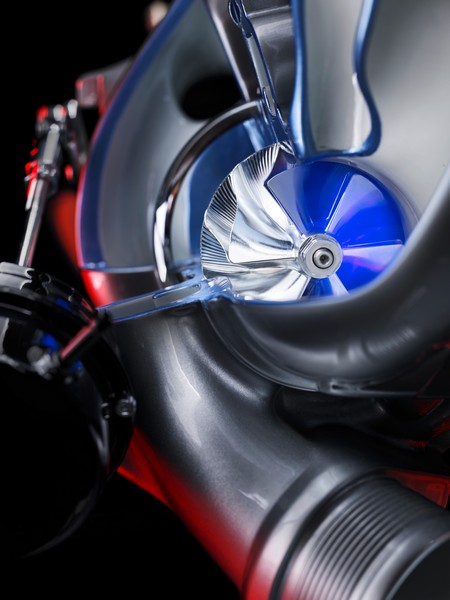
Il 2.5 TFSI attuale utilizza turbocompressore e iniezione diretta con un sistema di doppia iniezione, nel collettore di aspirazione e direttamente nella camera di combustione. Il carburante viene iniettato a 250 bar e il turbocompressore può raggiungere una pressione di sovralimentazione di circa 1,5 bar relativa. Il sistema Audi valvelift regola l’apertura delle valvole di scarico per migliorare efficienza e risposta del motore.
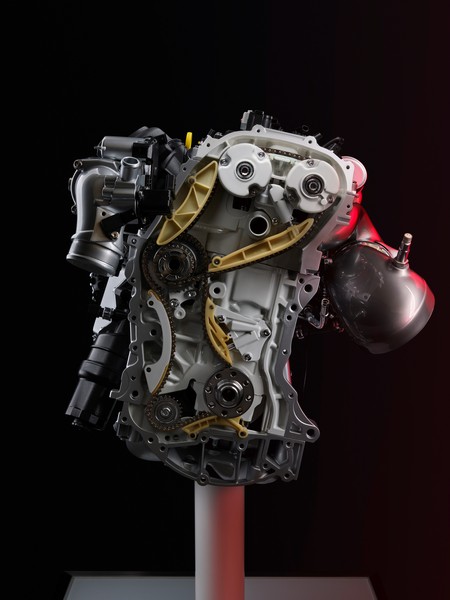
La struttura del motore utilizza numerosi componenti leggeri. Il basamento è in alluminio, l’albero motore è alleggerito mediante foratura interna e alcune parti, come la sezione superiore della coppa dell’olio, sono realizzate in magnesio. Il peso complessivo del motore è di circa 160 kg e la lunghezza inferiore a 50 centimetri consente l’installazione trasversale.
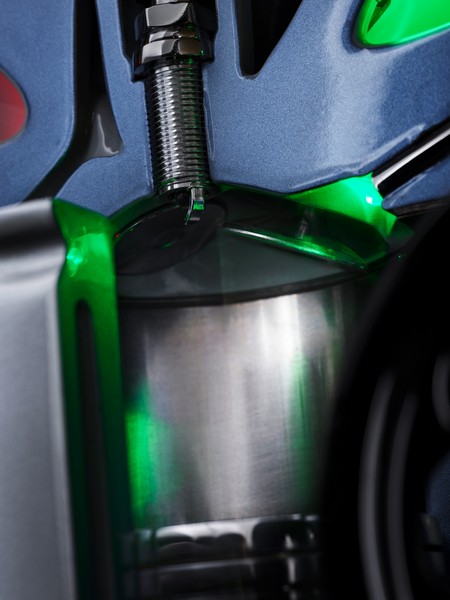
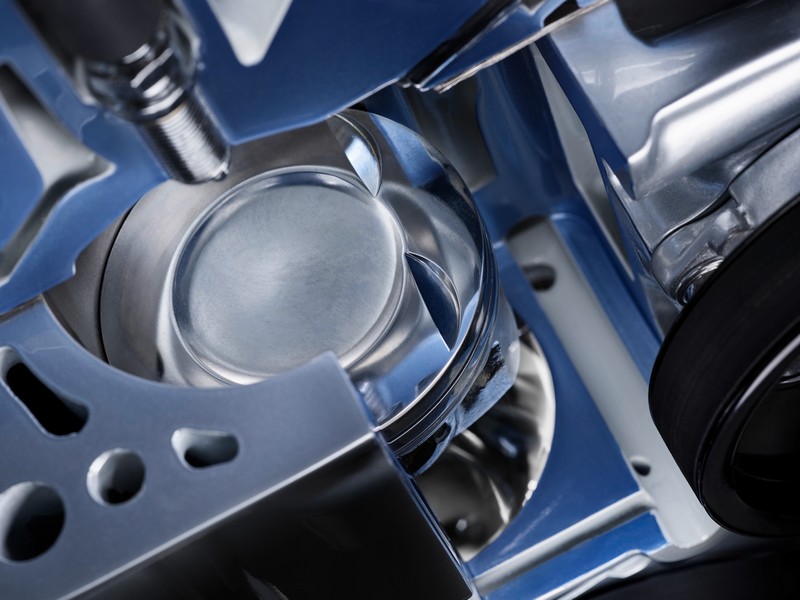
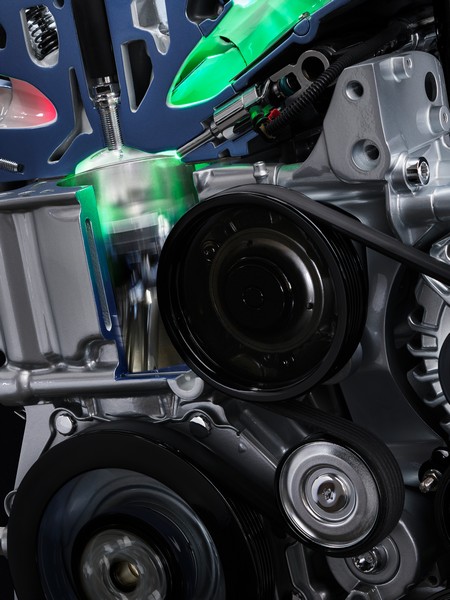
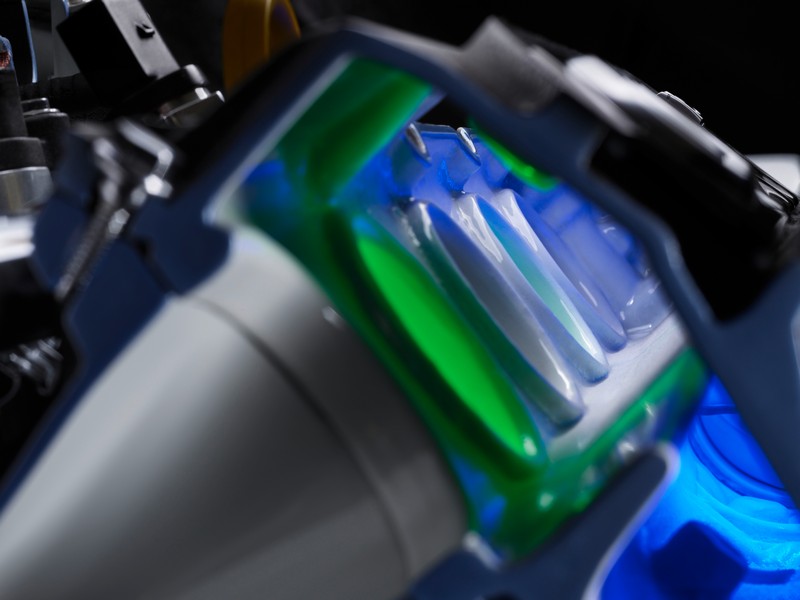
Tra le soluzioni tecniche figurano rivestimenti al plasma per i cilindri, canali di raffreddamento nei pistoni e un sistema di gestione termica con pompa dell’acqua commutabile, che permette al motore di raggiungere più rapidamente la temperatura di esercizio dopo l’avviamento.
Il cinque cilindri viene prodotto nello stabilimento Audi di Győr, in Ungheria. L’assemblaggio avviene manualmente su una linea di oltre 1.000 metri quadrati. Il motore viene montato in 21 stazioni da tecnici specializzati. Dopo i controlli finali, tra cui test a freddo e a caldo, i motori vengono trasportati a Ingolstadt, dove vengono installati sull’Audi RS 3 durante la fase finale della produzione.
 PITLANEITALIA