
A seguito della repentina chiusura di Modelauto Online, Fedor Eliseev ha proposto a PLIT di continuare a pubblicare i suoi articoli sulla storia dei marchi. Fedor è molto conosciuto per la sua attività di ricerca che ha spesso riguardato anche i produttori italiani. Su MAR Online erano già uscite le prime due parti di una storia in tre puntate della Old Cars. La terza non aveva fatto in tempo ad essere pubblicata e se ne occuperà appunto PLIT. Per riproporre lo studio nella sua interezza, però, si è deciso di riproporre anche le prime due puntate, che sono rimaste on line su MAR per poco tempo. Testi e didascalie saranno in inglese, l’editing è stato rifatto a cura della redazione, come ovviamente l’intera impaginazione. Ringraziamo fin da ora non solo Fedor ma anche Marco Nolasco, che ha favorito il contatto con l’autore. L’articolo appare a doppio nome per la collaborazione che Marco ha offerto nella stesura del lavoro originale. E’ necessario ricordare che PLIT si occupò della Old Cars già nel dicembre del 2023, con un bell’articolo di Riccardo Fontana: https://pitlaneitalia.com/2023/12/24/old-cars-e-new-camions/ . La seconda parte dello studio di Fedor Eliseev la trovate a questo link: https://pitlaneitalia.com/2026/06/10/old-cars-story-part-2/. Qui la terza parte: https://pitlaneitalia.com/2026/08/13/old-cars-story-part-3/. [David Tarallo, redazione di pitlaneitalia.com]
By Fedor Eliseev and Marco Nolasco
Italy has long been one of the most successful countries in model vehicle production. Companies such as Rio, Brumm, Mercury, Politoys, and Mebetoys brought prestige and authority to the national diecast industry. Alongside these major manufacturers, dozens of smaller craftsmen and specialist makers were involved in the production of precise, high-quality miniatures.
Most collectors associate Italian manufacturers primarily with passenger cars, motorsport vehicles, and vintage automobiles. However, trucks, buses, and specialist vehicles also occupied a significant segment of the model industry. In Italy, this particular field was strongly associated with Old Cars, and this article explores the company’s history.
During the 1970s, Luigi Castellani was running his own business producing various mechanical components and had never considered entering the model vehicle industry. However, circumstances led him into the diecast sector. In 1975, a friend of Luigi’s lost his job at Sispla, a small company located in Valsesia, approximately 120 km from Turin, which produced plastic objects and scale models.
Sispla worked on contracts for Fiat Trucks. At that time, Fiat owned the moulds for the Fiat/OM 50/90, Fiat 697, and Fiat 550 tractor, and was involved in the production of large quantities of 1/43 diecast models. The first trucks had been manufactured by Dugu, but Sispla later continued their production. Sispla had acquired Dugu, but unfortunately both companies ceased operations following bankruptcy in the mid-1970s.
Luigi’s friend persuaded him to enter the diecast business, and together they founded Old Cars. Their first contracts came from Fiat Trucks, which supplied the moulds.
After only a few months, Luigi’s business partner left the company, causing delays in truck production. However, in January 1976, Old Cars secured a highly significant agreement with Nestlé for the production of 75,000 vintage car models with five different designs. By September 1976, 50,000 units had been completed (10,000 of each model), with the remaining 25,000 produced in 1977.
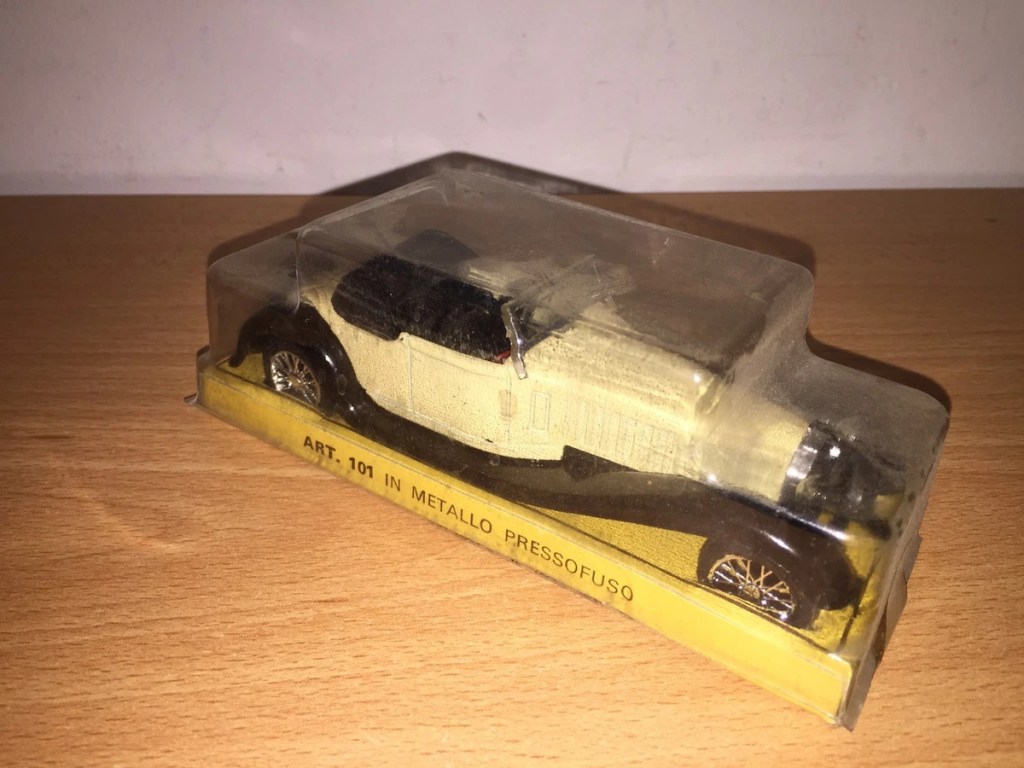
This range consisted of the 1931 Bugatti, 1909 Opel Coupé, 1907 Ford Model T Roadster, 1905 Fiat 24CV Cabriolet, and 1905 Fiat 24CV Berlina.
Compared with the offerings from Rio and Brumm, these models were relatively simple but competitively priced. The bases were basic, with no detailed reproduction of transmission or suspension components, featuring only inscriptions indicating the manufacturer and model name. Packaging consisted of cardboard boxes with blister windows.
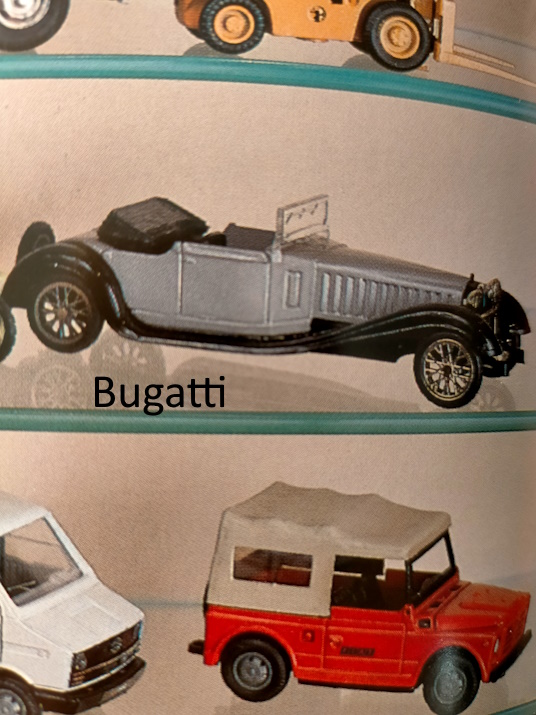
The vintage range received catalogue numbers 101–105. The series began with the 1931 Bugatti Cabriolet (No. 101), representing one of the six Type 41 Royale cars. Despite its simplicity, the miniature featured acceptable wire wheels, convincing moulded creases on the plastic roof covering, and a windscreen fitted with wipers. It was produced in two colour schemes: black/silver and dark blue, both with black interiors. The dark blue version is now particularly rare.
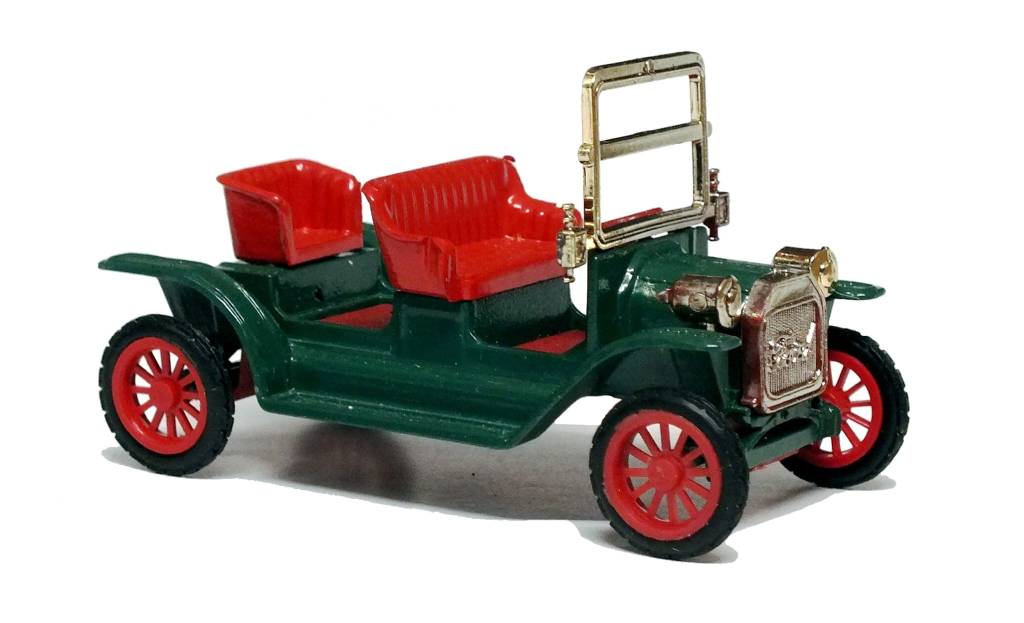
Catalogue No. 102, the 1907 Ford Model T Roadster, depicted one of the many variations of the famous “Tin Lizzie.” Old Cars chose an interesting version featuring a small rear seat. Strictly speaking, the real vehicle should have included a roof covering for the front passengers, but this feature was omitted. The radiator grille carrying the Ford emblem, along with the headlamps and sidelights, was reproduced reasonably well.
As with the other models in the 100 series, two colour schemes were offered. The most common version featured a green body, red interior and wheels, with gold detailing on the radiator grille, lamps, and horn tube. A less visually appealing variant used a yellow body, black interior, and silver exterior detailing. The Ford Model T represented an early production version, before black became the standard colour for most examples.
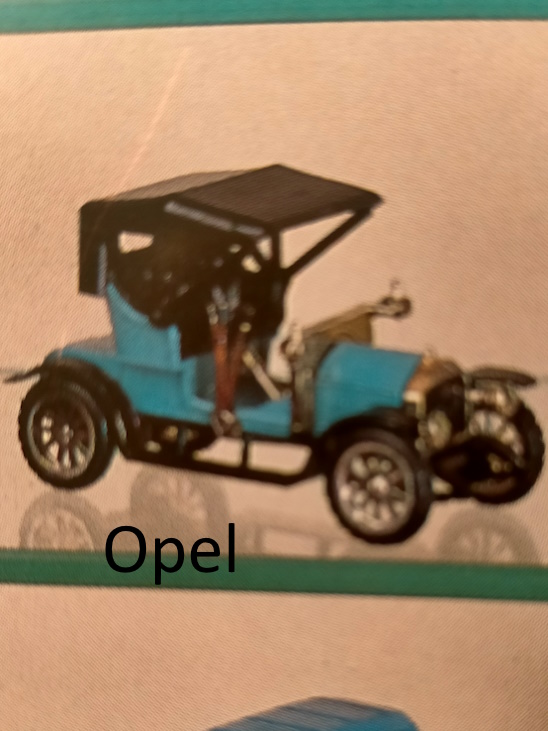
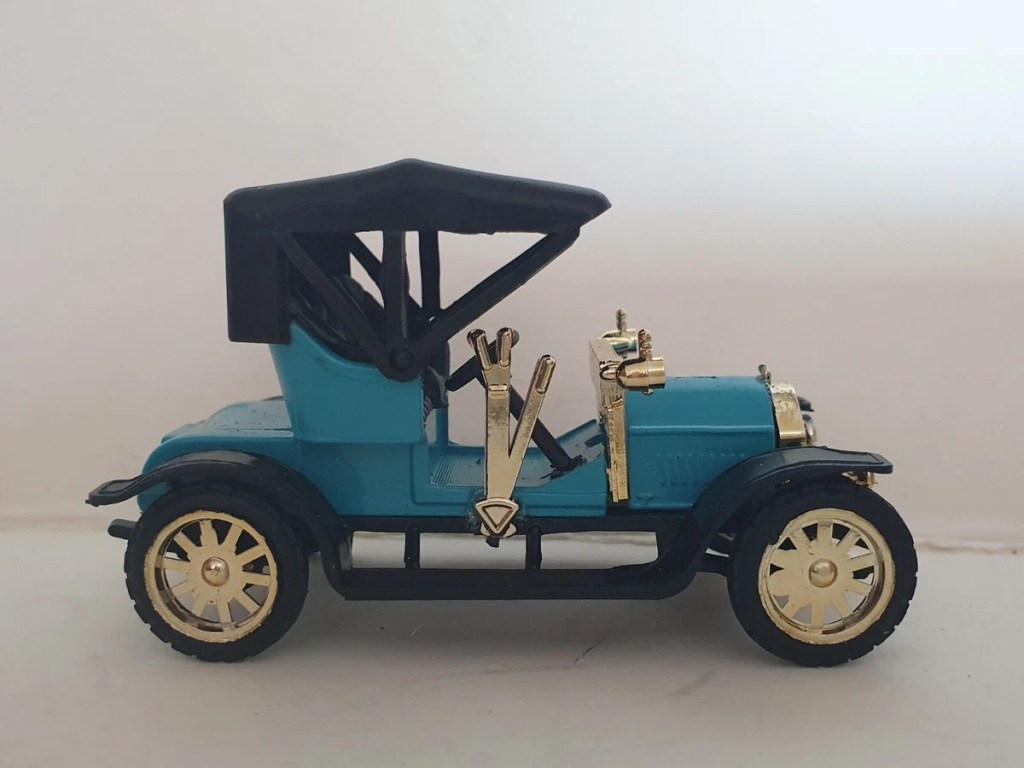
Catalogue No. 103 was the 1909 Opel 4/8 PS, also known as the Doctorwagen, one of Germany’s first relatively affordable automobiles. It was offered in blue/black and orange/black finishes.
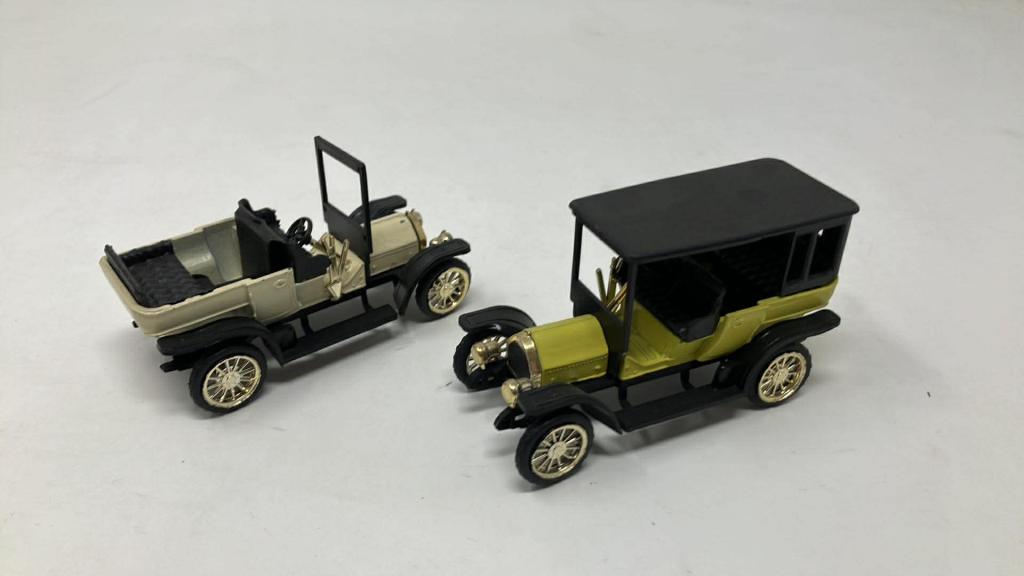
Catalogue Nos. 104 and 105 represented the 1905 Fiat 24CV in two different body styles: Berlina and Cabriolet. Standard colours for the Berlina were green/black and yellow/black, while the Cabriolet was available in maroon/black and red/black. Cabriolet interiors were produced in either white or red.
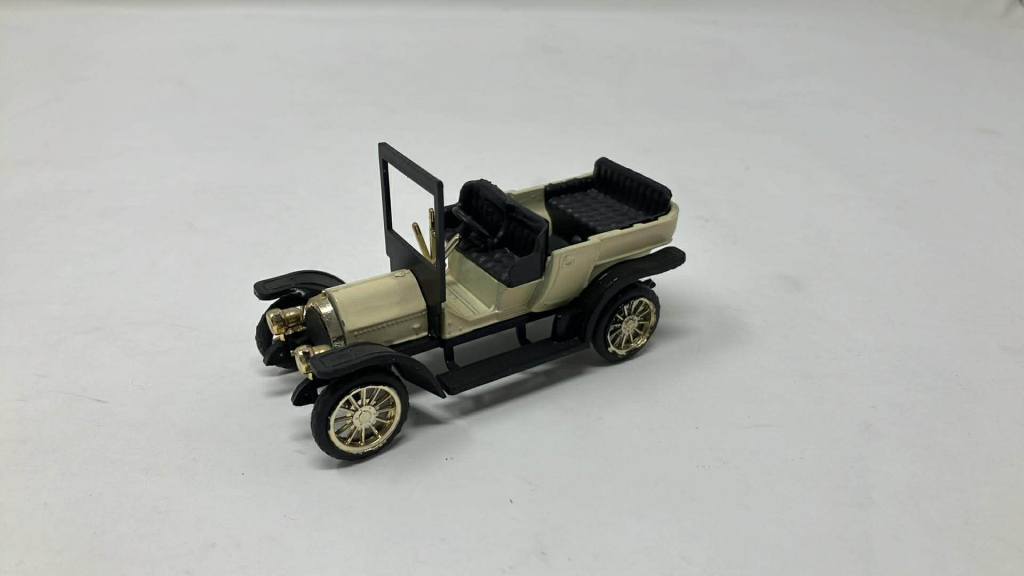
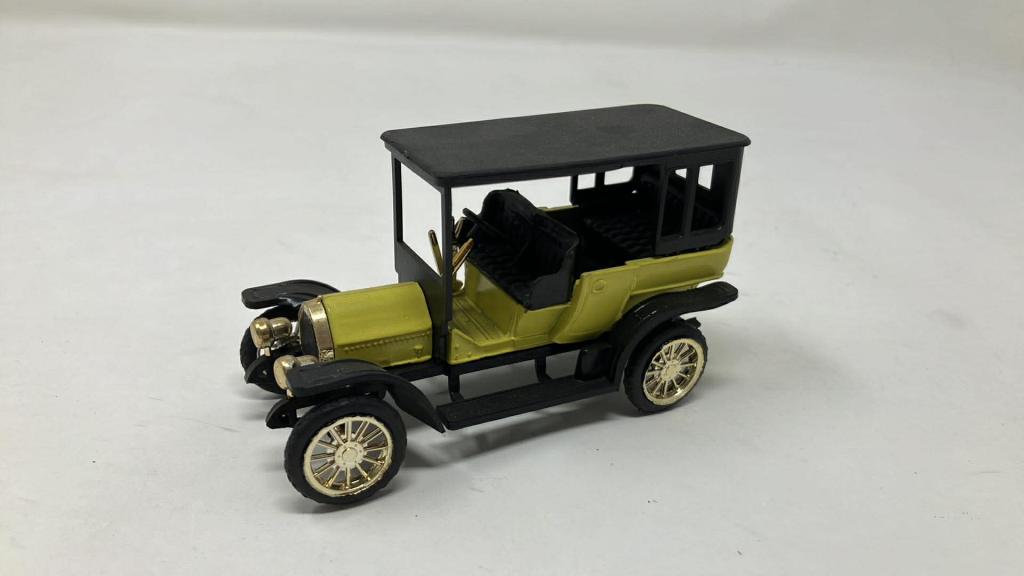
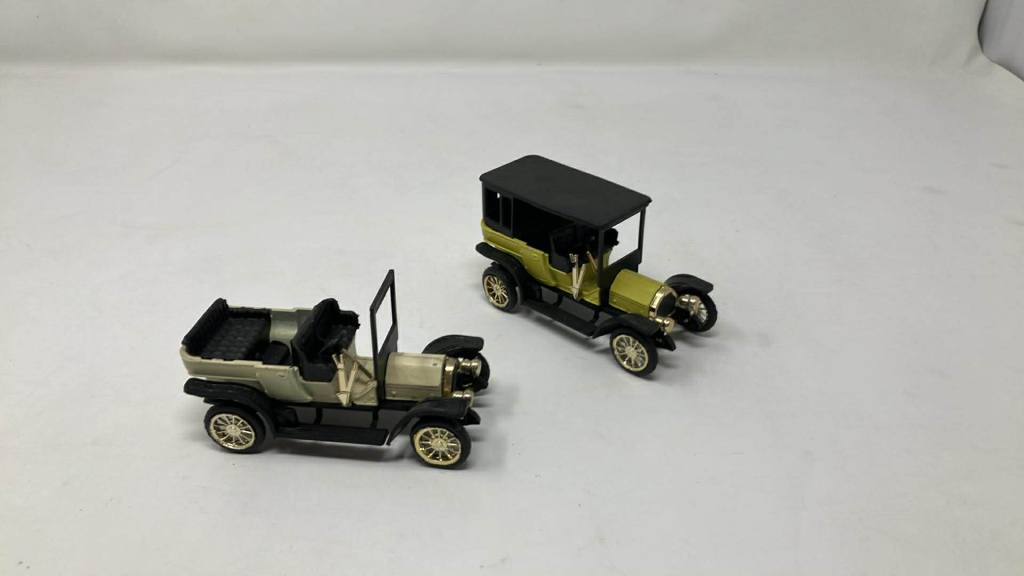
Nestlé used these models for promotional purposes until the end of the 1970s. Once that agreement concluded, Old Cars continued producing the range, updating the packaging and introducing additional colour schemes.
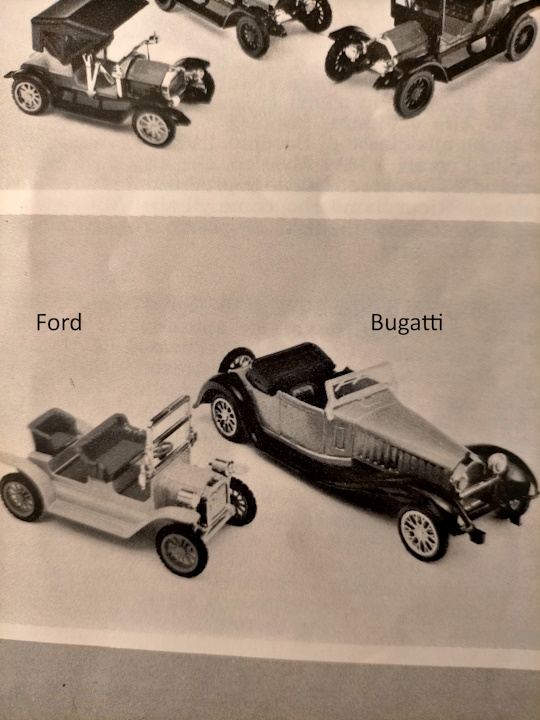
Instead of cardboard boxes, the company adopted small acrylic display cases, which became standard packaging for subsequent production. The plinth displayed model information on all four sides: the manufacturer’s name at the front, the catalogue number on the rear and one side, and the vehicle badge plus model name on the remaining side, with “Made in Italy” stamped underneath.
Identifying all the additional colours introduced later is difficult. For example, No. 102 gained brown and red variants, No. 103 received a green/black version, and No. 105 appeared in grey/black.
This Brass Era range enjoyed considerable commercial success and remained available until the mid-1980s.
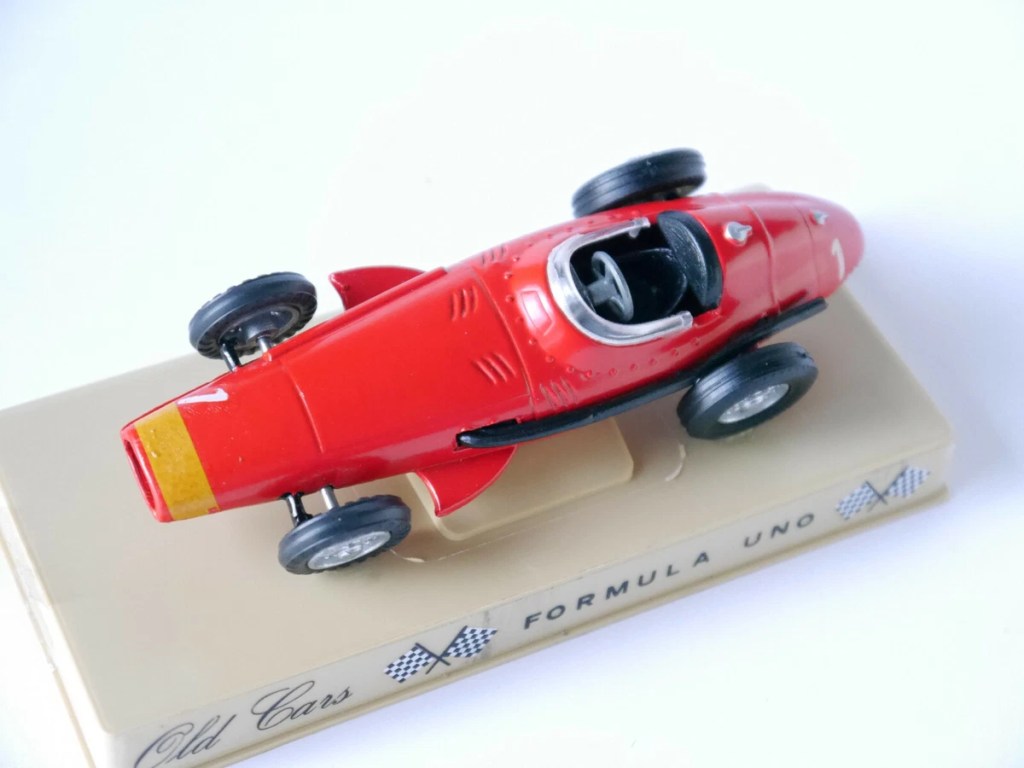
Old Cars attempted to expand its catalogue by introducing a new 500 series dedicated to Formula One cars. In 1977, the first model in this line appeared: the 1957 Maserati 250F, catalogue No. 501.
This was one of the most successful Formula One cars of the 1950s, winning eight Grands Prix between 1954 and 1960. Old Cars reproduced Juan Manuel Fangio’s championship-winning car, the Argentine driver having secured his fifth world title at its wheel.
Although relatively simple in execution, the model was attractive. Seeking to develop the range further, Old Cars introduced the 1949 Talbot-Lago 4.5L, also known as the T26. While successful in many competitions, it was no match for Alfa Romeo during the inaugural 1950 Formula One season, although it did manage several third-place finishes.
Whereas the Maserati 250F entered full production, only a very limited batch of Talbot-Lago models was manufactured, making them extremely rare today.
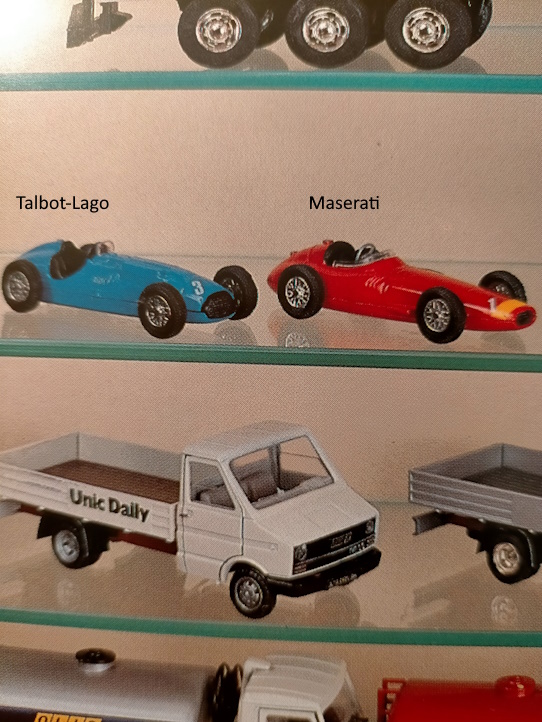
Old Cars had also planned further Formula One models, including the 1956 Ferrari-Lancia D50, the 1955 Ferrari 555 Supersqualo, and the 1950 BRM Mk1. However, these projects were postponed and eventually cancelled. The reasons included the company’s growing focus on trucks and commercial vehicles for Fiat, as well as Brumm’s dominance in the Grand Prix model niche.
After receiving truck moulds from Fiat, Old Cars continued production of former Sispla models. In 1976, the company released the Fiat 697 and Fiat 550 HP, followed in 1977 by the OM 90 and Fiat 640 HP.
At that time, Fiat’s truck division was undergoing major restructuring. The group consolidated brands such as OM, Unic, and Lancia’s commercial vehicle operations. Economic pressures encouraged broader industrial cooperation across Europe.
On 1 January 1975, the agreement establishing IVECO (Industrial Vehicles Corporation) was signed, merging Fiat’s truck divisions with Germany’s Magirus-Deutz. Headquarters were established in Amsterdam, with Fiat holding 80% of the shares and Magirus 20%. Production was centred in Turin and Brescia, while Unic focused on heavy trucks.
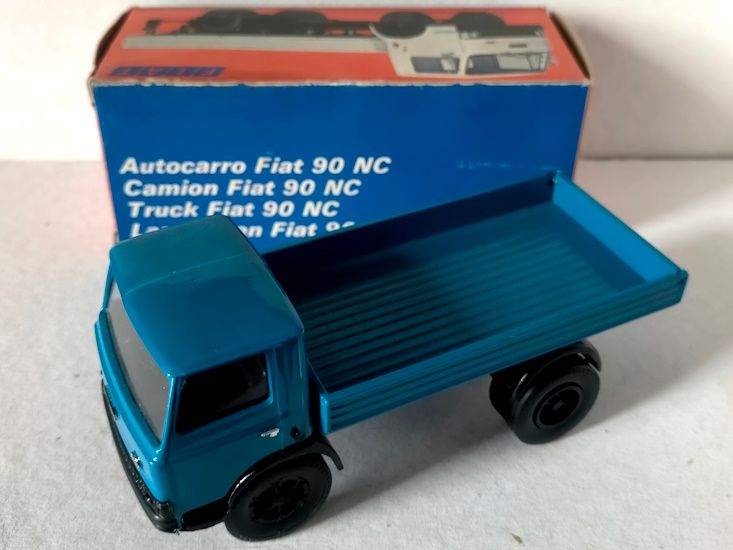
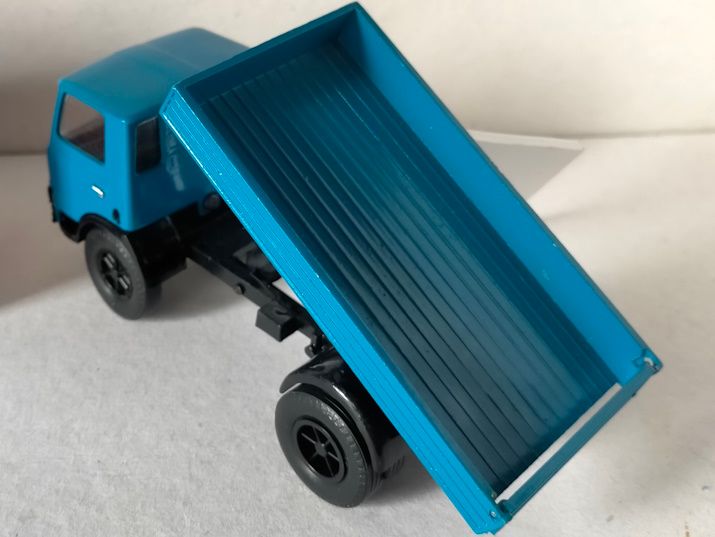
The creation of IVECO also influenced Old Cars, which began producing Fiat-OM and Fiat-Unic branded models depending on export markets. By the mid-1980s, the Fiat name had disappeared entirely, replaced by the unified IVECO branding.
The Fiat-OM 90 NC and Fiat 697 N differed little from their Sispla/Dugu predecessors aside from packaging, although Old Cars later developed original variants. Using the Fiat 697 N as a basis, the company introduced the medium-duty Fiat 130 range in 1978, primarily in tractor unit form.
Old Cars produced a wide selection of trailers, including cargo and refrigerated units, mostly moulded in plastic with some diecast components. Many carried the branding of major companies such as Agip, Alitalia, Pirelli, Cagiva, and Michelin.
The Fiat 90 PS 4×4 entered the catalogue in the late 1970s, derived from former Lancia truck tooling acquired from Mercury. This became known as the Bolzano series, named after the town where ex-Lancia trucks had been produced.
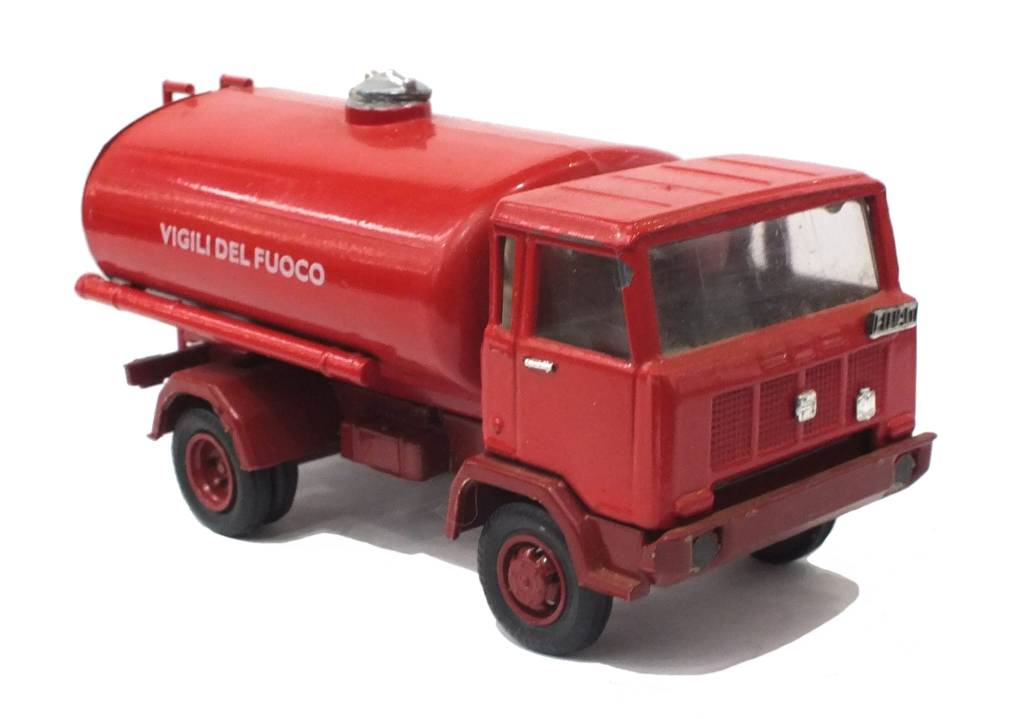
The Bolzano series included flatbeds, dump trucks, fuel tankers, fire engines, cranes, military versions, and rally-raid derivatives. Functional crane and tipping mechanisms were included, while the drivetrain detailing for 4×4 versions was notably sophisticated. Scale varied between approximately 1/50 and 1/43.
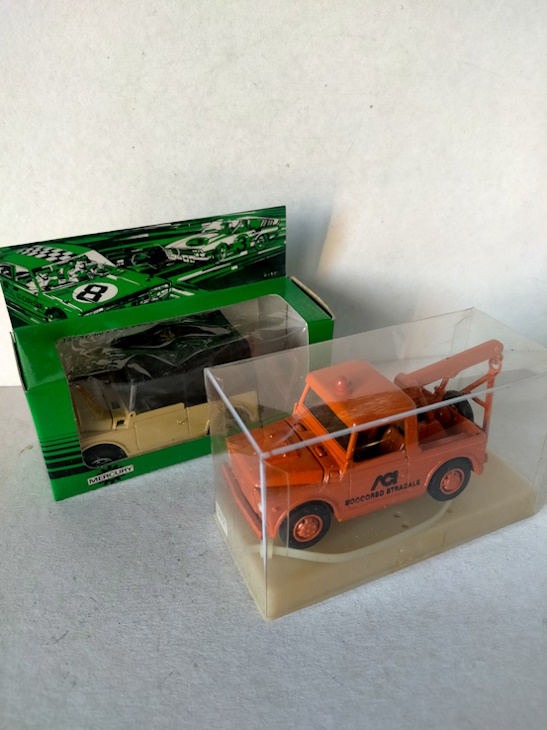
Cooperation with Mercury also led to the Fiat Campagnola, a light utility vehicle used by the military, police, and emergency services. In early 1979, Fiat’s military vehicle division in Bolzano urgently requested a large batch of OM 90 models, as well as Campagnolas. Since Mercury no longer had manufacturing capacity, Old Cars acquired Mercury’s moulds in July 1979 and significantly expanded the range.
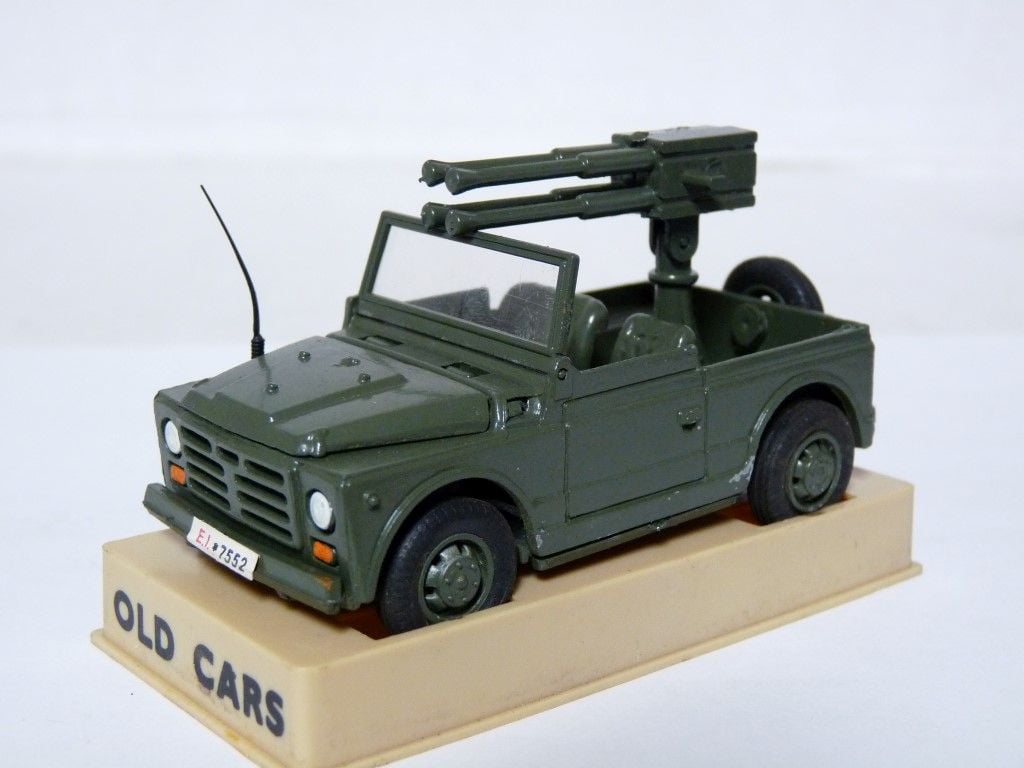
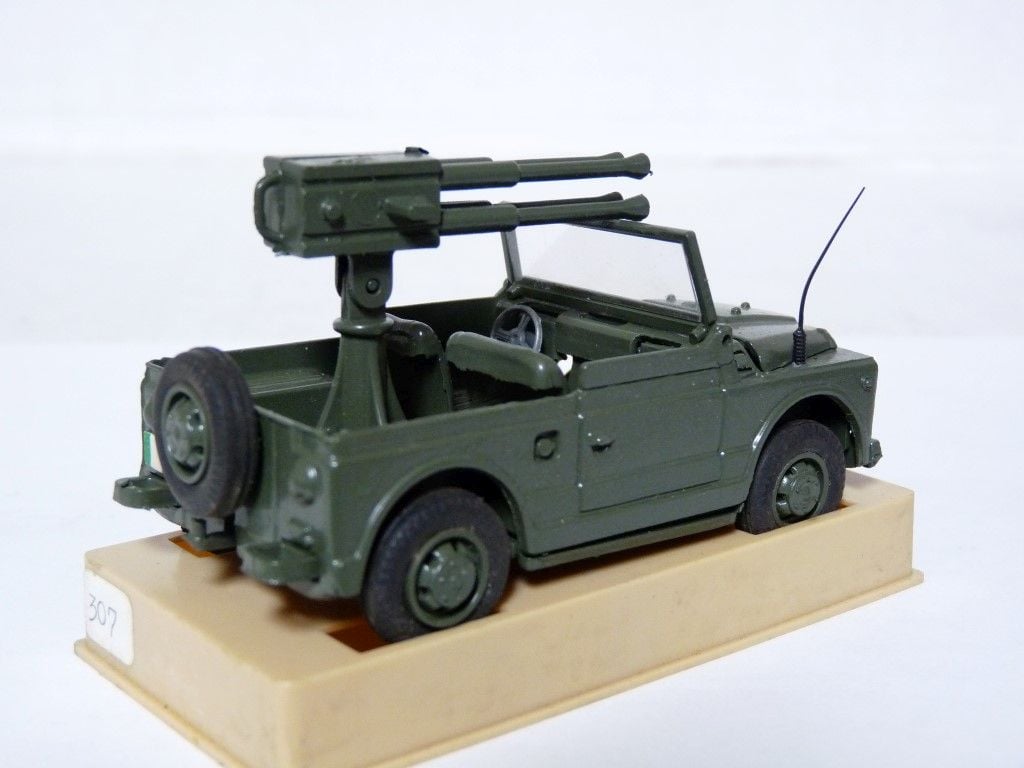
The Campagnola inherited from Mercury was particularly well executed, with accurate proportions, an opening bonnet, and engine detail. Following an agreement with the Italian Army, Luigi Castellani introduced military variants featuring searchlights, gun trailers, cargo trailers, and weapon-equipped configurations. Both open and closed body styles were offered.
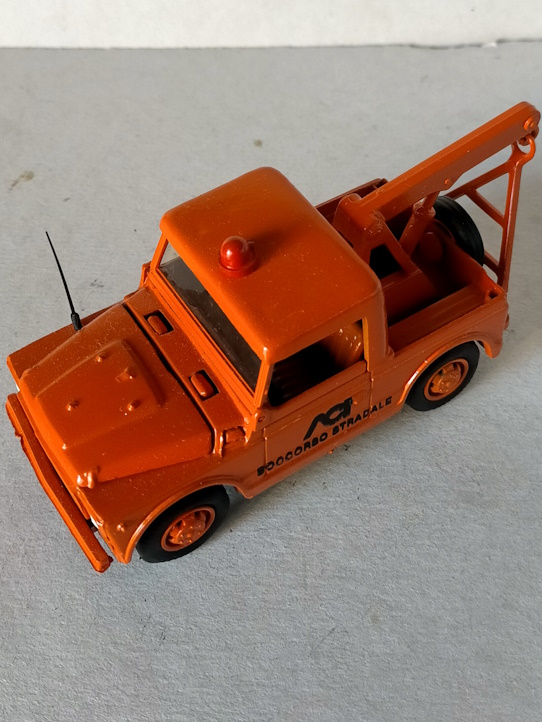
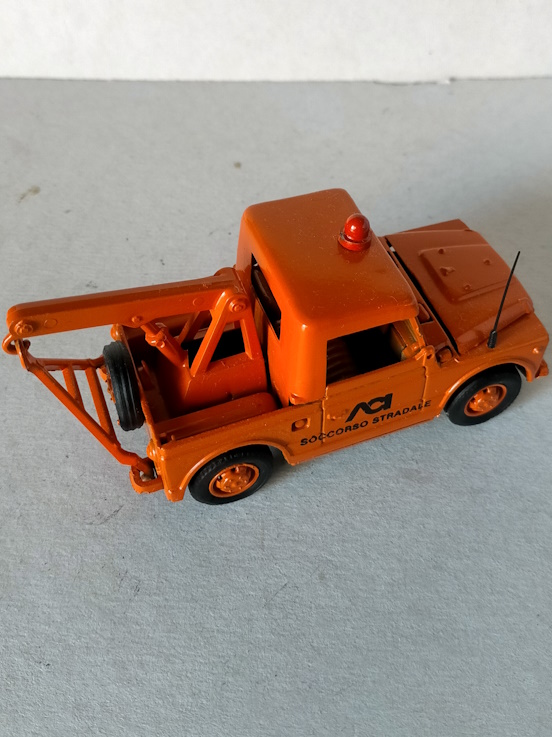
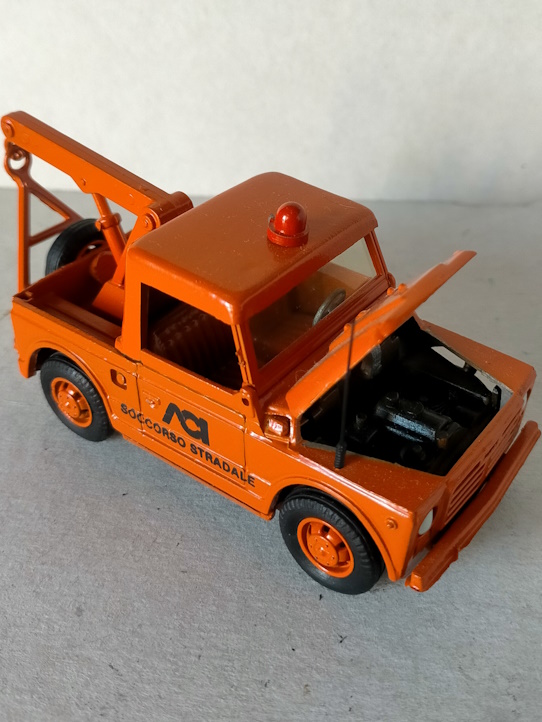
Civilian Campagnola versions included roadside assistance, fire brigade, police, and Carabinieri liveries.
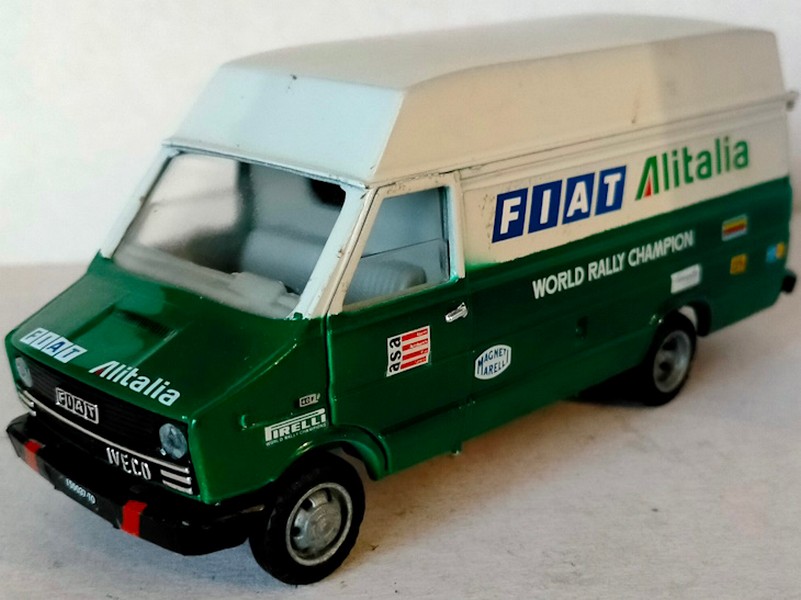
One of Old Cars’ greatest successes came with the introduction of the IVECO Daily range in 1979, whose masters where designed in-house by Luigi Castellani and his team.
The real IVECO Daily had debuted in 1978 as the first vehicle developed entirely under the new IVECO structure. Initially marketed as the IVECO-Fiat Daily and OM Grinta, it later became simply the IVECO Daily.
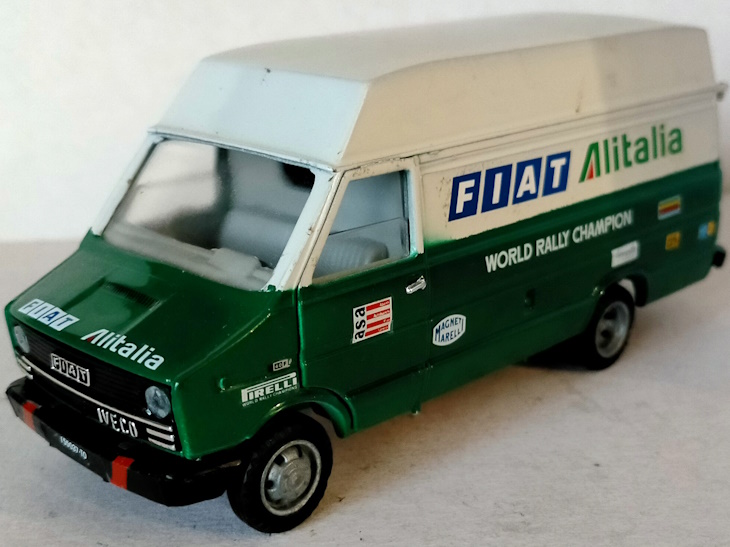
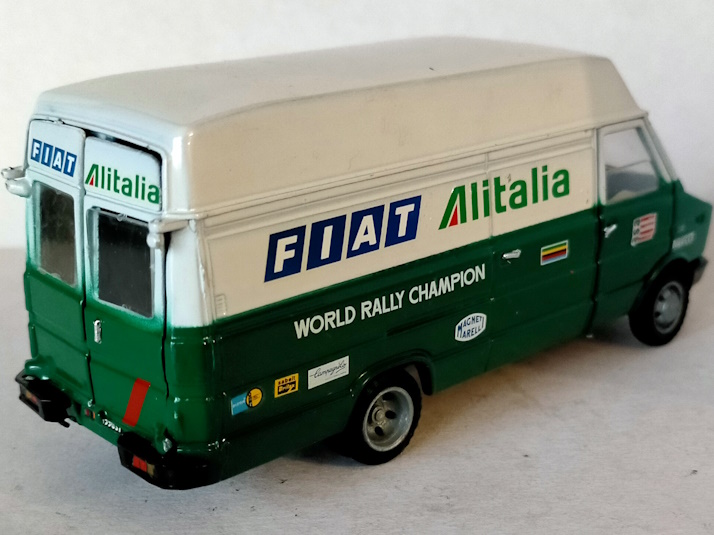
This pan-European commercial vehicle range used a chassis-frame construction, front disc brakes, independent torsion-bar suspension, and four- or five-speed gearboxes. The initial range comprised 49 variants, with payload capacities from 1.5 to 2.3 tonnes, wheelbases from 2,800 to 3,600 mm, and van capacities from 7.0 to 9.8 cubic metres. A heavier 49.10 version followed, powered by a 92 hp engine.
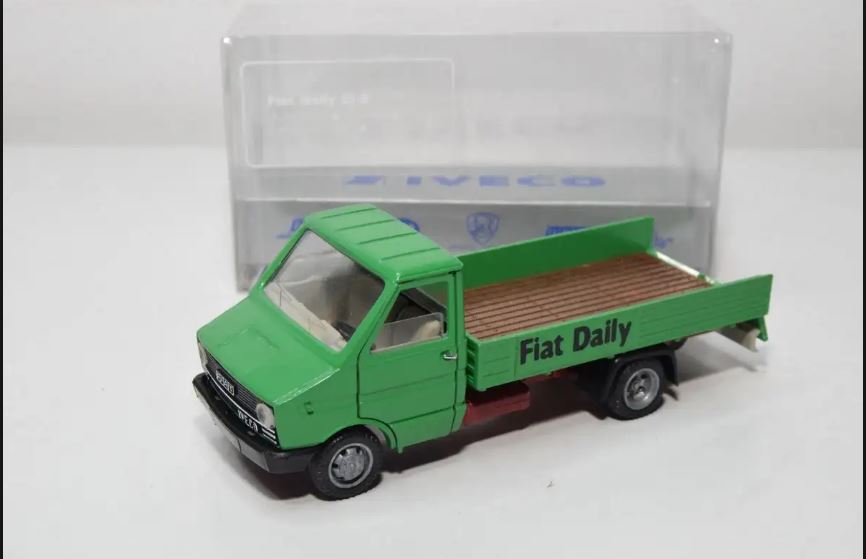
Old Cars produced an enormous variety of Daily models, including trucks, panel vans, minibuses, ambulances, fire engines, and police vehicles. Two roof heights were available for van versions, and chassis-only versions were produced for specialist conversions.
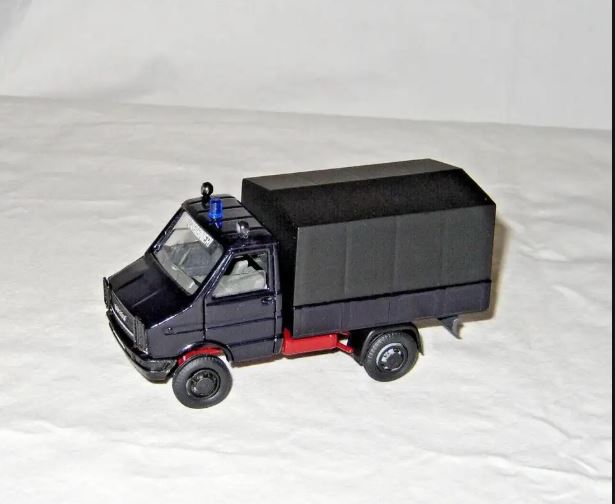
Numerous company liveries were offered, likely numbering in the hundreds.
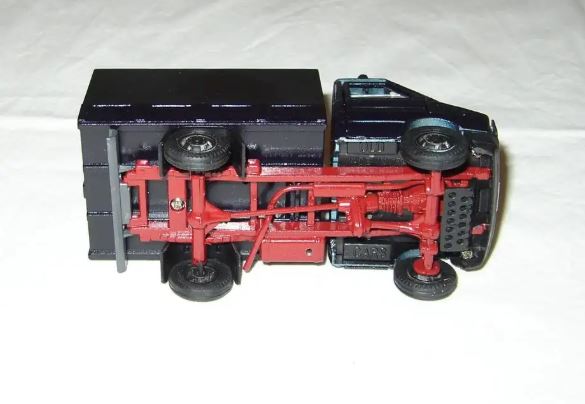
The models featured highly detailed chassis, with separate transmission and exhaust components. Front and rear doors opened, although the side cargo/passenger door remained fixed. Separate door handles were a particularly unusual detail for diecast models of the period.
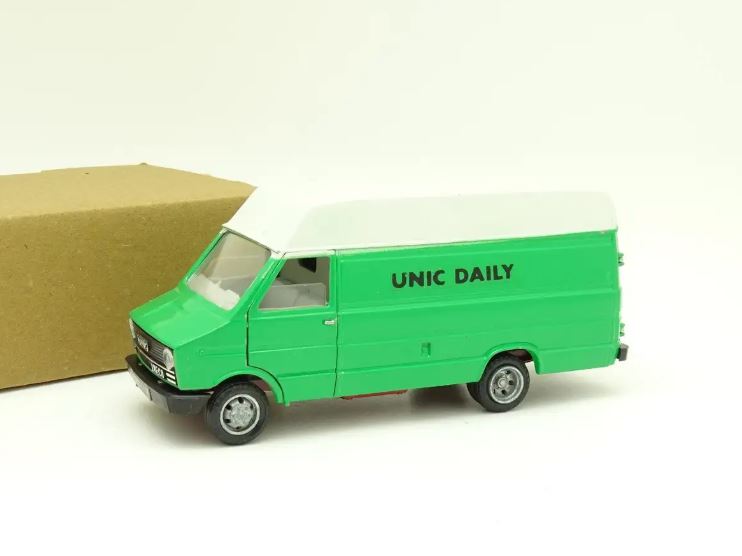
Other remarkable features included partially open front side windows, plastic headlamps integrated with blinkers and excellent overall detailing.
Models were packaged in standard acrylic display cases and remained in production until the end of the 1980s, when the next generation of the IVECO Daily replaced the original vehicles.
Many thanks to Gisella and Alessandro Castellani, Bruno Boracco, Marco Batazzi and Alessandro Sannia for their help in writing this feature.
 PITLANEITALIA
Bene, sarebbe stato davvero un peccato se il lavoro di Fedor (il mio contributo è stato minimo) fosse andato perso!
"Mi piace""Mi piace"
great article!!
"Mi piace""Mi piace"
Sbaglio o c’era anche la variante marcata AR8 del Daily?
"Mi piace""Mi piace"
Sì, Carlo, c’era anche quella. Bello risentirti.
"Mi piace""Mi piace"