
Di Fedor Eliseev (con la collaborazione di Marco Nolasco) avete letto alcuni giorni fa sul PLIT la prima parte della storia della Old Cars. Attendendo le puntate successive, vi proponiamo anche altri contributi di Fedor; iniziamo da un marchio molto amato dai collezionisti di modelli in metallo bianco, Conquest. Personalmente ricordo di aver sognato parecchio sulle foto che Modelauto Review pubblicava delle loro edizioni limitate, non sempre facili da reperire in Italia. Ecco intanto la prima parte di una storia originariamente apparsa su MAR Online, sito ormai chiuso, che proprio di Modelauto Review aveva rappresentato la continuazione digitale. [David Tarallo]
La seconda e la terza parte della storia le trovate ai seguenti link: https://pitlaneitalia.com/2026/05/23/the-story-of-conquest-models-part-2/ e https://pitlaneitalia.com/2026/05/27/the-story-of-conquest-models-part-3-1995-2001/
by Fedor Eliseev
For collectors of precision white metal models of American and European cars, the name Conquest/Madison Models became a symbol of the highest quality and meticulous attention to every detail. Produced by SMTS, these miniatures were very expensive, but without any doubt they were worth it. These brands created by Henk van Asten are reasonably well known, but I believe that, in fact, we know much less about them than we do about Brooklin. Gianluigi Cappi did a superb job by publishing his comprehensive collector’s guides, which answer virtually every question connected with the company from Bath. I hope that someday enthusiasts will produce similar guides about SMTS and all its brands, including Western Models, Minimarque, Motor City USA and others.
This series of articles does not pretend to be a complete guide to all Conquest/Madison Models; it is simply an attempt to bring them together in one place and to tell the story of the company and its production. I believe that this research will encourage other enthusiasts to produce more and more books about white metal models.
For easier reading, I decided to divide this research into three parts according to the ranges created by Henk van Asten:
Conquest Models – American cars;
Conquest Models – European cars series;
Madison Models and Light Duty – a range of American cars and commercial vehicles.
For Henk van Asten, his journey into the model world began in 1952 at the age of six, when he received a Mobaco set, a Dutch-made construction toy consisting of wood and cardboard elements that allowed children to build houses. Some time later, Henk was given Meccano sets, and he fell in love with these construction toys made of metal parts. He acquired more and more Meccano and played with them with great enthusiasm. In developing his imagination, Henk built car chassis with working steering systems and many other mechanisms.
Henk’s father owned a tobacco shop in the village of Heeze, near Eindhoven, where he also sold household items and toys, which he purchased from a wholesaler named Jan van Zummeren. Jan had some Dinky Toys in his shop, which greatly impressed Henk and became the objects of his dreams. Henk’s father asked van Zummeren to bring one Dinky Toy for his son, who was overjoyed to receive it, and from that time on Henk received one Dinky every month, as his father purchased goods with that frequency. During that period, which lasted from 1956 to 1958, Henk acquired about 20 models, mostly of British production, though several were French. He played with them very intensively, which is why most of these cars were eventually destroyed, although several examples have survived to this day, naturally not in mint condition. Around the same time, Henk also received Schuco Varianto toys, consisting of cars that could run on a layout powered by a battery. Then, for Saint Nicholas Day in 1959 (6 December), he received his first Märklin train layout.
After graduating from school in 1964, Henk went on to study economics at the Katholieke Hogeschool Tilburg (now Tilburg University). As a student, he stopped playing with his trains and began collecting Dinky Toys very seriously. In 1965, he purchased the first model specifically intended for his collection: Dinky Toys number 198, the Rolls-Royce Phantom V.
Henk van Asten completed his university education in 1971 and became a teacher of economics and bookkeeping at a secondary school. During his free time, he continued collecting diecast models, constantly finding new ways to acquire them.
One day, on his way home, Henk visited an old-fashioned shop in Nederweert which still had some Dinky models from the early 1960s in stock. He bought many of them without hesitation, though he still regrets not acquiring the entire stock. Another place where Henk bought models in the mid-1970s was a shop in Veldhoven.
As an avid collector of diecast models, Henk also developed an interest in real classic cars. In 1973, he bought his first classic, a 1949 Rover P3 75 Saloon, which was later traded for a 1950 Bentley Mark VI. Then, in 1974, classic car dealer Arnold van Os offered Henk the opportunity to purchase a 1953 Daimler Conquest in good condition, which had previously been in use in London. This proved to be a very successful choice, one Henk has never regretted, and thanks to this purchase he became a member of both the local classic car club and the Daimler & Lanchester Owners’ Club in the UK.
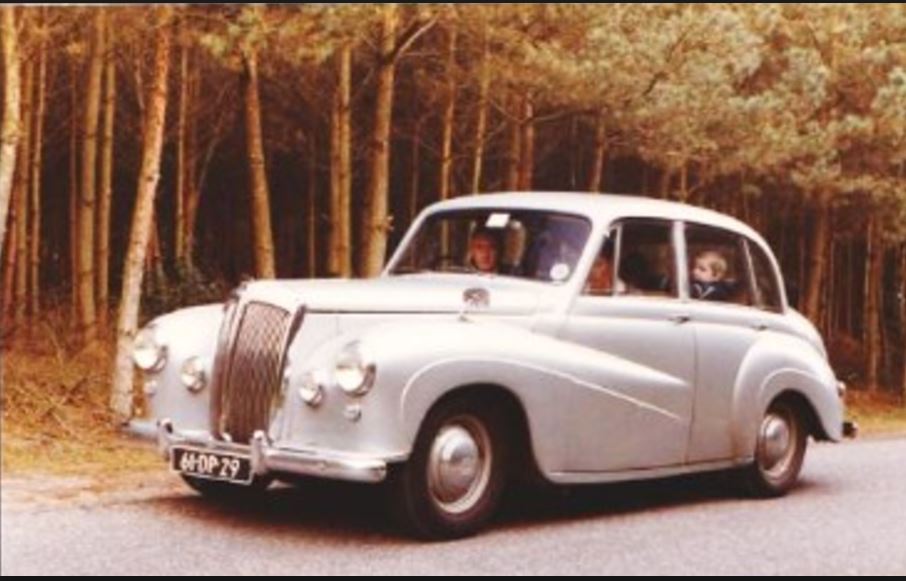
Driven by his passion for the Daimler marque, Henk found an advertisement in one of the English magazines for a 1938 Daimler E20 Charlesworth Saloon for sale. The car was in good condition but was not yet roadworthy. In 1975, during a holiday in England with his nephew, Henk visited Lutterworth, where the car was located. After a year, it had been repaired and made roadworthy. It was then collected by a friend and his girlfriend and driven to the Netherlands, to Henk’s home.
The following year, Henk and his nephew made a trip to a flea market. There was a plethora of diecast models for sale, and they bought a significant quantity. From that time on, Henk spent every holiday in England and purchased many Dinky Toys there. By the beginning of the 1980s, his personal collection had grown to approximately 1,000 models.
Flea markets and swap meets offered huge numbers of Dinky Toys in mint or near-mint condition at that time, and the idea of starting a side business was born. During his holidays, Henk bought models not only for himself but also for resale. The business became successful. He also met many English collectors and dealers. In the late 1970s, Henk met Rod Ward, who had a shop in Huddersfield and later in Leeds. In 1982, Rod established Model Auto Review, which became one of the most authoritative sources of information in the hobby for the next 30 years.
Visiting swap meets, shops, and flea markets, Henk realised that many cars had never been modelled in 1:43 scale. As a collector, he developed a passion for American cars of the 1930s to the 1960s, with their abundant chrome trim and spectacular styling features. In the 1980s, diecast manufacturers were not particularly active in this field, and some of the gaps were being filled by white metal companies such as Brooklin and Western Models. In fact, these two major producers in the white metal sector were unable to cover the full range of American cars produced by the major manufacturers. Moreover, at that time Brooklin models had a relatively simple level of detail. So, in 1985, Henk decided to create a highly sophisticated range that would reproduce chrome trim, mouldings, door handles, and other fine details, while avoiding duplication of models already produced by other white metal manufacturers. Naturally, he already had a list of miniatures he wanted to add to his personal collection.
Without any doubt, the process of creating a new company is a very difficult undertaking. It was necessary to find a good pattern maker and a production factory. After several attempts, one of Britain’s finest pattern makers, Pete Kenna, contacted Henk and offered to create a master for the new range. The chosen subject was a 1957 Chrysler 300C Convertible.
The next stage was selecting a name. Initially, Henk considered calling his range Diamodels, but Rod Ward persuaded him to choose another name. He therefore decided on Conquest Models, in honour of the Daimler Conquest, and Madison Models. The company itself was named Daimler House.
As a production partner, Henk approached SMTS in Hastings. The company, founded by Keith Williams, John Allen and Steve Overy, had been established only relatively recently at that time, but it already possessed all the necessary equipment and skilled staff capable of producing not only their own Racing Line and Classic Line series, but also fulfilling commissions for other companies and retailers.
At first, Henk also decided to create a less expensive range, which was named Madison Models. This was not in honour of President James Madison, but simply because the name sounded appropriate and carried an American association. The first release was the 1957 Chrysler 300C Convertible, marketed under the Madison Models name and introduced in 1987. It was an attractive model, but compared with the Conquest range it featured fewer chrome and photo-etched parts, allowing Daimler House to sell Madison models at approximately 20% less than Conquest. The Chrysler 300C became the first and only model ever offered in kit form as well.
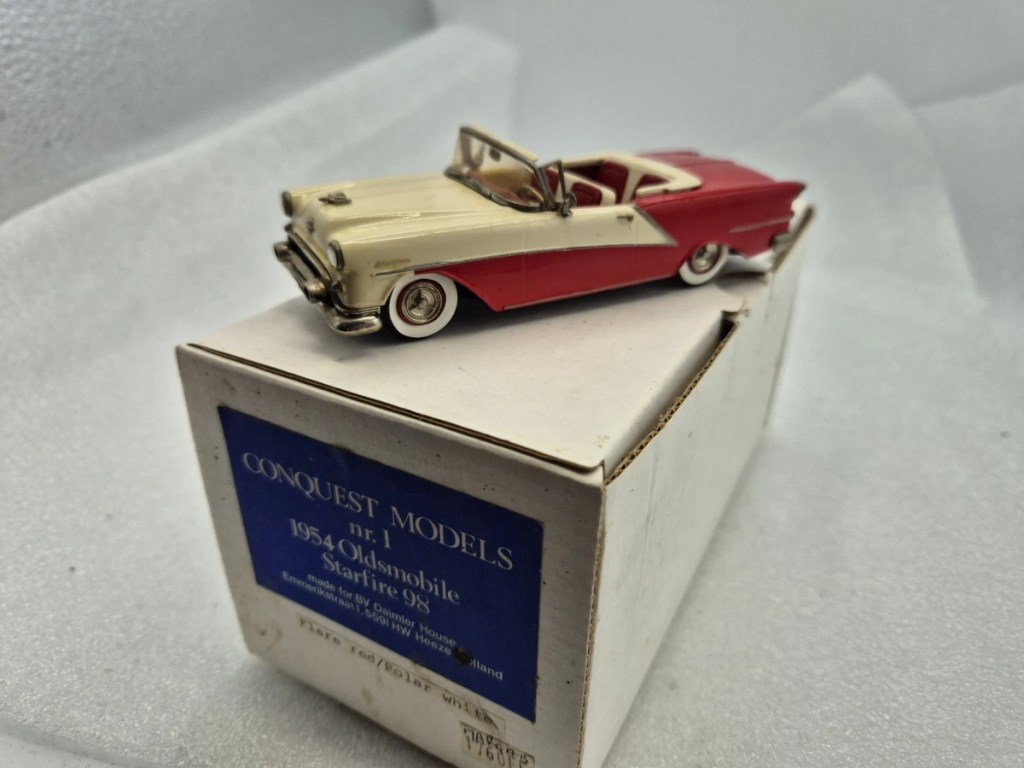
A few months after the release of the 1957 Chrysler, the first model in the Conquest range was introduced: the 1954 Oldsmobile 98 Starfire Convertible.
This miniature takes us back to a time when the Oldsmobile brand held a strong position within the GM empire. Designed by Harley Earl, the car featured innovations such as a panoramic windscreen, small rear fins, and a V-shaped chrome side trim line, all representative of the aerodynamic styling trend of the period. The chassis shared its basic structure with the Oldsmobile 88, but featured a longer wheelbase. The Rocket V8 engine was upgraded, with displacement increased to 5.3 litres and output raised to 185 hp. The four-speed automatic transmission remained unchanged compared with its predecessor.
In 1954, the Oldsmobile 98 was available in three body styles: a four-door sedan, the two-door Holiday Coupe, and the Starfire Convertible. The latter was chosen by Conquest for reproduction.
The Starfire was, in fact, the most expensive model in the range. In 1954, a total of 93,375 Oldsmobile 98s were produced, of which only 6,800 were Starfires.
For the Conquest range, developed by Henk in collaboration with SMTS, he aimed for the highest possible standards of quality. Though made in white metal, these models were far from crude, and their proportions were captured extremely well. This was the result of extensive measurement work, based on books and period advertisements featuring the real cars. It was also thanks to the excellent work of the pattern maker, combined with SMTS’s highly professional standards in casting, painting, and final production.
Each model featured chrome parts, fully detailed dashboards, trim closely replicating the real prototype, separate door handles, clear resin headlights and red tail lights, photo-etched windscreen wipers, number plates, and numerous other small details. The earliest Oldsmobiles were painted in single-tone colours, while later releases were offered in various two-tone combinations.
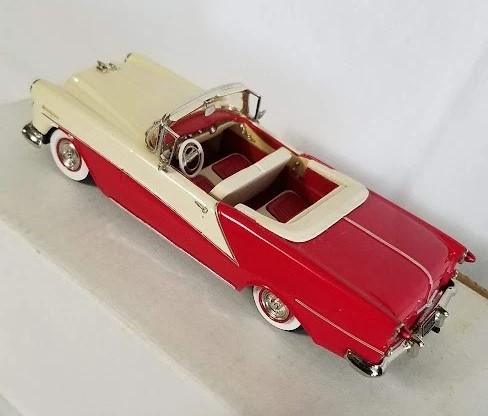
The baseplates were rather plain, but few collectors paid much attention to underside details. Here, customers could find information including the model name, catalogue number, range name, and the manufacturer’s name, SMTS. Additional details such as aerials, rear-view mirrors, mascots, and other delicate components were supplied in a separate small bag and were intended to be fitted by collectors displaying their models in large cabinets.
As for packaging, Daimler House initially used white cardboard boxes, later switching to blue ones. During the early years, there were no leaflets, collector cards, or advertising inserts inside, which makes it difficult today to determine exactly how many units of each model were produced.
At the same time, Henk van Asten’s spectacular models were undeniably expensive. In the early 1990s, for example, the average retail price for a Conquest or Madison model was around £80–90, while Brooklin retailed at approximately £30 and Western Models at around £50.
The brass master for the 1954 Oldsmobile Starfire was created by Ian Playfoot. The first editions were produced in Blue Metallic and Willow Green Metallic. Later editions appeared in Flare Red/Polar White and Capri Blue/Polar White.
Because SMTS was unable to increase production capacity quickly enough, they could not initially provide Henk with sufficient quantities. As a result, one batch of Starfires was shipped to the Netherlands in kit form to be painted and assembled by two model builders employed by one of Henk’s acquaintances. The quality was very good, but their pace was rather slow.
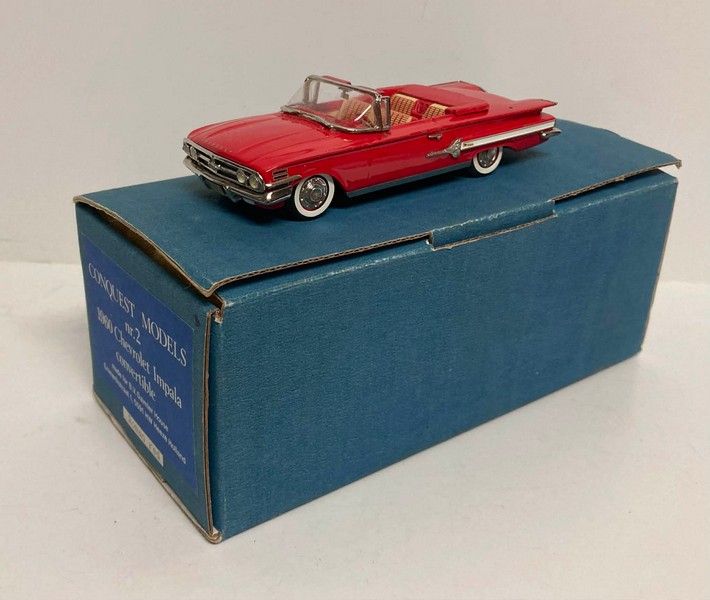
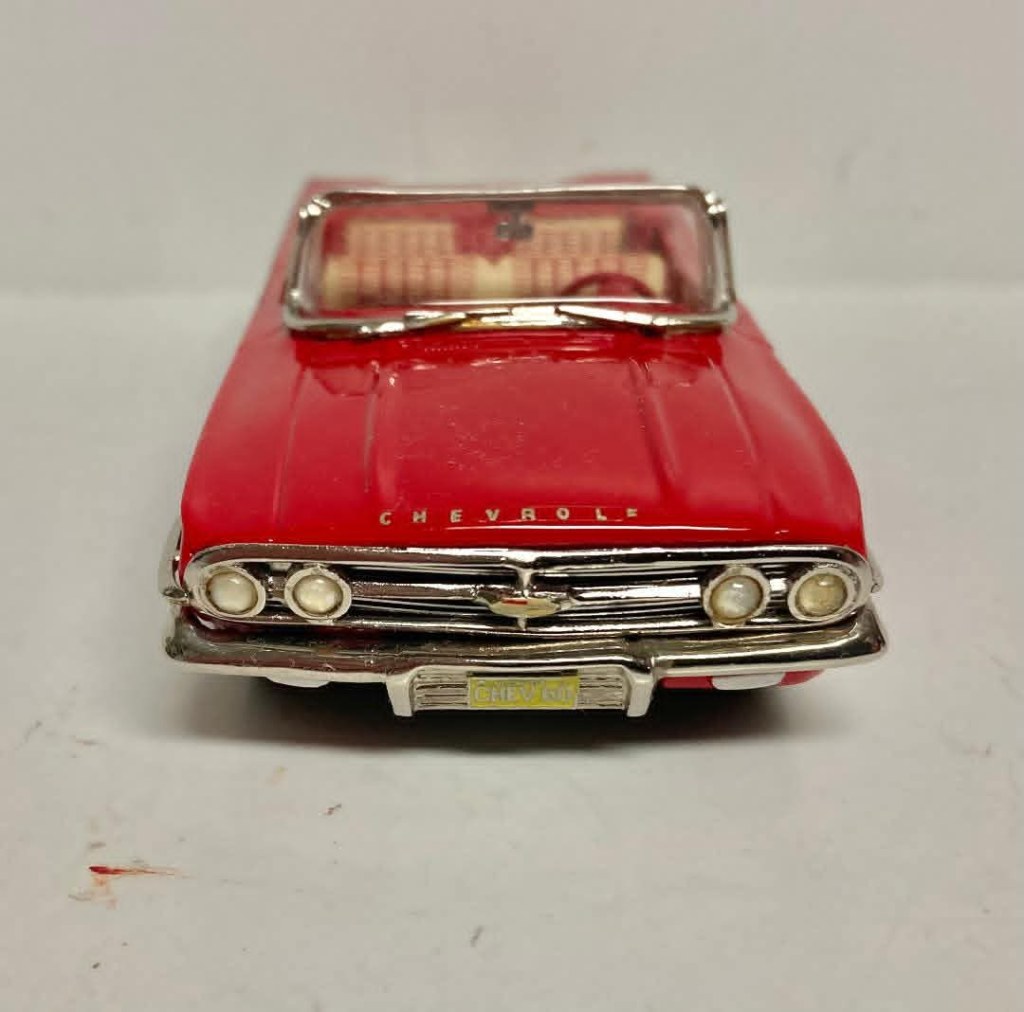
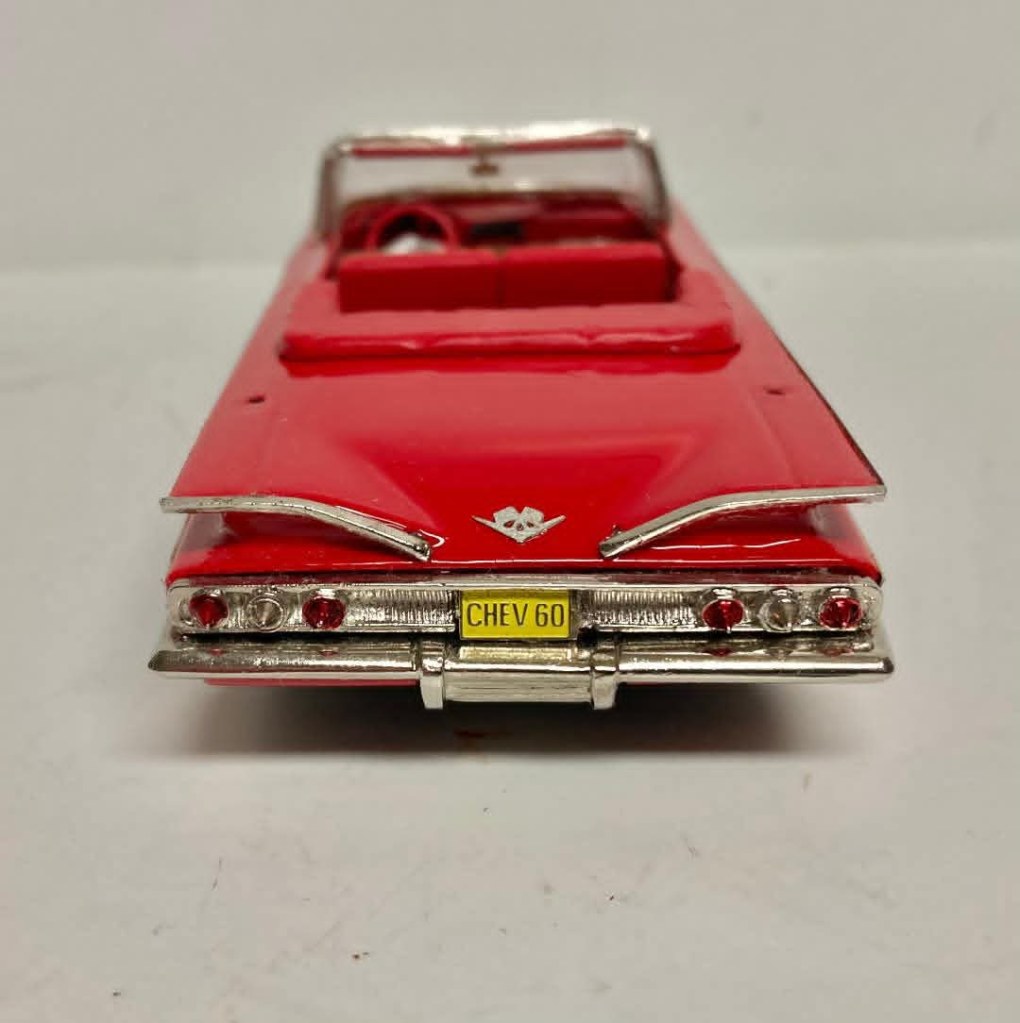
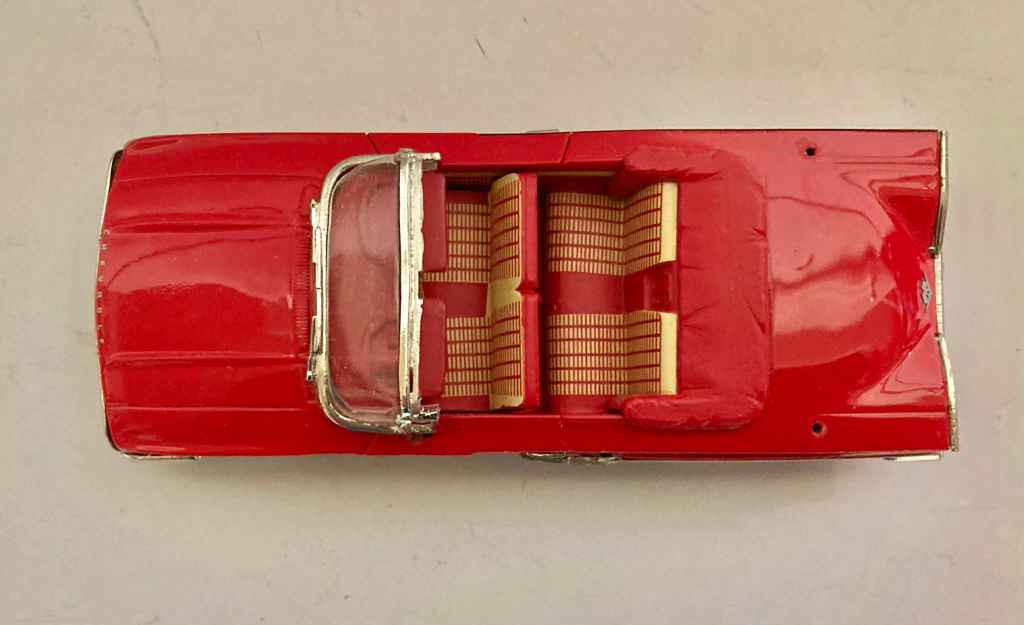
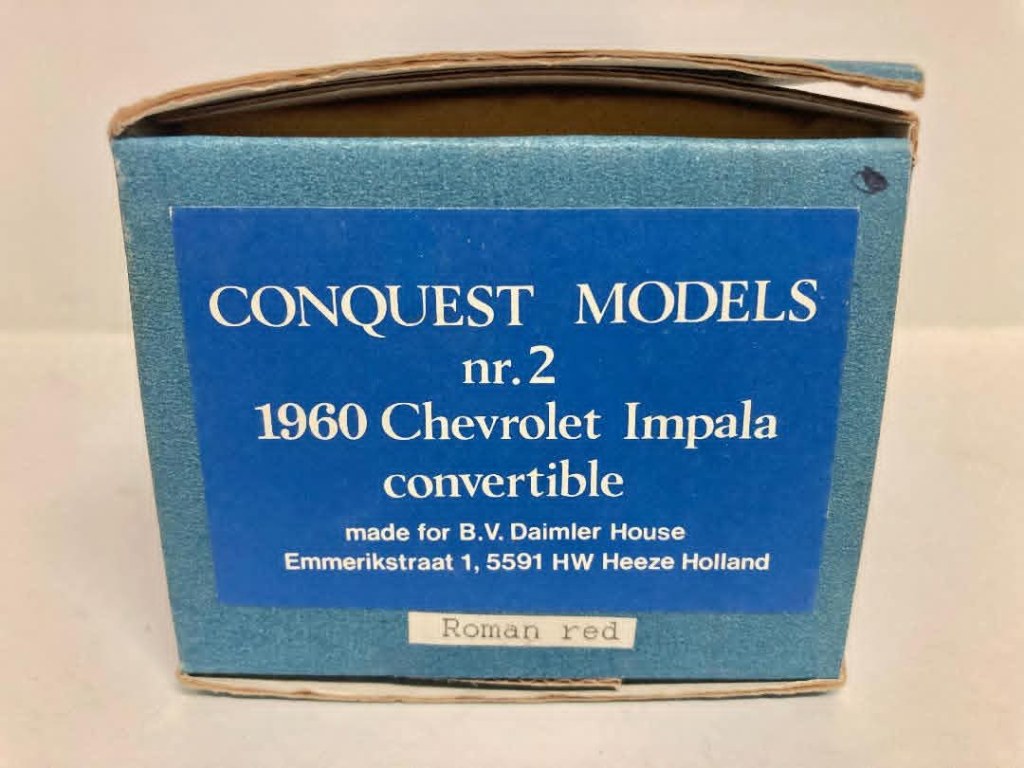
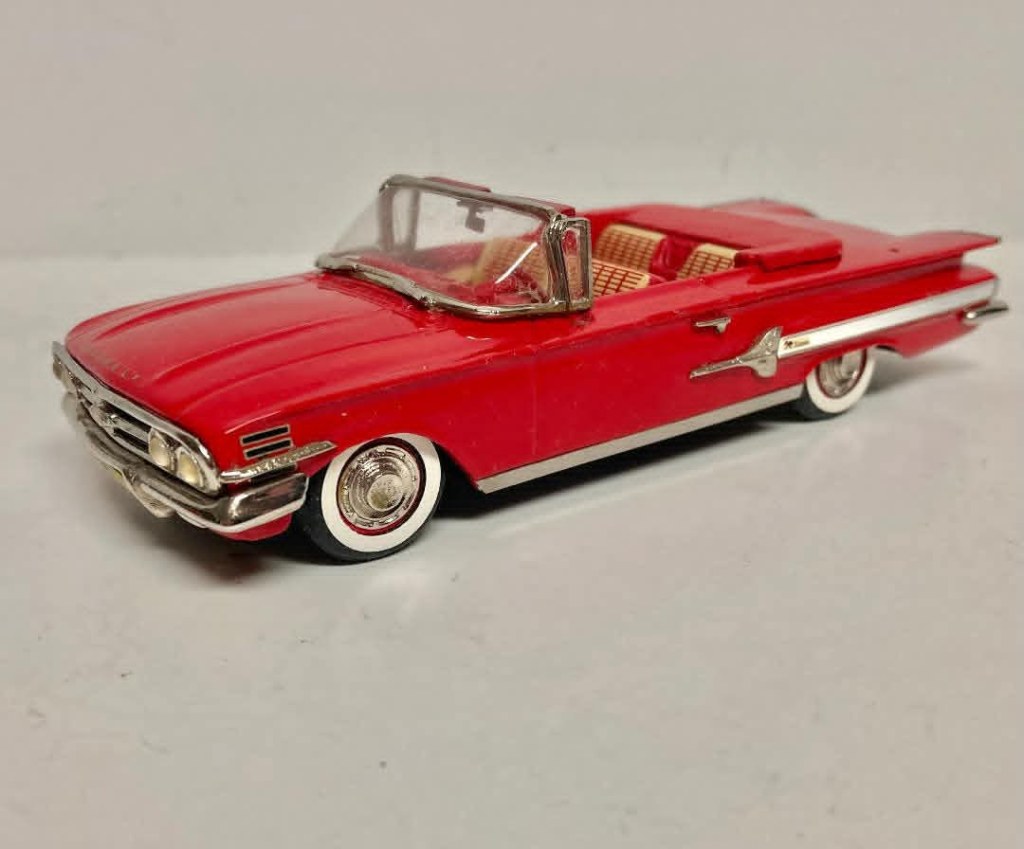
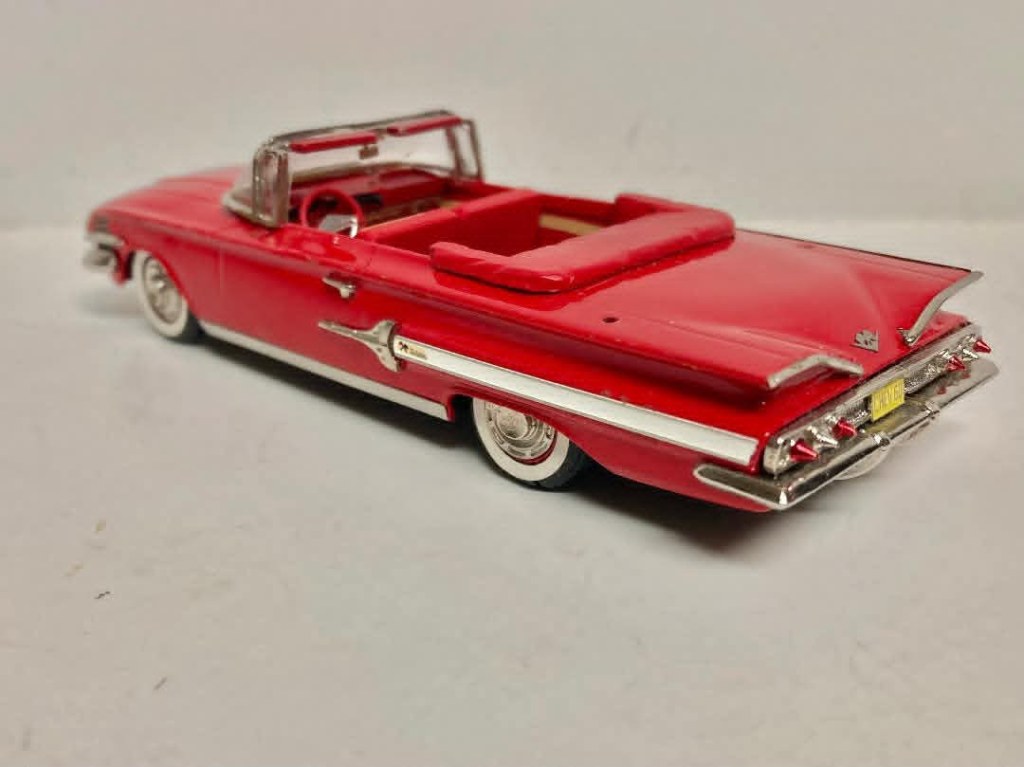
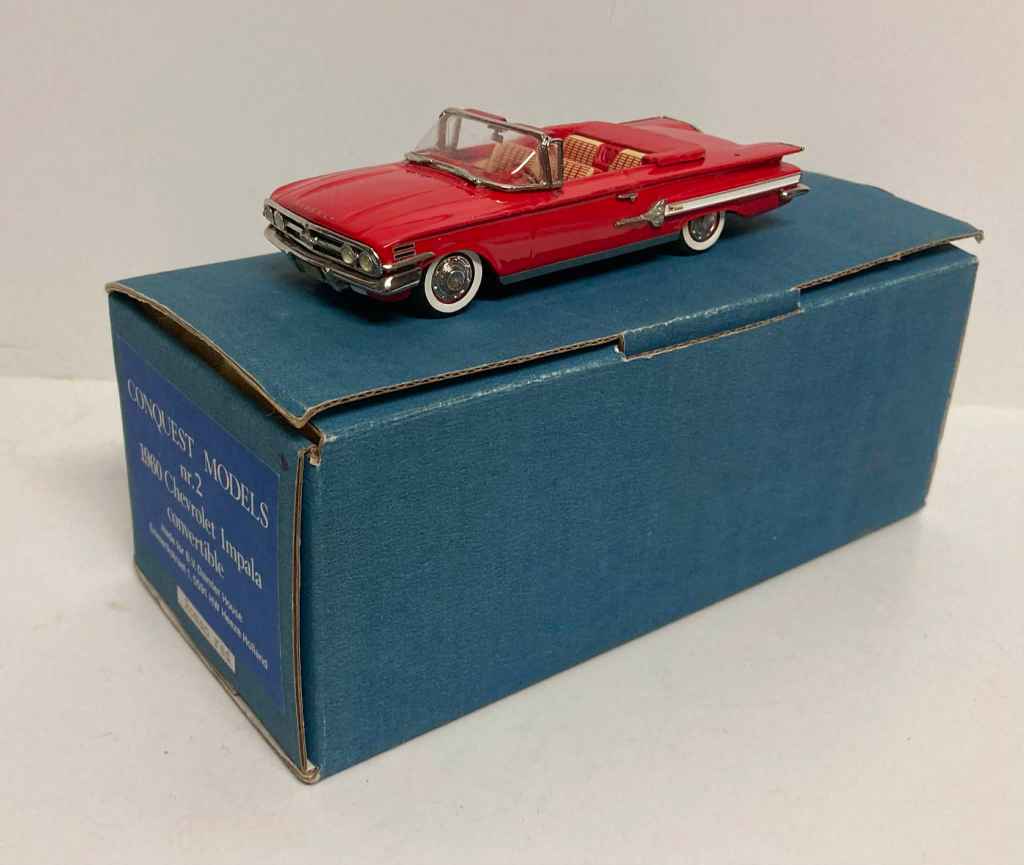
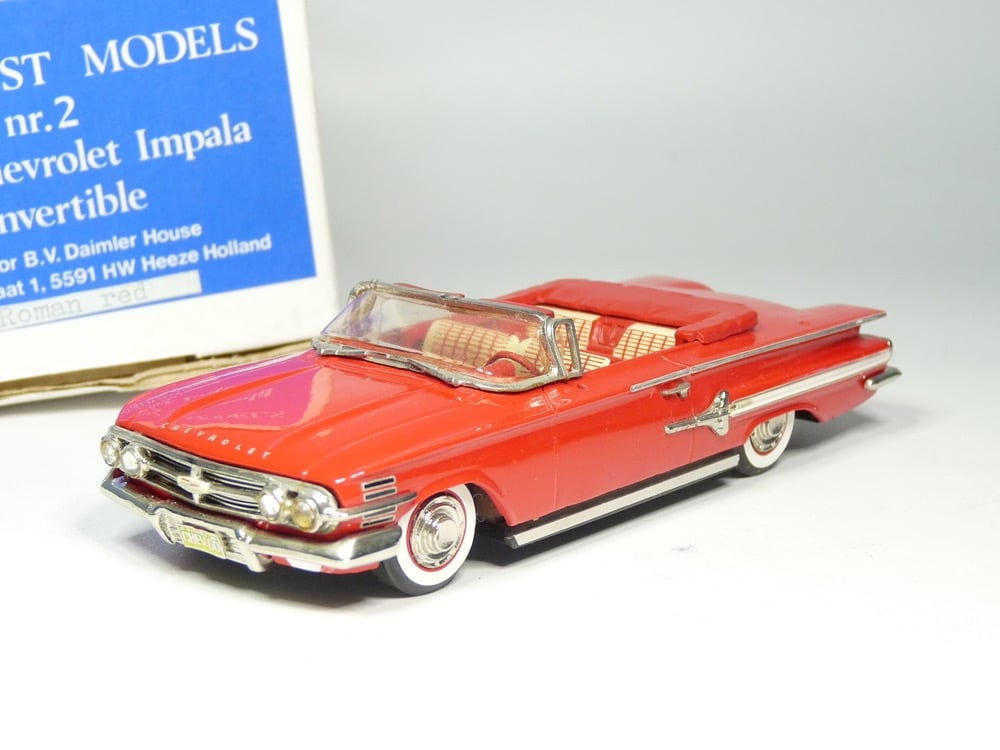
Nr. 2, the 1960 Chevrolet Impala Convertible Top Down, was released in 1988. This model reflects the new design trends that emerged after the 1958 Eisenhower recession, when manufacturers began to move away from Detroit baroque styling and increasingly embraced aviation-inspired motifs. The 1960 Impala featured elegant rear fins and twin headlights integrated into the radiator grille. Engine options included a 3.9-litre six-cylinder producing 135 hp, as well as several V8s, the most powerful of which delivered 335 hp. The Impala became the most expensive Chevrolet, although Chevrolet remained the most democratic—that is, lowest-priced—brand within the GM corporate line-up, and naturally even the most powerful Impala never approached Cadillac or Buick pricing.
The model was available in Roman Red, Ermine White, and Horizon Blue. From Nr. 2 onward, Fa. Daimler House began offering some models in alternative versions. Naturally, the convertible top-up version was also designed, although production only began in 1991. For this variant, catalogue number Nr. 2A, the available colours were Ermine White and Red Top.
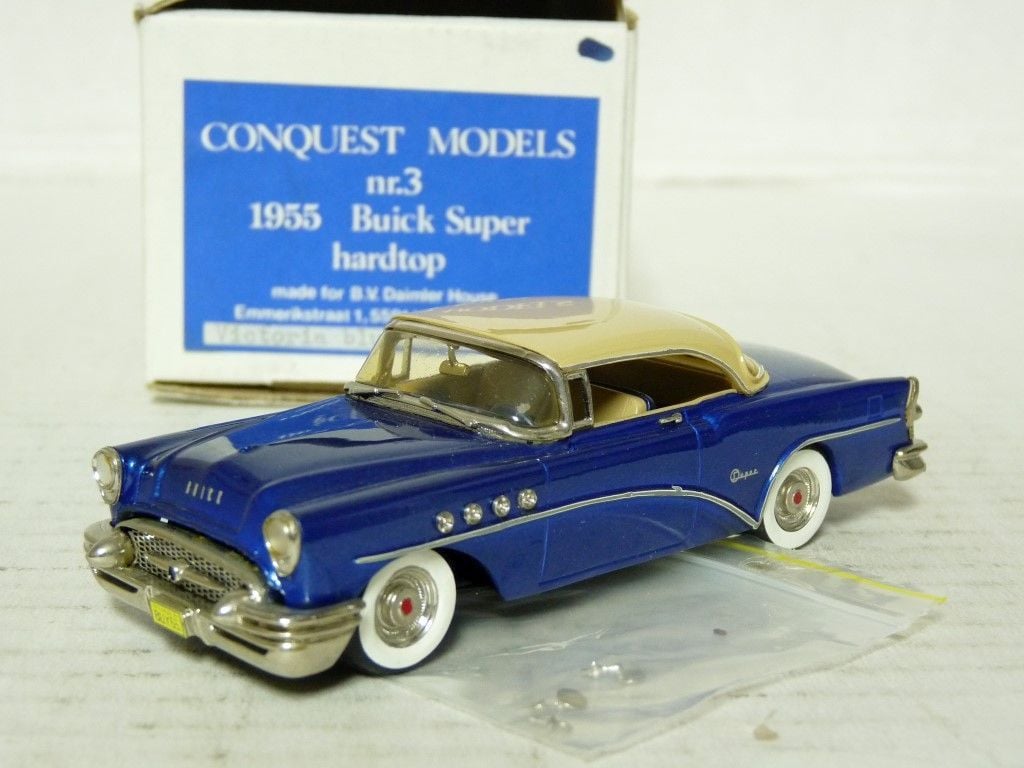
Nr. 3, the 1955 Buick Super Riviera, was added to the Conquest range in 1989. These remarkable hardtops helped Buick secure third place in production volume in 1955 – an excellent result – and, strictly speaking, hardtop versions enjoyed much stronger customer demand than traditional sedans. In fact, the 1955 Buick shared the C-body platform with other GM divisions, namely Oldsmobile and Cadillac. For example, the Oldsmobile 98 previously released in the Conquest range shared many structural features with Buick, although the styling was, of course, entirely different.
The model, based on a master created by Pete Kenna, became highly successful, and in the future this pattern would be used for other mid-1950s Buick versions. Colour variants included Cherokee Red/Carlsbad Black, Victoria Blue Metallic/Cameo Beige, and the three-tone Metallic Windsor Grey/Dover White with Carlsbad Black roof.
From 1990 onward, Henk van Asten significantly expanded his business. First, SMTS was able to increase production volumes and provide Daimler House with approximately 200 units per month. As a consequence, instead of introducing just one model per year, three to four models were now being added to the range annually. Despite the high prices, demand continued to grow steadily, and Henk ultimately decided to leave his teaching career and concentrate entirely on the model car business.
Daimler House launched a separate Conquest series devoted to European cars, while Madison Models were no longer positioned as a cheaper alternative to Conquest. As a result, Madison acquired all the masters of the Conquest range, and there were no meaningful differences between them anymore. Conquest and Madison nevertheless continued as separate ranges of American cars from the 1930s to the 1960s, without duplication between the two ranges.
At the same time, Daimler House also became a dealer for other white metal brands such as Kenna, Goldvarg, and Motor City USA.
Initially, Henk did not equip his miniatures with whitewall tyres, but approximately a year after production began he started using circular white decals. These were replaced in 1990 when a special master was created, enabling SMTS to fit models with proper whitewall tyres. There were two types of whitewalls: one for 1950s models and another for 1960s models.
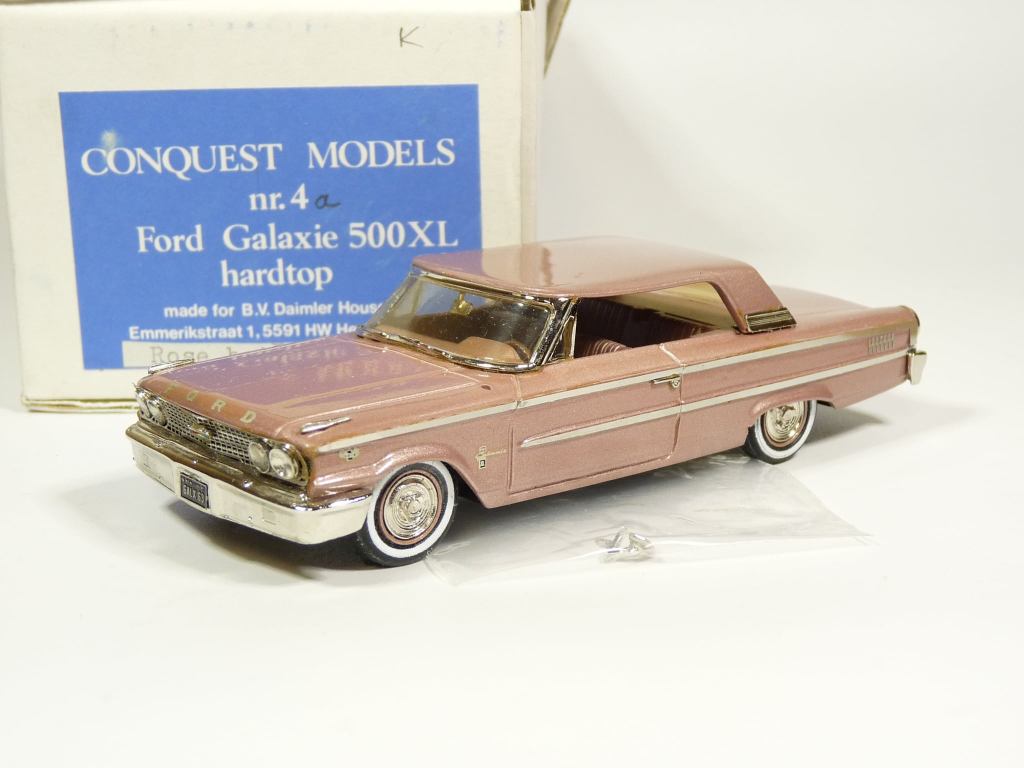
1990 became the first fully busy year for Daimler House, when four models were added to the Conquest range: Nr. 4, the 1963 Ford Galaxie 500 XL Hardtop; Nr. 4A, the Convertible; Nr. 5, the 1954 Oldsmobile 98 Holiday two-door Hardtop; and Nr. 6, the 1957 Imperial Crown four-door.
With the Galaxie 500 XL Hardtop and Convertible, Henk finally turned his attention to another major corporation besides GM, namely Ford Motor Company. By the early 1960s, the full-size Galaxie range had almost replaced the Fairlane. The 1963 model chosen for reproduction did not differ dramatically from the previous 1962 version. The 500 XL versions were available with a 6.4-litre V8 producing 300 hp and represented the most powerful versions in the 1963 Galaxie range. The styling was relatively restrained yet very elegant, with large round tail lights reminiscent of jet engine exhausts. The convertible version was called the Sunliner, while the hardtop was known as the Club Victoria. Nr. 4 was available in Rose Beige Metallic and Oxford Blue, while Nr. 4A came in Rose Beige Metallic and Heritage Burgundy. These models were so highly detailed that even the bolts on the bumpers were visible.
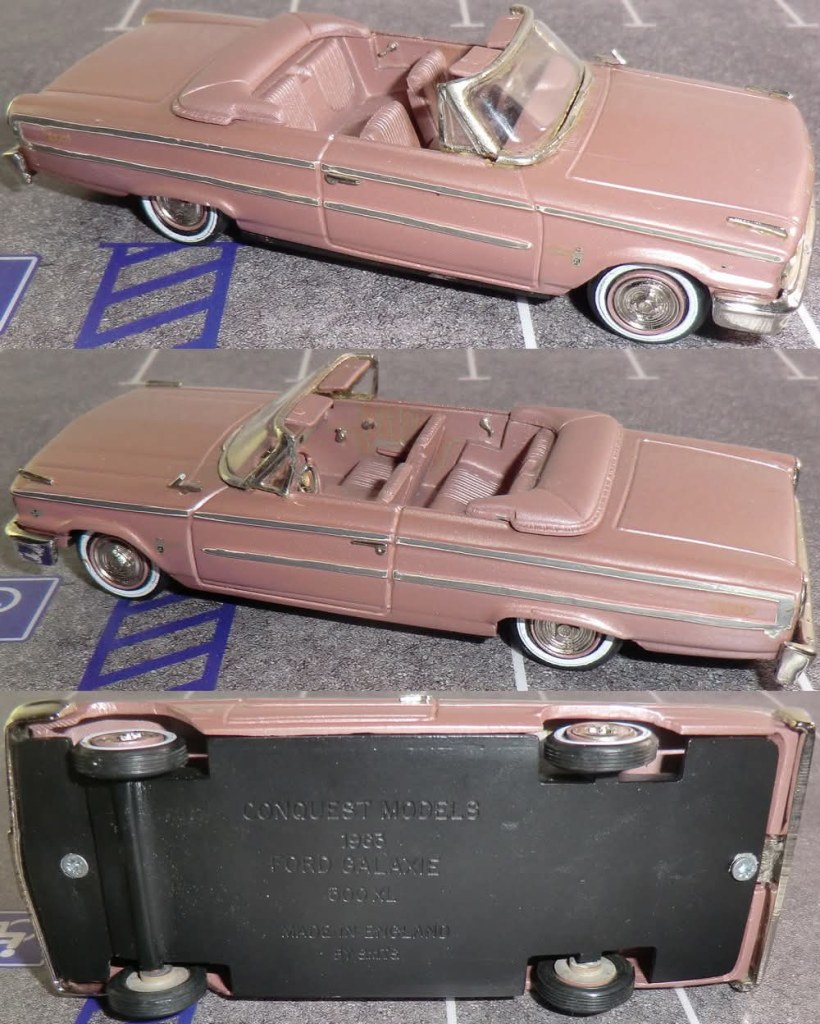
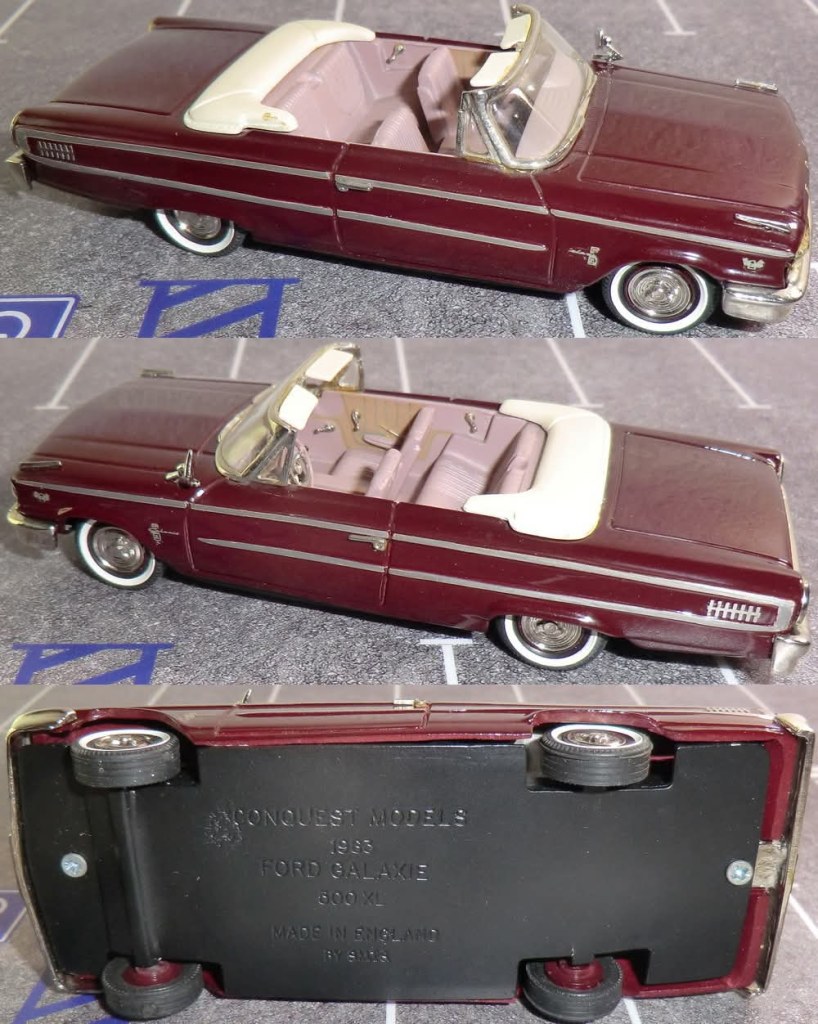
The 1963 Galaxie proved highly suitable for modelling, and a year later Henk added Nr. 9, the Country Squire Station Wagon, to the range. Incidentally, the Galaxie also competed successfully in NASCAR, and many years later SMTS reused these patterns for their Racing Line series.
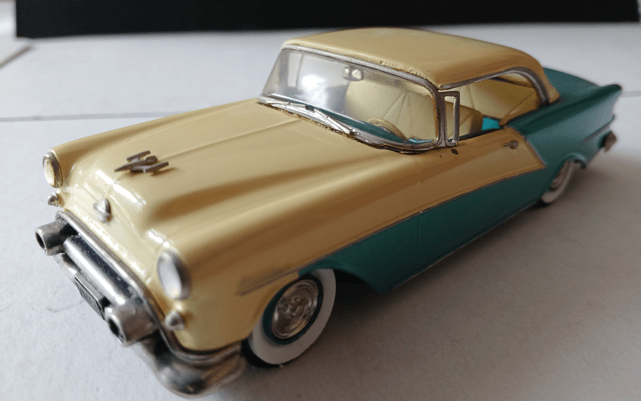
Nr. 5, the 1954 Oldsmobile 98 Holiday two-door Hardtop, was one of the previously mentioned cars in this family and a logical companion to Nr. 1. Several colour variations were released: Willow Green Metallic/Saratoga White, Turquoise Metallic/Maire Cream, and a special edition for E.W.A. Miniature Cars USA painted in Turquoise Metallic/Polar White. The Oldsmobile 98 range would have been almost completely covered after the later introduction of Nr. 19, a four-door Holiday hardtop.
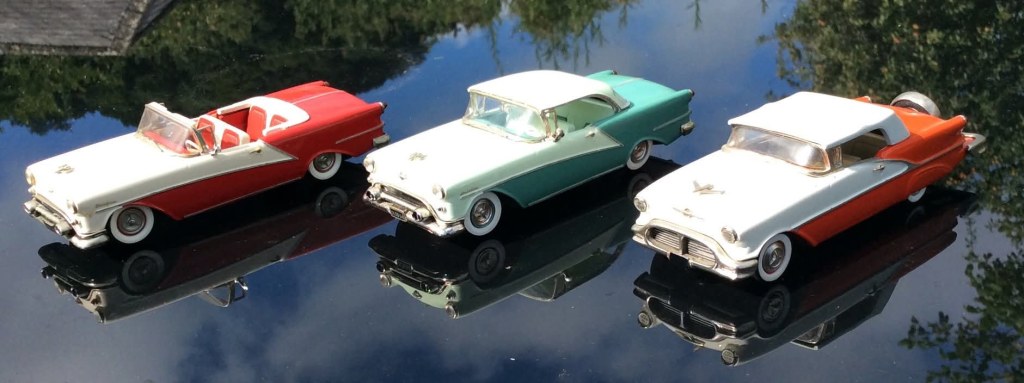
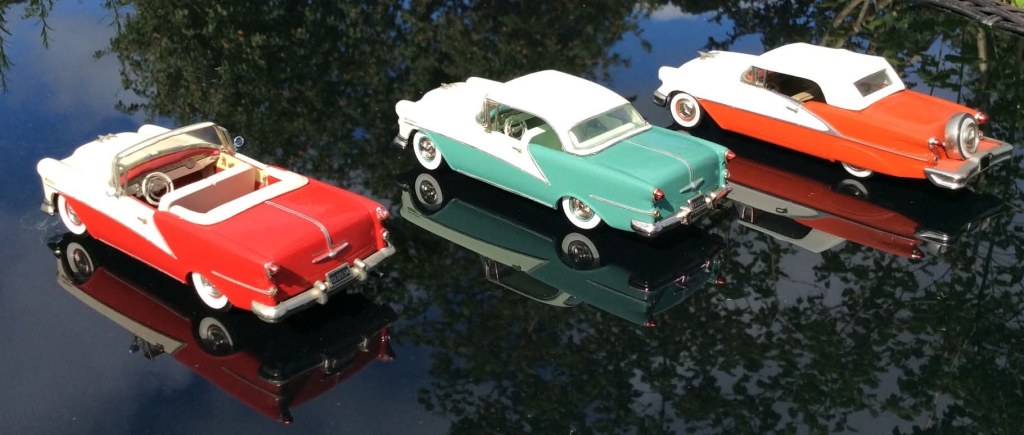
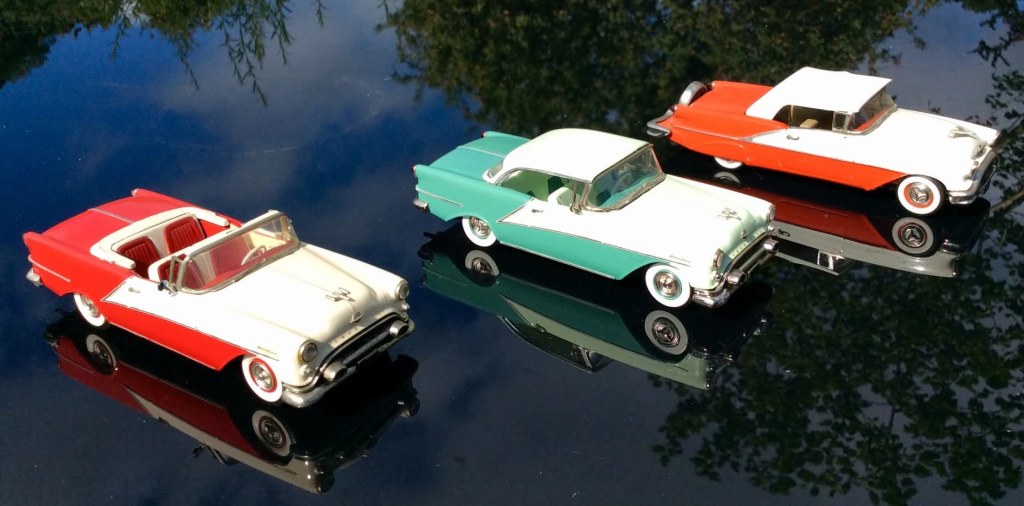
Photos by Paul Friend
Nr. 6, the 1957 Imperial Crown four-door Southampton Hardtop, reminds us of a time when Chrysler Corporation maintained its own premium marque, just as GM had Cadillac and Ford had Lincoln. The 1957 model represented the second generation of Imperial, with the Crown designation applied to hardtops. Virgil Exner created a new styling direction called “Forward Look,” which was fully embodied in the new Imperial. Here he combined two distinct design inspirations: jet aircraft forms and elements drawn from 1930s vintage cars.
The car was equipped with a 6.4-litre V8 producing 325 hp, a three-speed automatic gearbox, and Torsion-Aire front suspension. Most of its details were unique and not borrowed from other Chrysler Corporation products. Customers, who could choose from 121 exterior and interior colour combinations, greatly appreciated the new model, purchasing approximately 37,000 units in 1957 – the same number sold by Lincoln.
In addition to hardtops, the 1957 Imperial range also included standard saloons and convertibles. Many years later, taking advantage of this fact, Henk expanded the 1957 Imperial selection with Nr. 33, a two-door Hardtop, and Nr. 34, the Convertible.
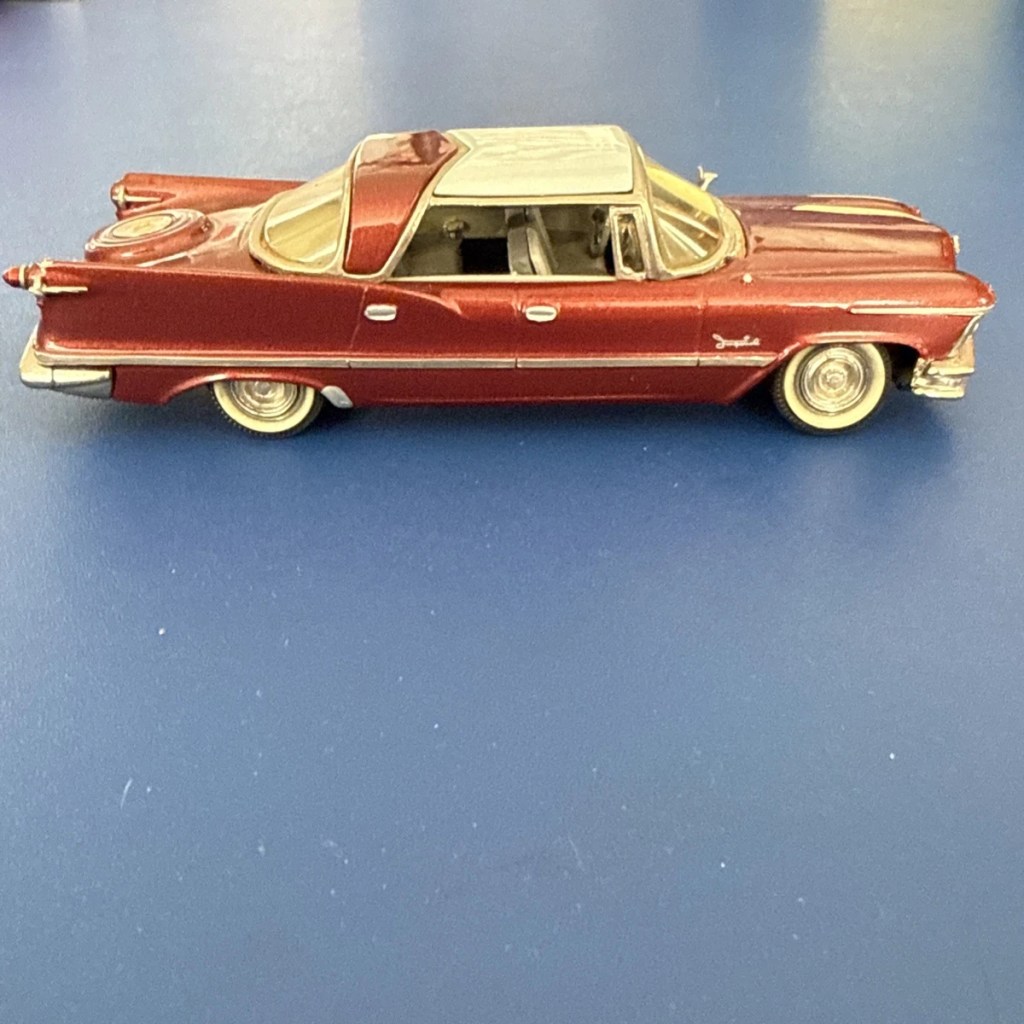
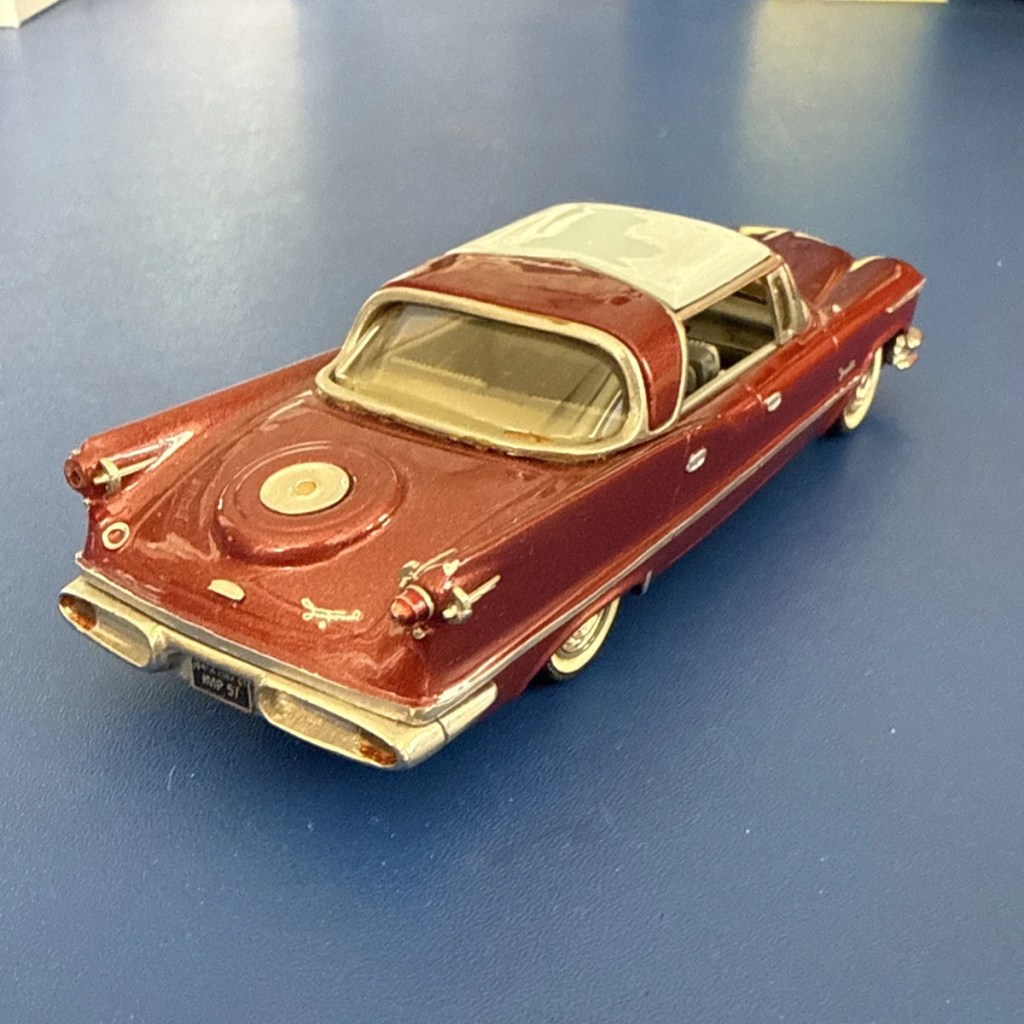
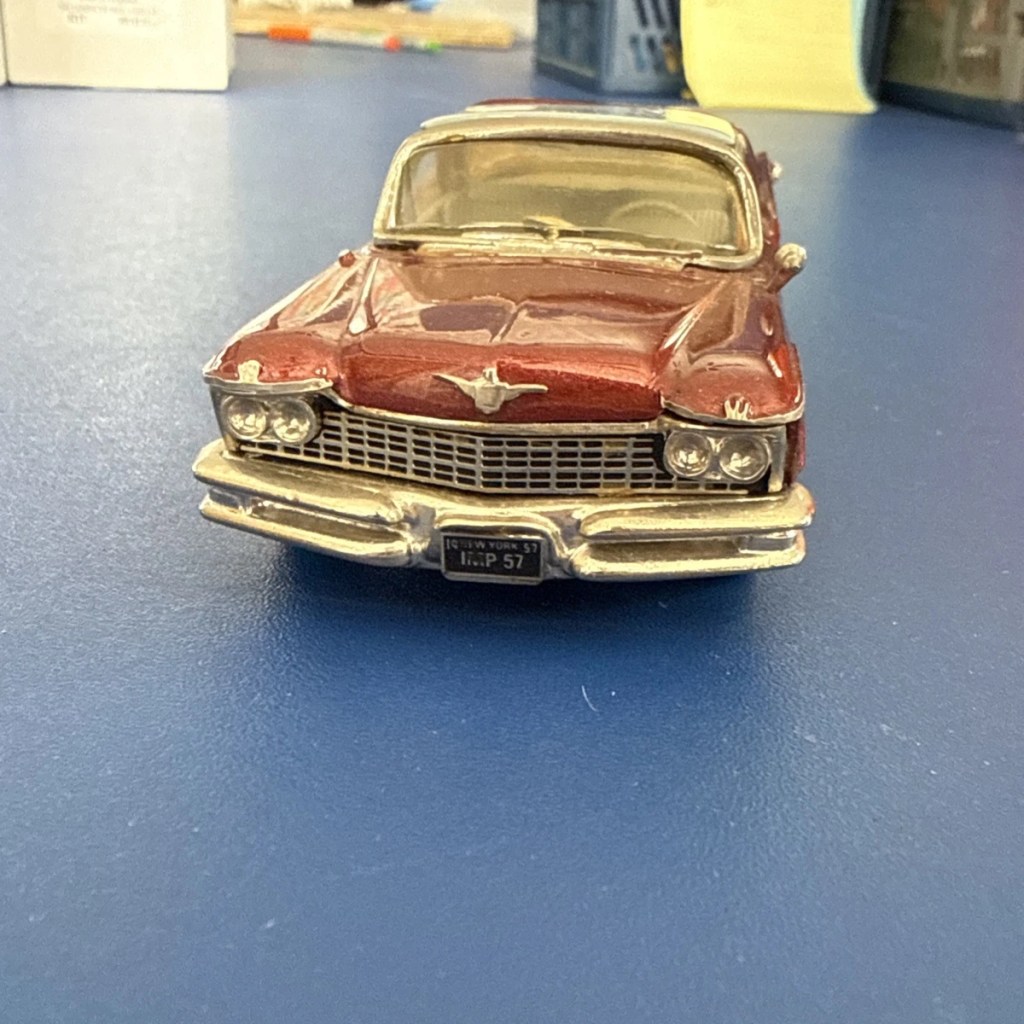
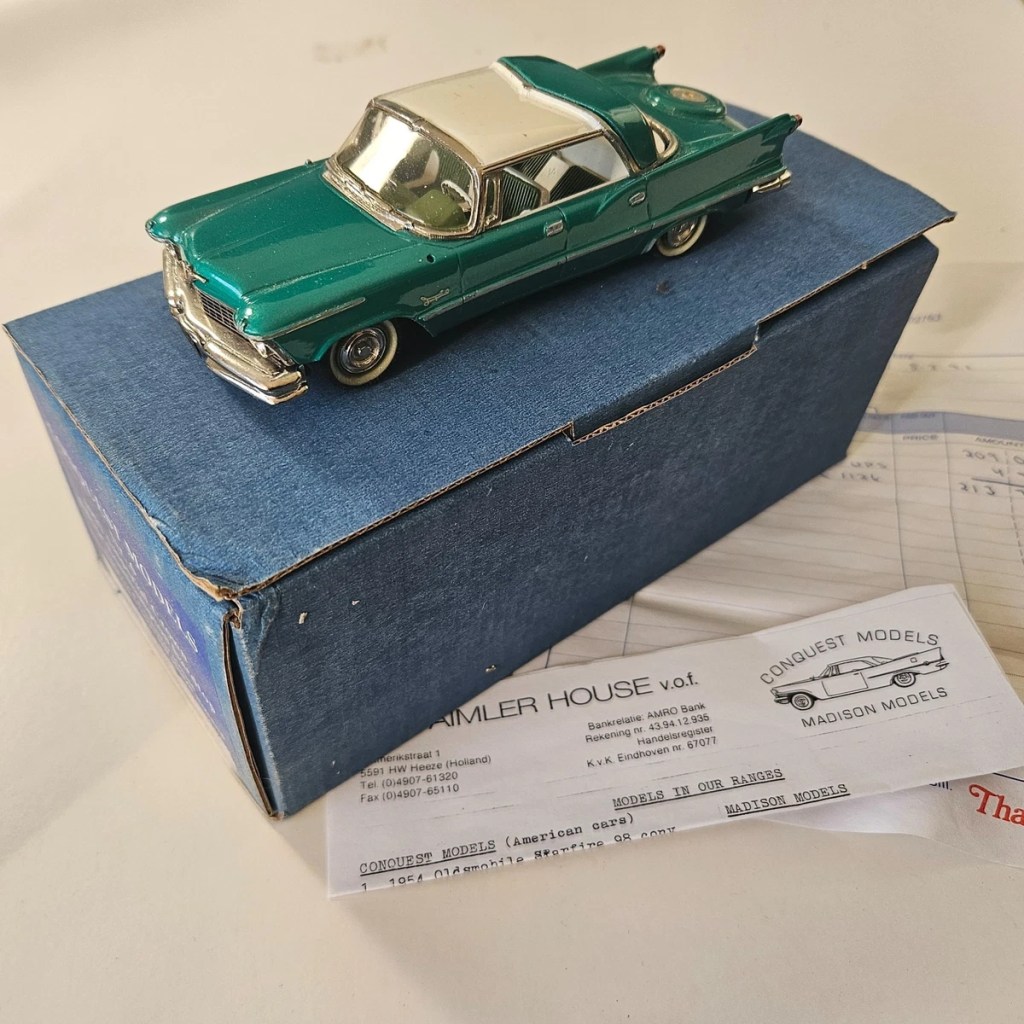
For Nr. 6, three colour combinations were selected: Champagne Gold/Charcoal Grey Metallic, Deep Ruby Metallic/Mist Grey, and Parade Green Metallic/Cloud White. These truly spectacular miniatures featured extensive chrome detailing, and all window surrounds were chromed. Even the Imperial emblem was embossed on the seat backrests. The front seat consisted of four separate pieces, while the rear seat was made up of three.
Many thanks to Henk van Asten for answering questions, and to Albert Kopans and Tim Musselman for photographs of the models from their collections.


2 pensieri riguardo “The story of Conquest Models (part 1: 1987-1990)”