
Come anticipato, pubblichiamo uno studio inedito sul marchio norvegese Minicar 43, a cura di Fedor Eliseev, che fa da ideale pendant alla storia di Conquest apparsa di recente su PLIT. L’attività di questi marchi conferma l’intensa collaborazione intercorsa soprattutto negli anni ’80-90 fra aziende continentali (soprattutto del nord Europa) e gli artigiani britannici del metallo bianco. [David Tarallo]
text by Fedor Eliseev
When I started exploring white metal manufacturers, I noticed that many companies had never been mentioned in articles and books. In my opinion, they can be divided into three groups. The first consists of well-known names such as Brooklin Models, SMTS and Western Models. The second includes more specialised companies known primarily in England but not abroad, such as Crossway Models, Pathfinder Models, Kenna Models, Spa Croft Models, etc. The third group is represented by very little-known companies from all over the world whose production volumes were never particularly large. There are many names in this group, and I hope that someday these pages of history will become available to everyone interested in hand-built models.
This article is about one of the companies that is not very well known today: Minicar 43 from Norway.
After World War II, sales of motor cars in Norway were restricted until 1960. As a result, there were not many cars on the country’s roads. Geir Andreassen spent his childhood during these years. Geir was fascinated by cars, and this passion has never faded. He was very happy when his father was finally able to buy a private car: a Ford Anglia Estate.
After graduating from university, Geir Andreassen became an architect and started working on many projects in Oslo. Cars and their history remained his hobby. As a motoring enthusiast, Geir also began collecting scale models. He realised that this was the best way to own examples of all the marques he dreamed about if collecting real cars was not possible.
Some time later, Geir and his friends established a collectors’ club in Oslo. At that time, there were not many hobby shops in Norway, and collectors had very few opportunities to buy everything they wanted. Only those who could visit swap meets in other European countries had good sources for finding new items. Geir recognised this problem and, in July 1989, established his own company, Minicar 43. Strictly speaking, Minicar 43 was never a conventional store; it operated through mail order and local markets in Norway and partly in Sweden. Geir offered club members and other customers a huge selection of die-cast models such as Brumm, Eligor and Rio, as well as hand-built models from Brooklin, Western, Conquest, SMTS, Pathfinder and others.
At that time, some stores had begun commissioning manufacturers to produce special models. This provided a good opportunity for both sides to expand their business and increase sales. Geir therefore decided not only to sell standard models but also to commission special editions in order to attract attention in the marketplace. Naturally, his aim was to reproduce vehicles whose full-size prototypes had been sold in Norway and Sweden.
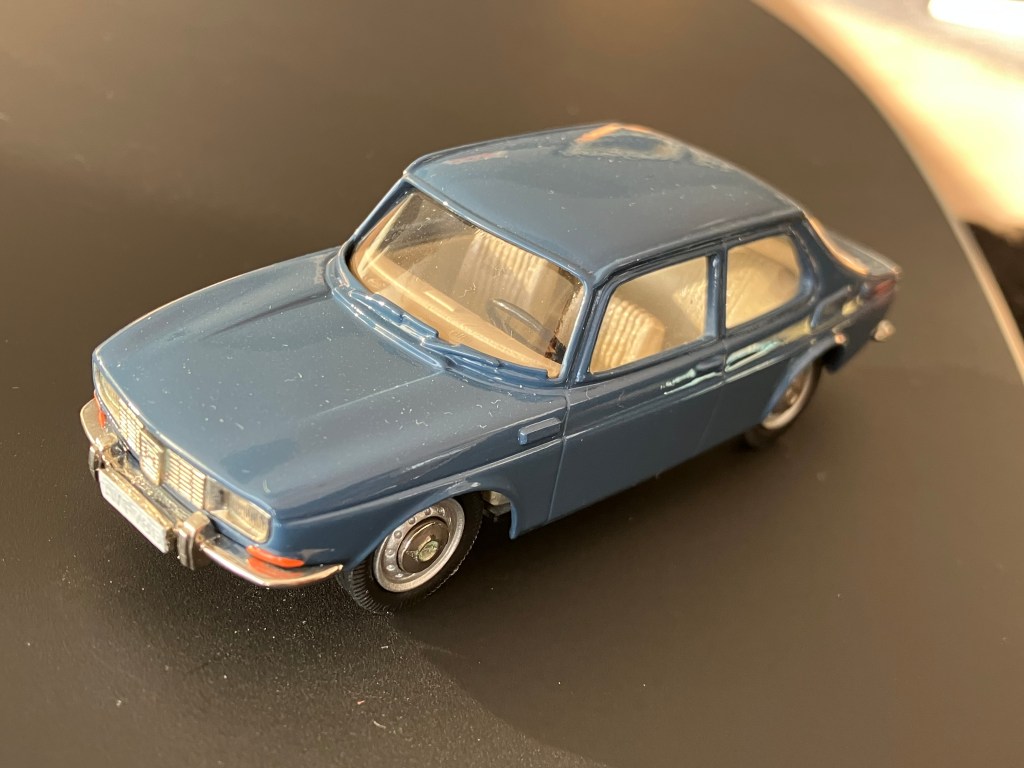
In November 1991, Minicar 43 released its first special edition: the 1968 Saab 99 2-door saloon by RobEddie (a sub-brand of Brooklin). Only 200 examples of the model, painted in Caroline Blue with a tan interior, were produced.
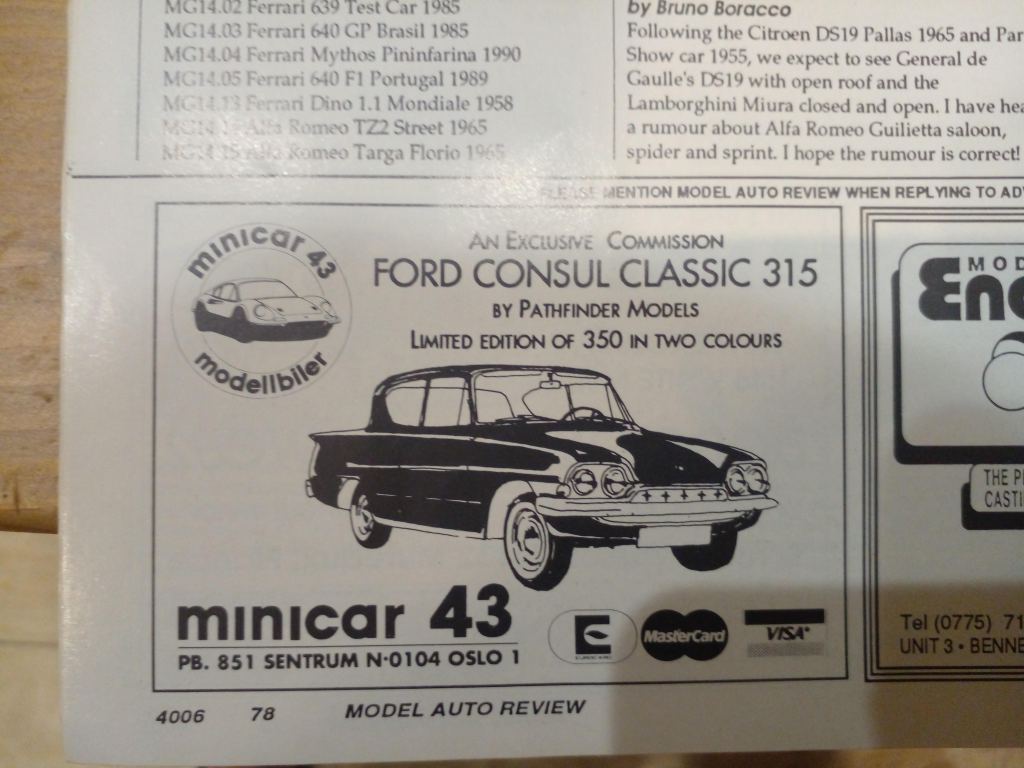
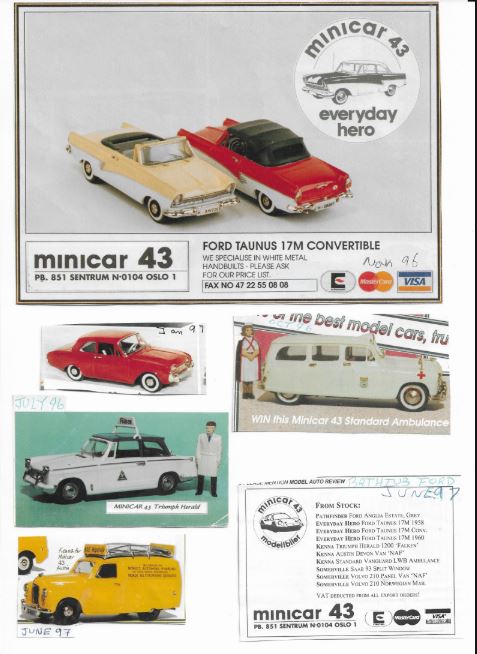
This venture proved very successful and brought attention to the small Norwegian company not only on the domestic market but also abroad. Geir placed an advertisement in Model Auto Review magazine, which led to increased sales. Until the end of Minicar 43’s activity, its advertisements and production programme were regularly published in MAR. Moreover, Geir donated several models as prizes for readers’ competitions.
In 1993, Minicar 43 commissioned two models. The first was the Volvo 544 of Tom Trana, winner of the 1963 RAC Rally. The model, carrying number 29, was based on a standard RobEddie release. A total of 300 examples were produced.
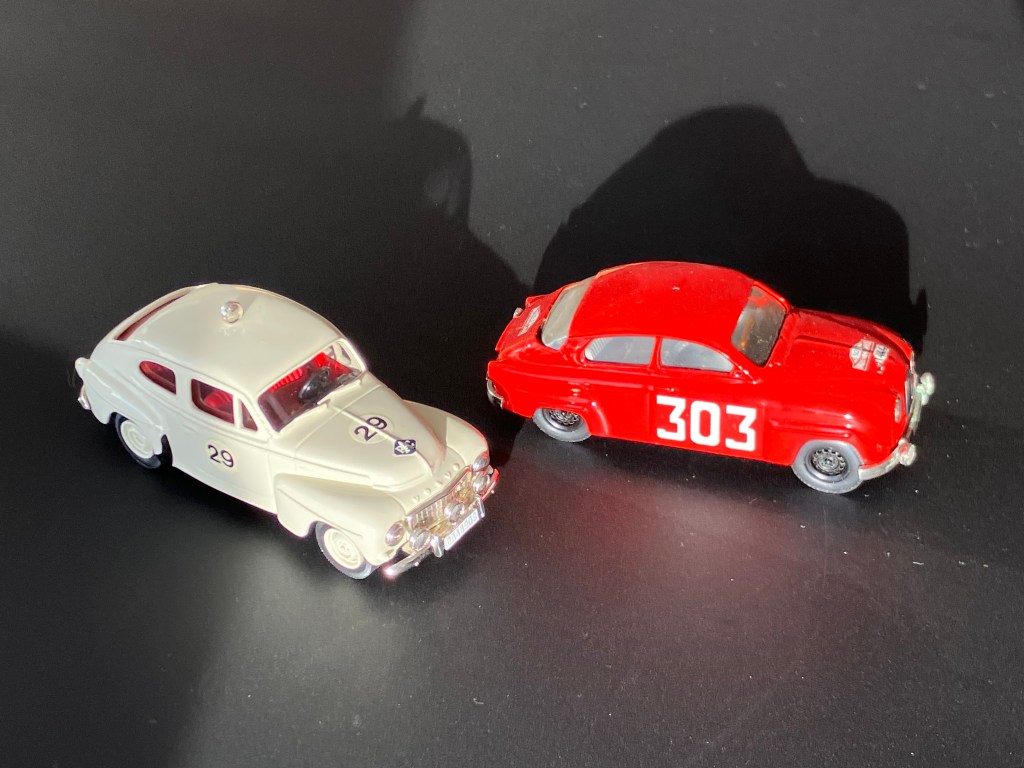
The second model was the Saab 96 of Erik Carlsson, which won the 1962 Monte Carlo Rally. Small Wheels (a sub-brand of Western Models) built only 100 examples of this superb model, commemorating one of Carlsson’s most important victories.
The next step for Minicar 43 was to commission not only special editions of standard models but also an original range produced exclusively for the company. Among all white metal manufacturers, Pathfinder was Geir’s favourite. Established in 1986 by Jeff and Sue Sharrock, the company produced attractive and finely finished miniatures that were capable of capturing a car’s character, even though the models themselves were relatively simple. For this reason, Geir chose Pathfinder as his principal production partner, and together they agreed to create a series of cars for Minicar 43.
Geir decided to concentrate primarily on British Fords because the marque was closely connected with his family. His father’s car had been a Ford Anglia Estate, while Geir’s own first car was a Ford Escort.
Another reason was that during the 1950s and 1960s the British and German divisions of the Ford Motor Company operated independently, and British-built Fords were sold throughout Europe, including Norway.
Naturally, Geir initially wanted to reproduce his father’s car, but Jeff and Sue persuaded him to begin with the standard saloon version.
The 1961 Ford Anglia 105E was released in June 1992. Introduced in 1959, the Anglia 105E became extremely popular, with approximately one million examples produced by 1967. Styled with American influences and featuring a reverse-raked rear window reminiscent of contemporary Mercury and Lincoln models, the 105E was equipped with a 4-cylinder 1-litre 39 hp engine and a 4-speed gearbox.
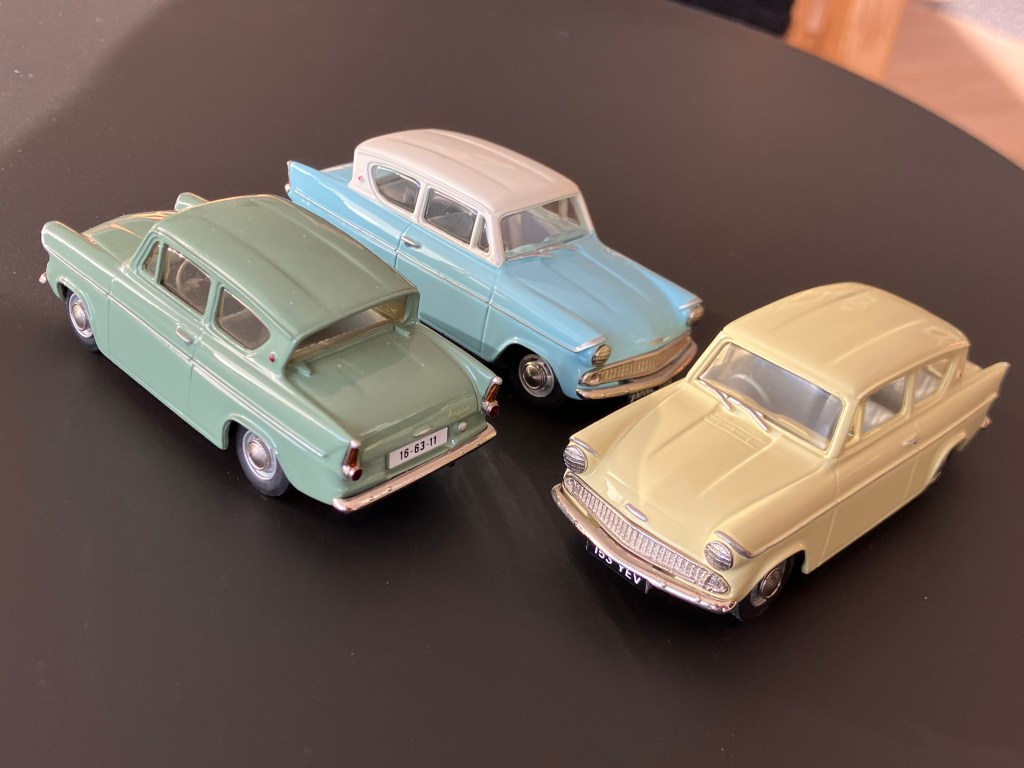
Such a famous car had, of course, already been modelled by die-cast manufacturers including Dinky Toys, Matchbox and Spot-On, but none of them had produced a truly accurate representation. Pathfinder therefore created the first precision model of this vehicle. Produced in typical Pathfinder style, it featured windscreen wipers and door handles cast integrally with the body. At the same time, details such as the chrome trim, rear lights and hubcaps were reproduced with considerable accuracy.
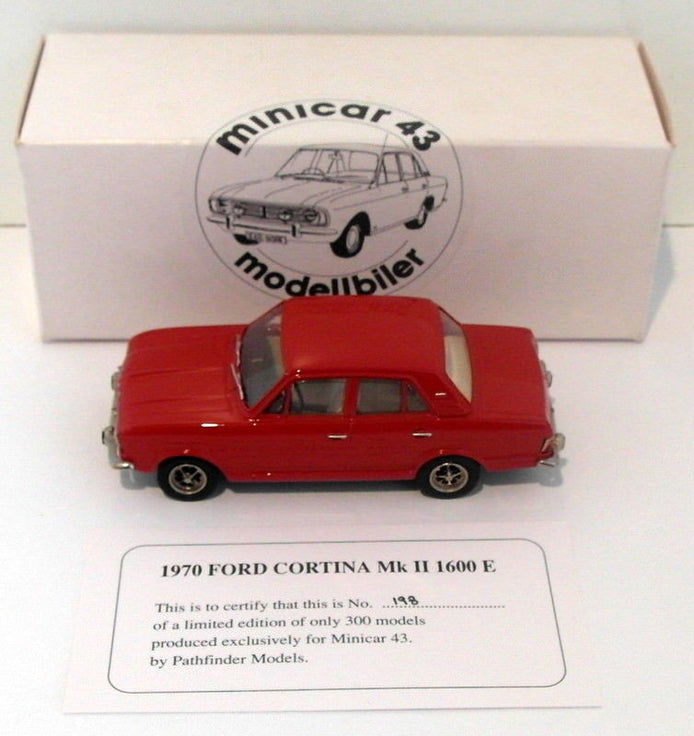
The models were packaged in white cardboard boxes bearing a round Minicar 43 logo depicting a copy of the car. Each model was accompanied by a certificate stating that it had been specially produced by Pathfinder exclusively for Minicar 43, together with the model’s full name and its individual number within the total production run.
As British Fords were sold not only in the United Kingdom but also throughout Europe, including Norway, Geir decided that every model should be offered in both right-hand-drive (RHD) and left-hand-drive (LHD) versions. The Ford Anglia 105E was produced in three versions: Green (Norwegian registration plates, LHD), Yellow (LHD) and Blue with a White roof (British registration plates, RHD). A total of 450 examples were produced.
The 1962 Ford Consul Classic followed the Anglia 105E in June 1993. This mid-sized car had been introduced in 1961 and was available as a 2-door or 4-door saloon, as well as a 2-door coupé. It was initially equipped with a 1.3-litre 54 hp engine, which was replaced in 1962 by a 1.5-litre 60 hp unit. Other features included a 4-speed manual gearbox with either floor-mounted or column-mounted gearshift, independent front suspension with MacPherson struts and disc brakes. Like the Anglia 105E, the Consul Classic’s styling was inspired by American cars and incorporated a reverse-raked rear window.
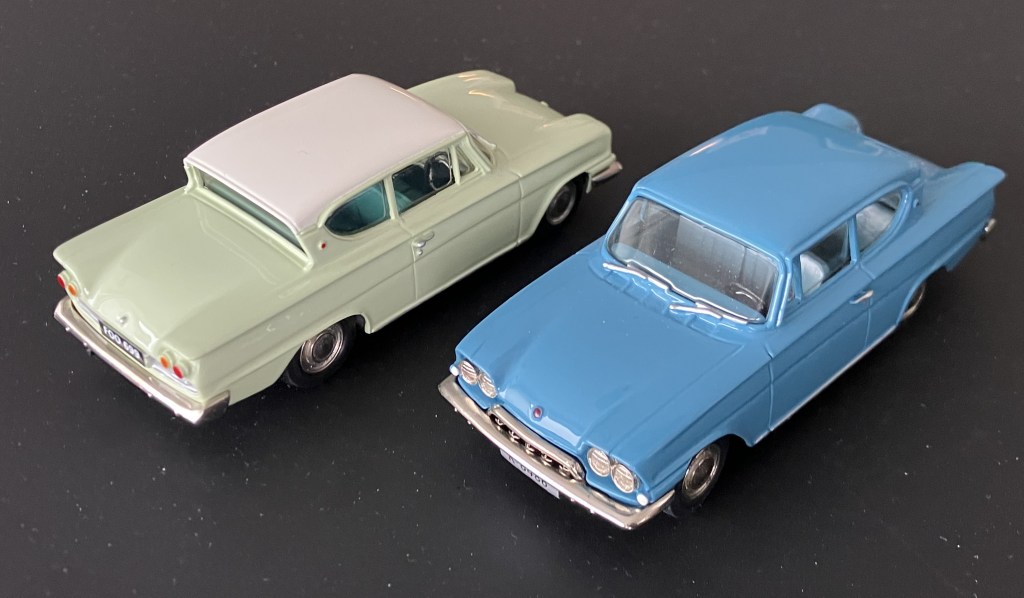
The car was available in Standard and DeLuxe versions, while export models were marketed as the Ford Consul 315. Production ceased in 1963 after approximately 111,000 units had been built, as the Dagenham plant shifted its focus to the Cortina.
For reproduction, Geir chose the 2-door saloon version. A total of 350 models were produced in two variants: Sky Blue LHD, representing a friend’s car, and Light Greenish Yellow RHD with British registration plates.
Ford Consul Classic production was succeeded by the Ford Corsair, introduced in 1964. Designed by the same team that had created the Cortina, the Corsair borrowed many of its components. The model was based on a long-wheelbase Cortina chassis and used the Cortina’s windscreen and side windows. Many body panels were also fundamentally similar. Initially fitted with a 1.5-litre Kent engine, the range was later expanded with 1.7-litre and 2-litre versions, including the V4 DeLuxe and V4 GT. The body styles available included 2-door and 4-door saloons, an estate and a convertible built by Crayford Engineering.
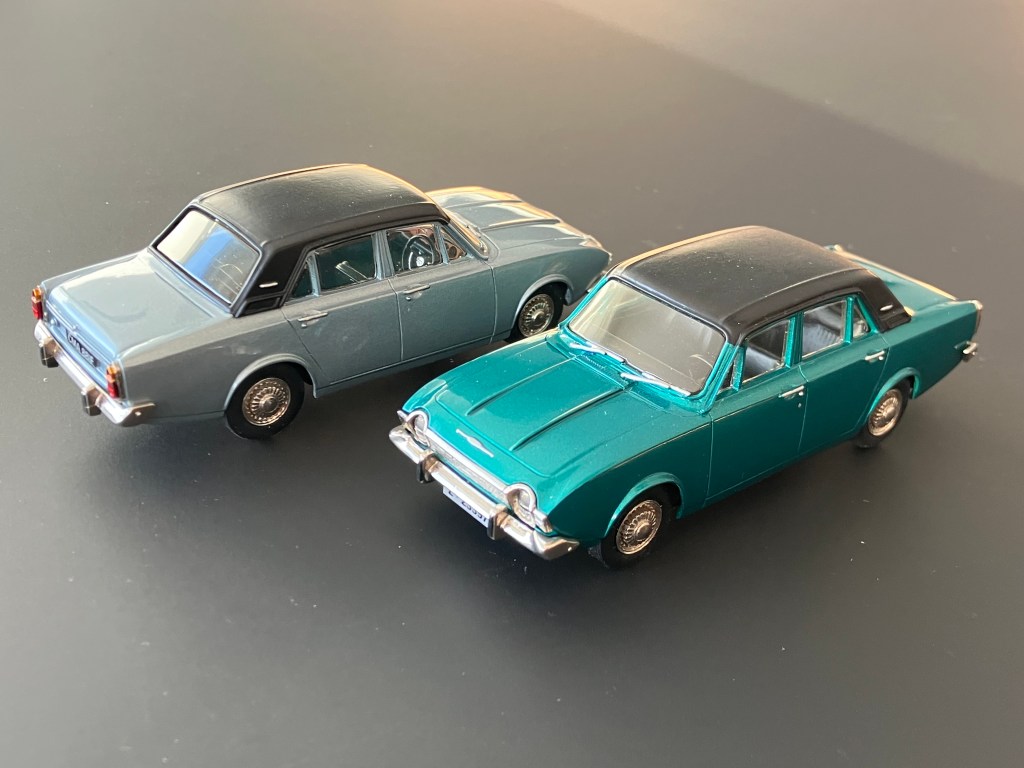
In 1967, a special Executive version known as the 2000E was introduced. Its purpose was to compete in a more luxurious market segment than the DeLuxe and GT models. These cars featured a 2-litre 103 hp Essex V4 engine, a choice of 4-speed manual or 3-speed automatic transmission, a vinyl roof, special wheel trims, an upgraded interior and a polished wood dashboard. By the end of production in 1970, approximately 310,000 Corsairs had been built.
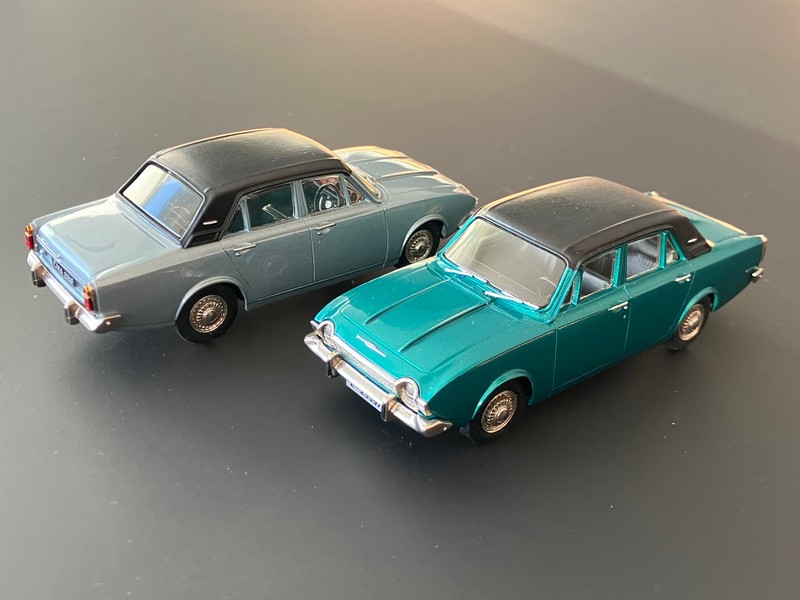
Minicar 43 commissioned Pathfinder to produce the most elegant version, the 4-door saloon 2000E. The model was released in August 1994 in two variants: Turquoise Metallic LHD with Norwegian registration plates and Light Blue Metallic RHD with British registration plates. A total of 350 examples were produced.
While developing the range of British Fords with Pathfinder, Geir began his collaboration with Pete Kenna. By the early 1990s, Pete had added a wide selection of Standard Vanguards and Triumph Heralds in various versions to his range. During the 1950s and 1960s, a number of these cars had been sold in Scandinavian countries, and Geir took advantage of this opportunity to reproduce models based on actual vehicles.
In 1993, Minicar 43 commissioned Pete Kenna to produce 50 examples of the Standard Vanguard Van “Norsk Bygdekino”. This organisation travelled throughout rural Norway, showing films in small towns and villages that did not have cinemas. To support these activities, Norsk Bygdekino purchased a fleet of 16 Vanguard vans.
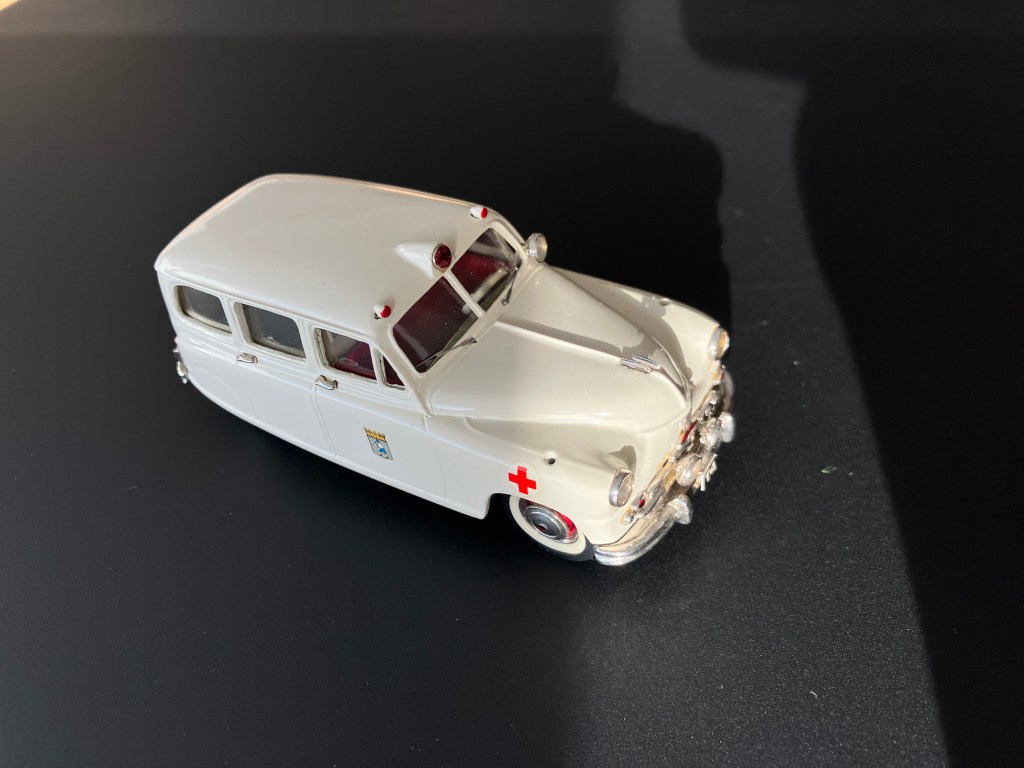
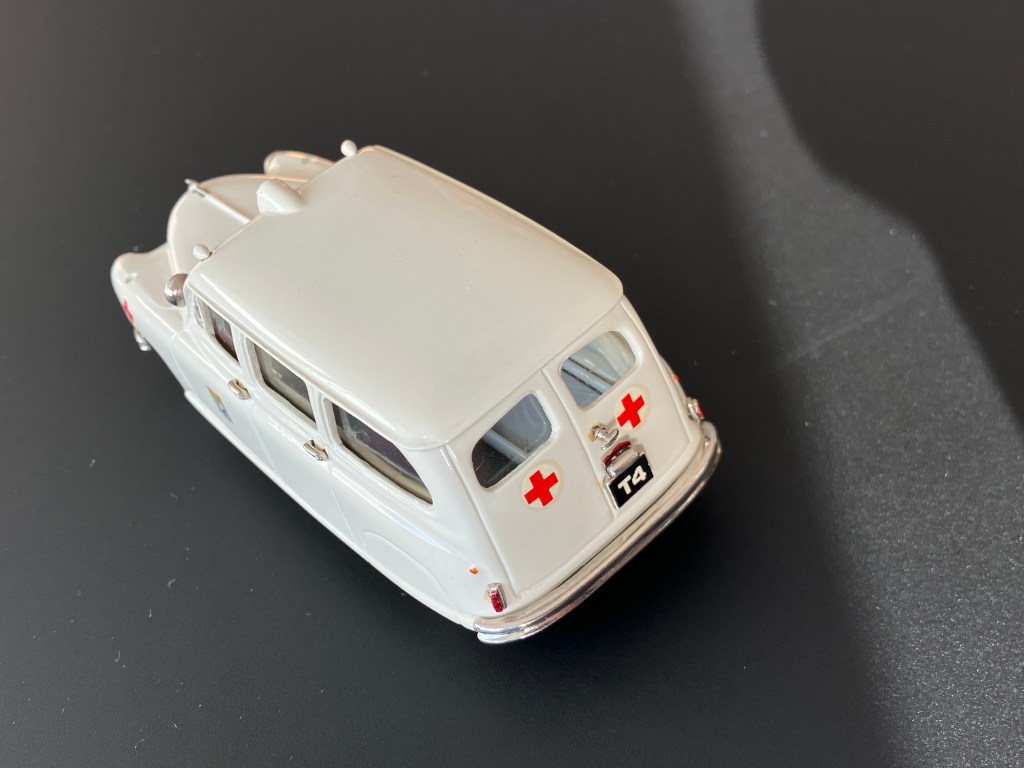
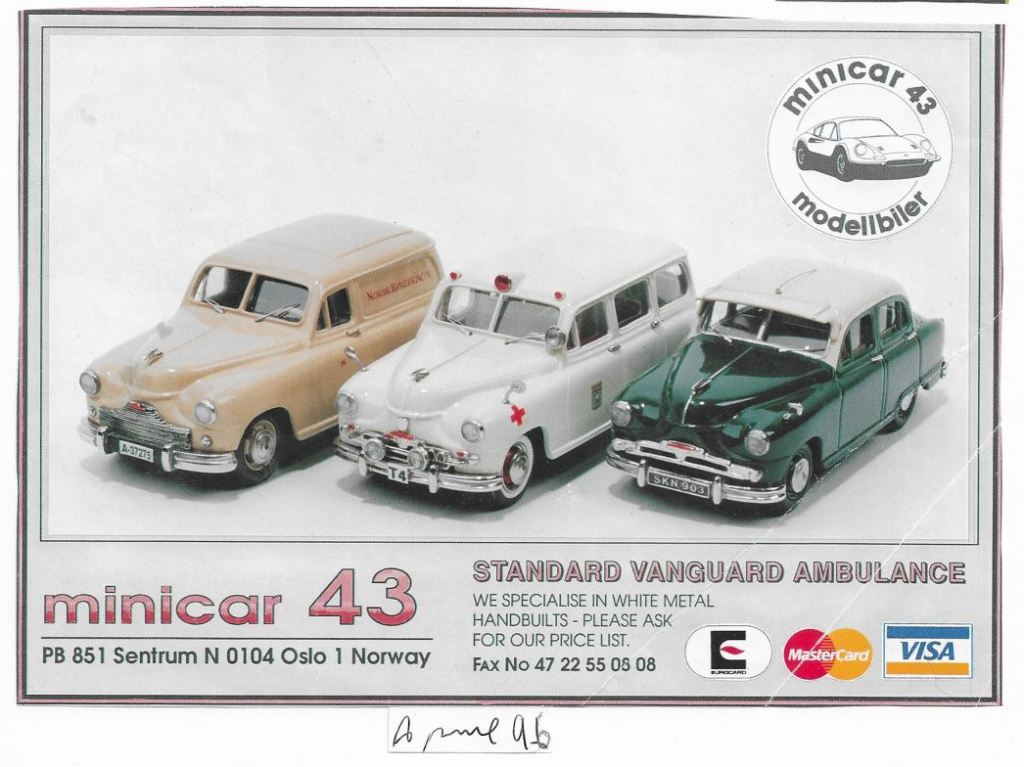
Continuing the Scandinavian Standard Vanguard theme, in April 1994 Geir commissioned a specially designed ambulance model. This LWD Ambulance served in the small Swedish town of Askersund during the 1950s and 1960s and was based on period photographs. Kenna Models produced 150 examples exclusively for Minicar 43.
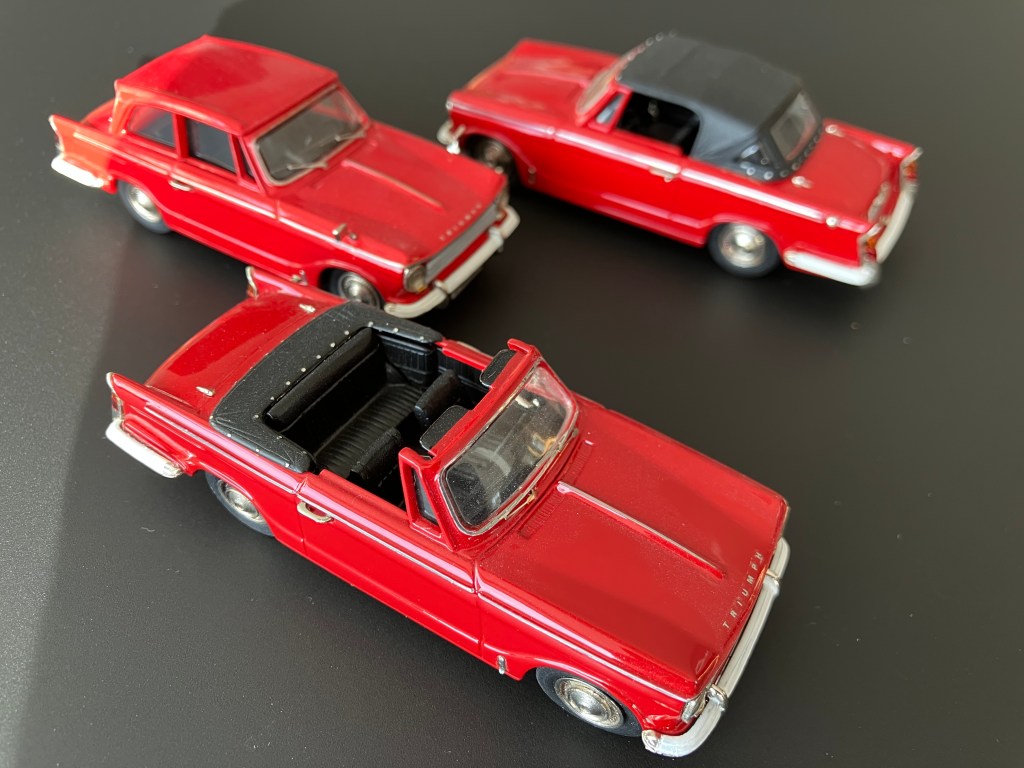
The Triumph Herald 13/60, introduced in 1959, was also well known in Sweden and Norway. Geir commissioned a red convertible version to reproduce the car of a friend who was a member of the club. It was produced in two variants: open (30 units) and closed (20 units).
Standard 2-door saloons were represented by a vehicle from Falken, a Norwegian roadside assistance company founded in 1949. During the 1960s, Falken purchased ten Triumph Heralds for use by its inspectors. One hundred models in this livery were produced.
Other models produced by Kenna for Geir and based on standard releases included the Standard Vanguard Mk2 finished in Dark Green with a Cream roof and gangster cap, as well as the Triumph Herald Saloon in Red, of which only 25 examples were produced.
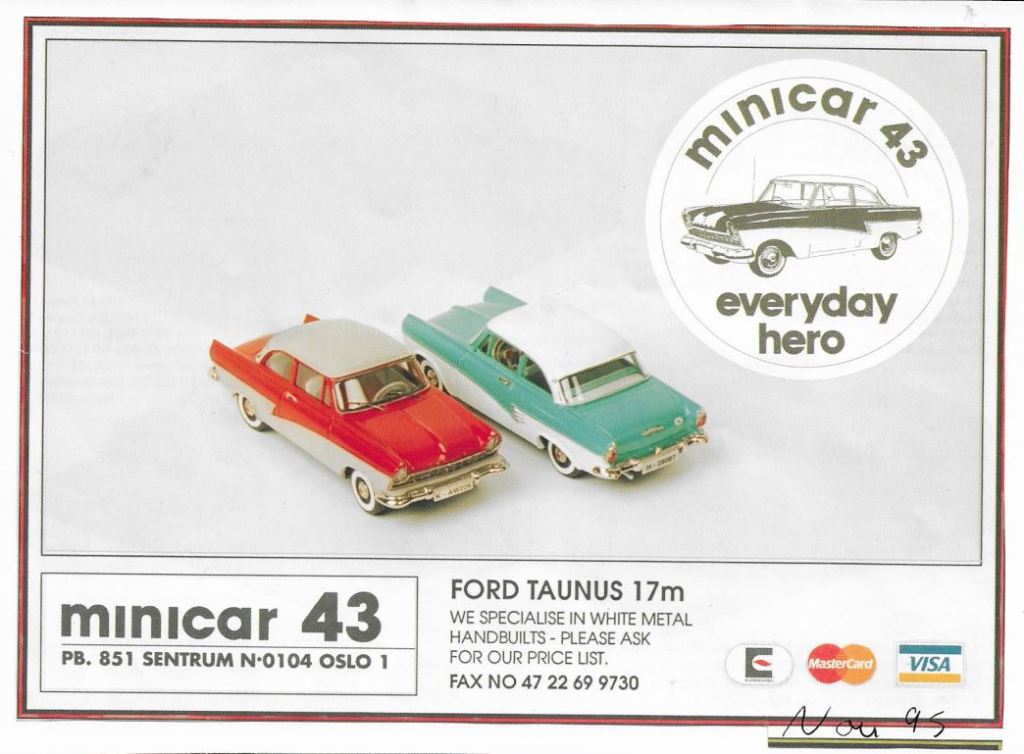
Usually, the most stylish and powerful cars receive the greatest attention. Geir did not share this view and decided instead to create a series dedicated to ordinary German Fords. He named this collection “Everyday Hero” and commissioned Pete Kenna to design and produce the models.
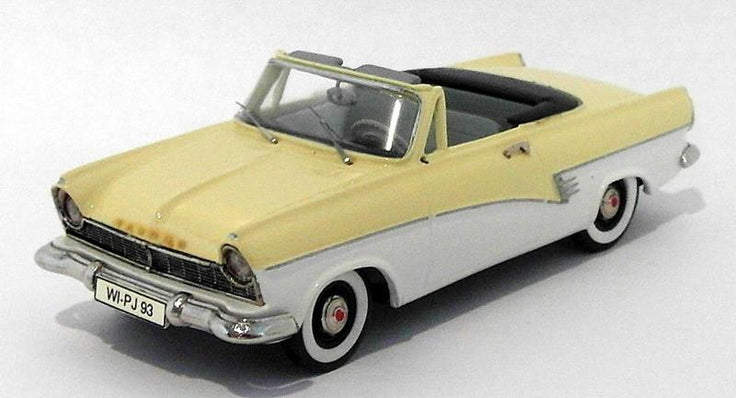
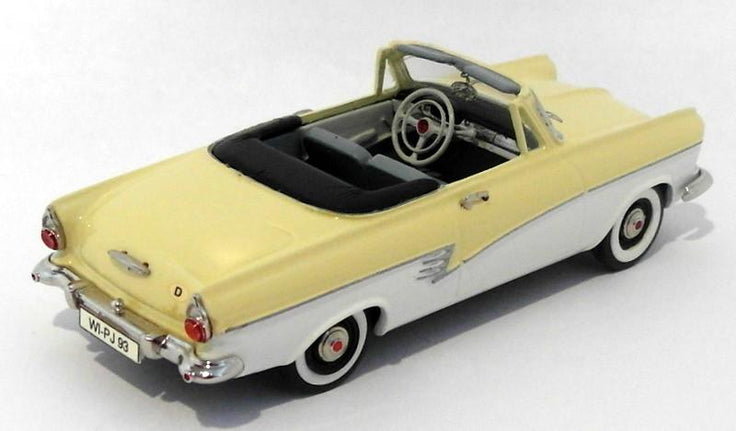
The Everyday Hero series, released in 1995–96, consisted of three models: the 1958 Ford Taunus 17M 2-door Sedan, the 1958 Ford Taunus 17M Convertible and the 1960 Ford Taunus 17M Badewanne. Each model was produced in a total run of 300 examples.
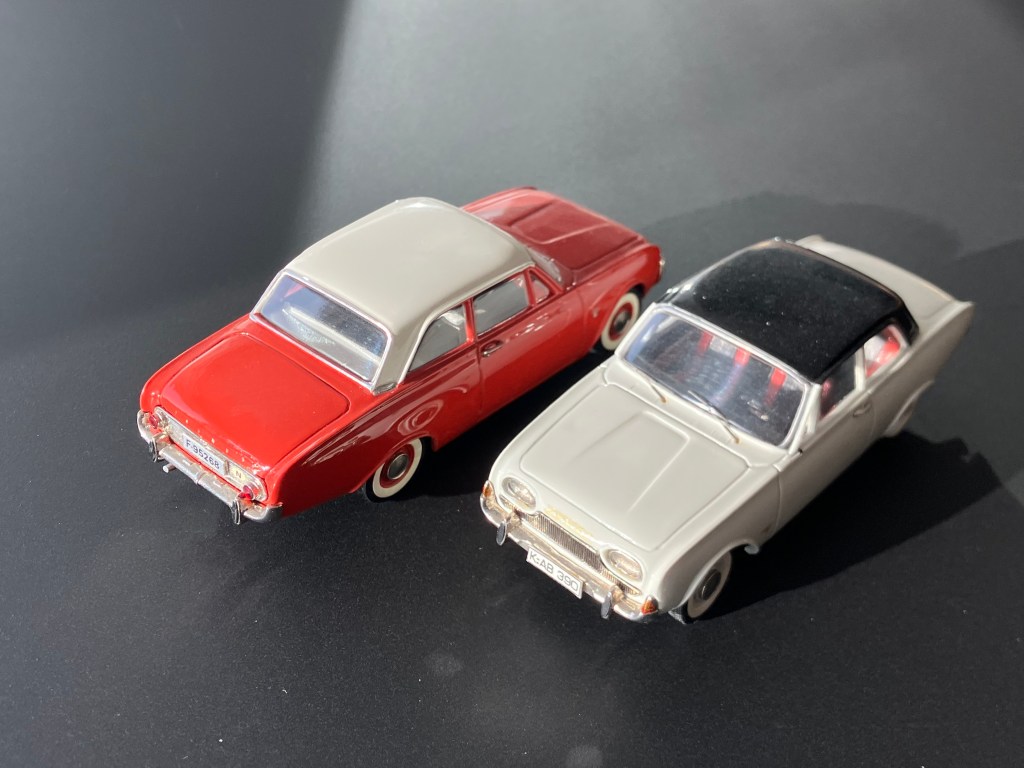
The models produced by Pete Kenna featured a higher level of detail than the Pathfinder releases. Among the additional features were separate door handles, photo-etched windscreen wipers, chrome window surrounds and fully detailed dashboards.
The Ford Taunus 17M P2 was introduced in 1957 and, like many cars of the period, was styled with strong American influences, particularly those of the 1955 Ford Fairlane. This mid-sized car was equipped with a 1.7-litre 60 hp engine and became the first Ford Germany model to feature MacPherson front suspension. The P2 was available as a 2-door or 4-door sedan, convertible and estate, in both Standard and DeLuxe specifications. Customers and the German motoring press nicknamed it “Barocktaunus” because of its distinctive styling. By the end of production in 1960, approximately 240,000 examples had been built at the Cologne plant.
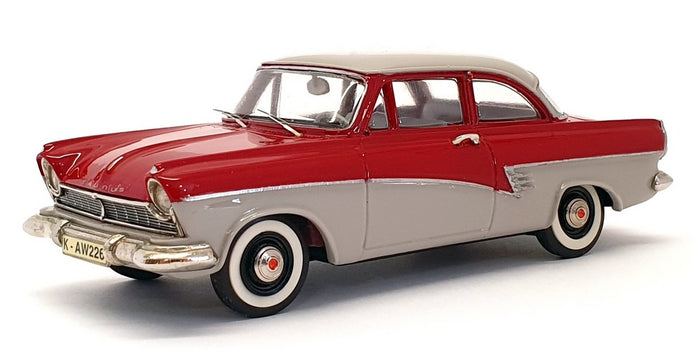
For reproduction, Geir selected the DeLuxe versions finished in two-tone colour schemes and fitted with additional chrome trim. The 2-door sedan was available in Red/White and Green/White, while the convertible was offered in Yellow/White (open version) and Red/White (closed version).
In 1960, the Ford Taunus 17M P3 Badewanne replaced the earlier P2 Barocktaunus. Unlike its predecessor, the new model featured a distinctly European design. The Taunus P3 became a major success, with approximately 670,000 examples sold by 1964, substantially outperforming the P2.
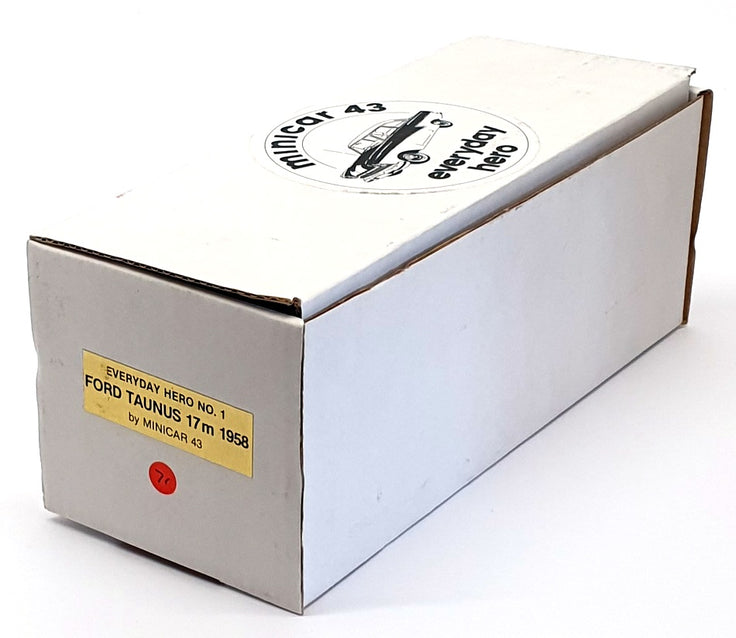
The Minicar 43 model represented the 2-door sedan and was available in two colour schemes: Paprika Red with a White roof and Norwegian registration plates, and a German-market version finished in White with a Black roof.
This model became the final release in the small Everyday Hero series.
While working on new models with Pathfinder and Kenna, Geir continued commissioning special versions of standard models produced by other manufacturers such as Somerville, Durham Classics and Brooklin.
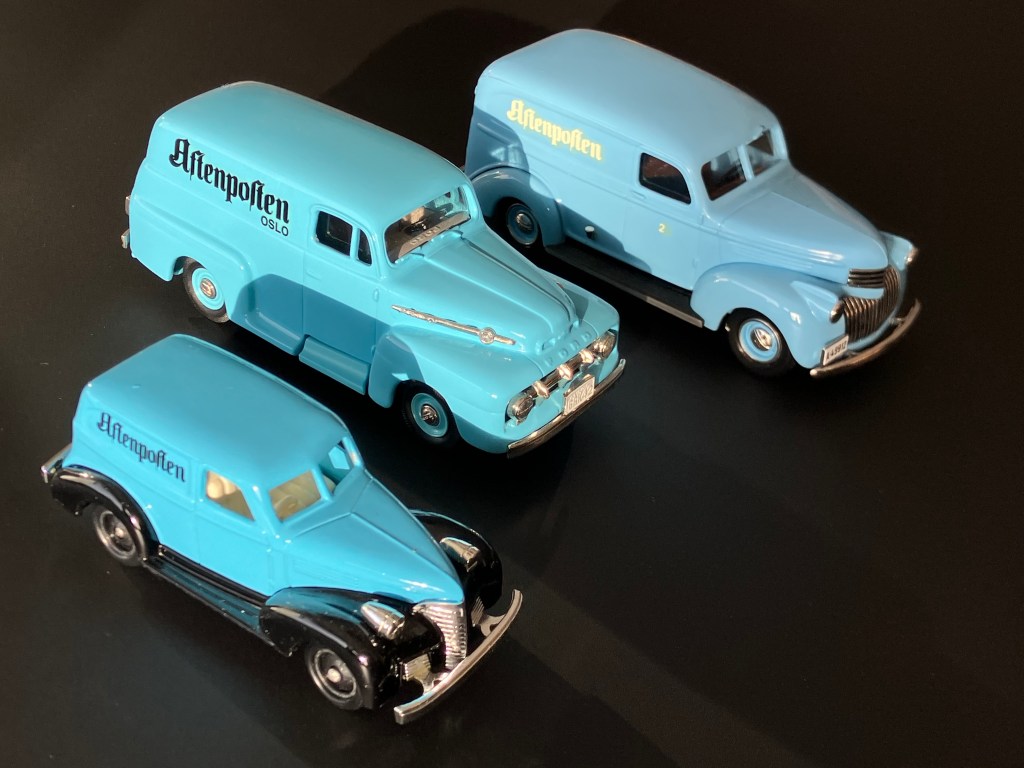
One of the most interesting groups included vehicles carrying the “Aftenposten” livery, based on the Chevrolet Panel Delivery Van by Durham Classics, the Chevrolet Van by Lledo and the Ford F1 by Brooklin. Aftenposten is one of Norway’s largest newspapers, and Geir himself worked for the company as an architect. The models reproduced actual vehicles used by the newspaper. For example, the Light Blue Ford F1 Van represented a vehicle used during the Olympic Games in Oslo in 1952.
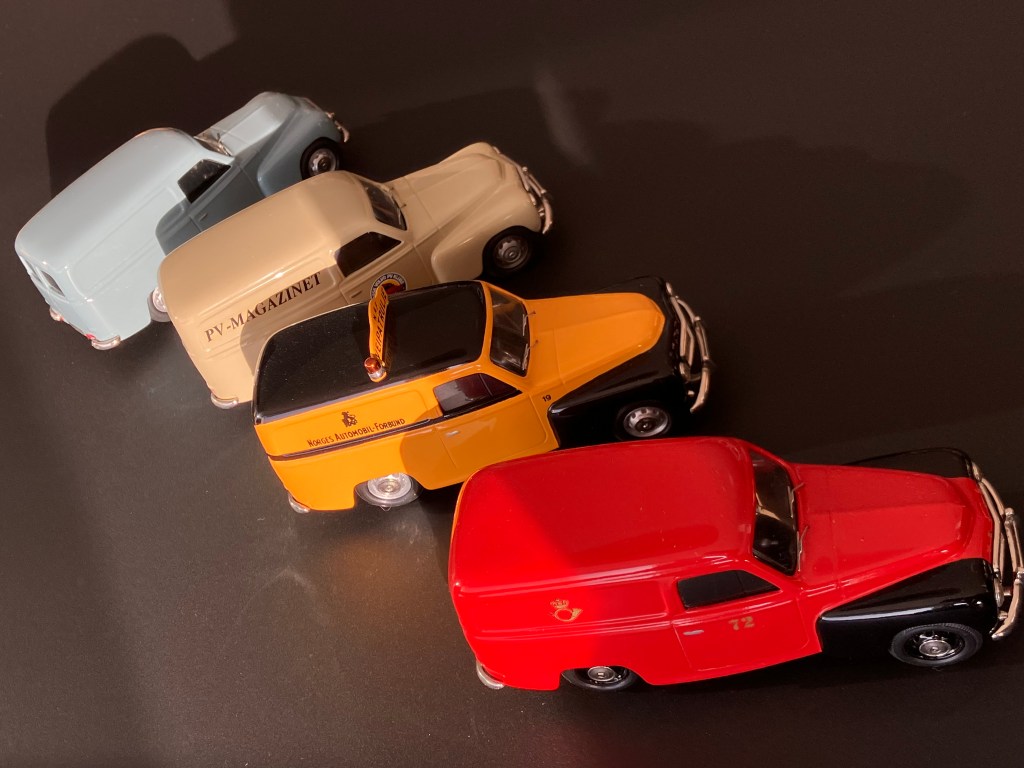
Somerville produced a range of special Volvo 210 Duett models for Minicar 43, including the Norwegian Mail version finished in Red with Black wings (125 units), the NAF (Norwegian Automobile Association) version in Yellow with Black wings, the “PV Magasinet” edition produced exclusively for members of the Norwegian Volvo PV Club (50 units), and a civilian version finished in Dove Grey (65 units).
Other special Somerville releases included the Volvo Amazon 123 GT in Metallic Blue (100 units), the Volvo 544 in Foggy Green (150 units) and the Saab 93 in Cream with Red wheels (60 units).
Collaboration with Pathfinder continued successfully and, in 1995, the fourth model in the British Ford series was released: the 1966 Ford Zephyr Mk4 V6. This full-size car occupied the top position in the British Ford range. Designed by Roy Haynes, the Zephyr was available with Essex V4 and V6 engines, together with either a 4-speed manual or a 3-speed automatic gearbox. Production ended in 1972, when the model was replaced by the Consul/Granada.
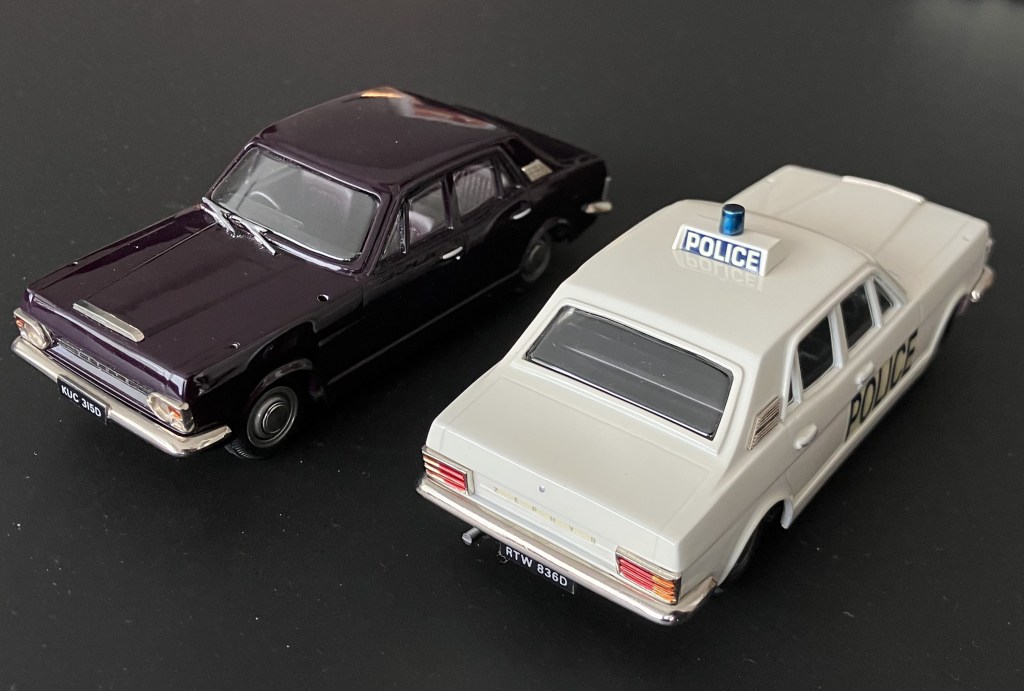
For Minicar 43, Pathfinder reproduced the powerful 2.5-litre V6 112 hp version. Unlike the previous models in the range, this one was available only in British right-hand-drive form: a civilian version finished in Aubergine and a Police version. The latter was based on a vehicle featured in a popular television series of the period. A total of 300 examples were produced.
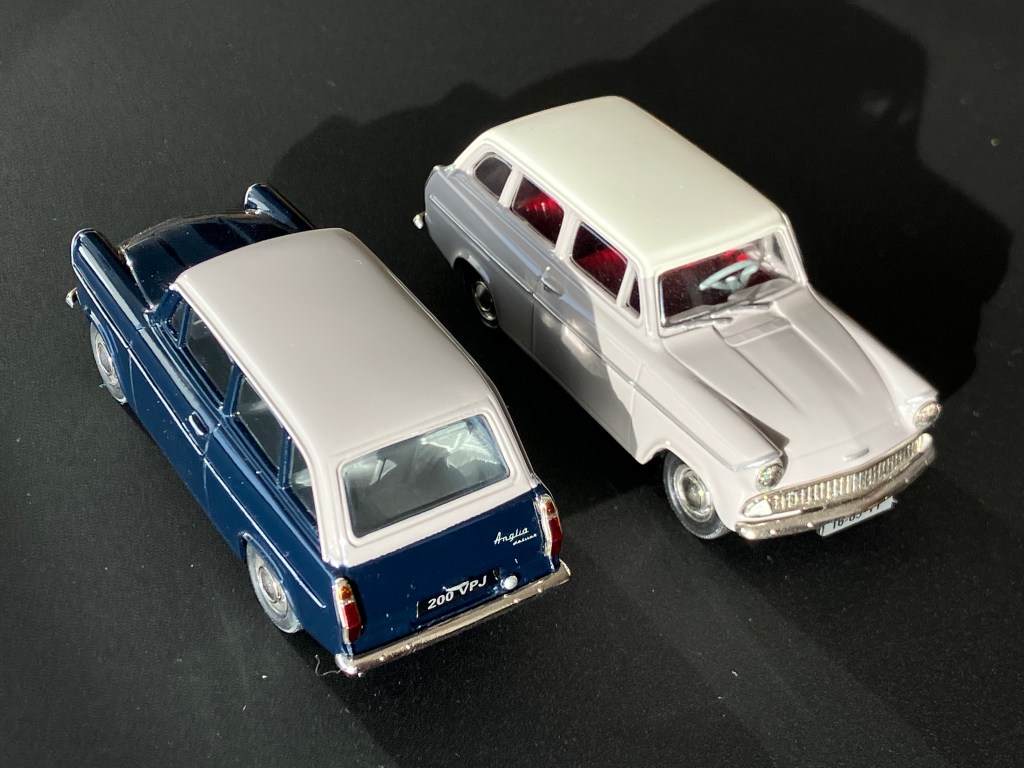
Finally, in 1996, Geir was able to release the 1962 Ford Anglia 105E Estate, the same model owned by his father. This miniature inaugurated a series of vehicles that had never previously been reproduced by other manufacturers. Like most Pathfinder commissions, it was produced in a run of 300 examples.
Even today, no manufacturer has produced the Anglia Estate, and, frankly speaking, there seems little chance that Brooklin or Vanguards will pay attention to it under current market conditions. Pathfinder reproduced both a Light Grey LHD version carrying Geir’s father’s registration plates and a Dark Blue RHD British version with a Light Grey roof.
The next model, the 1970 Ford Cortina Mk2 1600E, was released in 1997 and filled another significant gap in the market. The four-door 1600E version, introduced at the Paris Motor Show in 1967, was the highest-trim model in the Cortina Mk2 range.
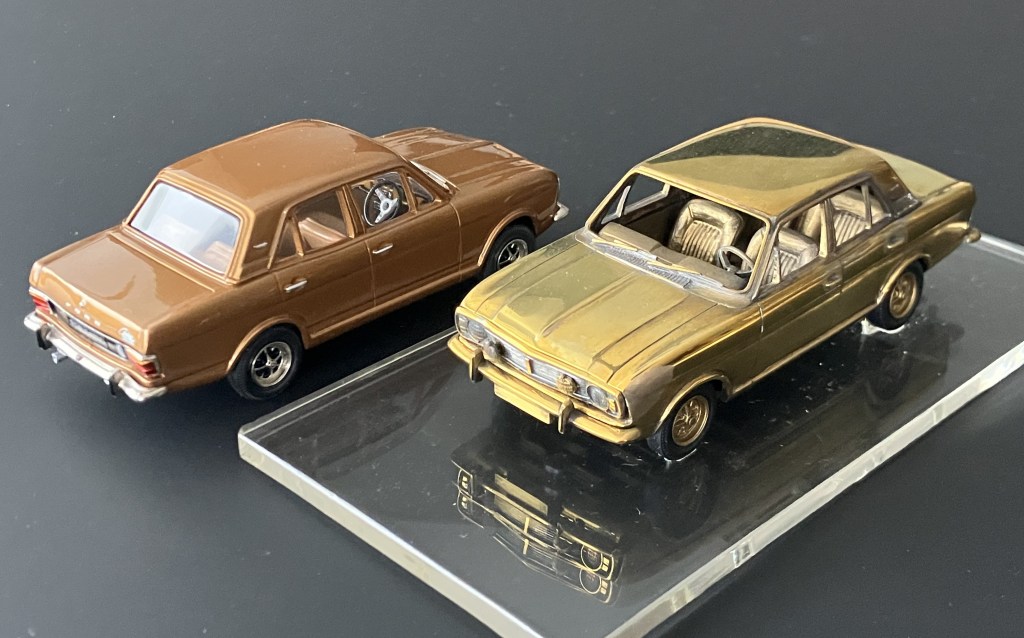
It featured the lowered suspension from the Lotus Cortina and the high-performance 1600 GT Kent engine. Distinctive features included Rostyle wheels fitted with radial tyres, a wooden dashboard, a black radiator grille, bucket seats, a leather-covered aluminium steering wheel and numerous other refinements.
The Minicar 43 model represented one of the final cars produced in 1970 before the second-generation Cortina was replaced by its successor. The left-hand-drive version, carrying Norwegian registration plates, was finished in Red, while the British right-hand-drive version was produced in Gold.
Many years later, in 2012, GTA Models, a former production partner of Pathfinder, released an exclusive version of the Cortina Mk2 1600E for British Heritage Models to commemorate the 50th anniversary of the Ford Cortina.
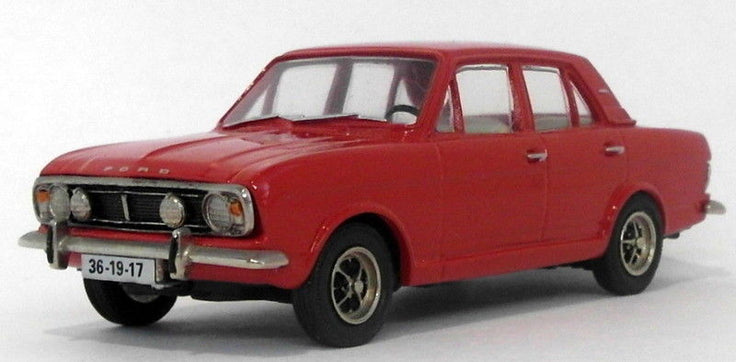
Photo by RM Toys Ltd
This model was based on the same master pattern and was essentially a copy of the Minicar 43 version. The differences were limited to the colours, some details and the packaging.
Apparently, Graham Price, owner of GTA Models, used either the original drawings or Pathfinder castings that had been preserved.
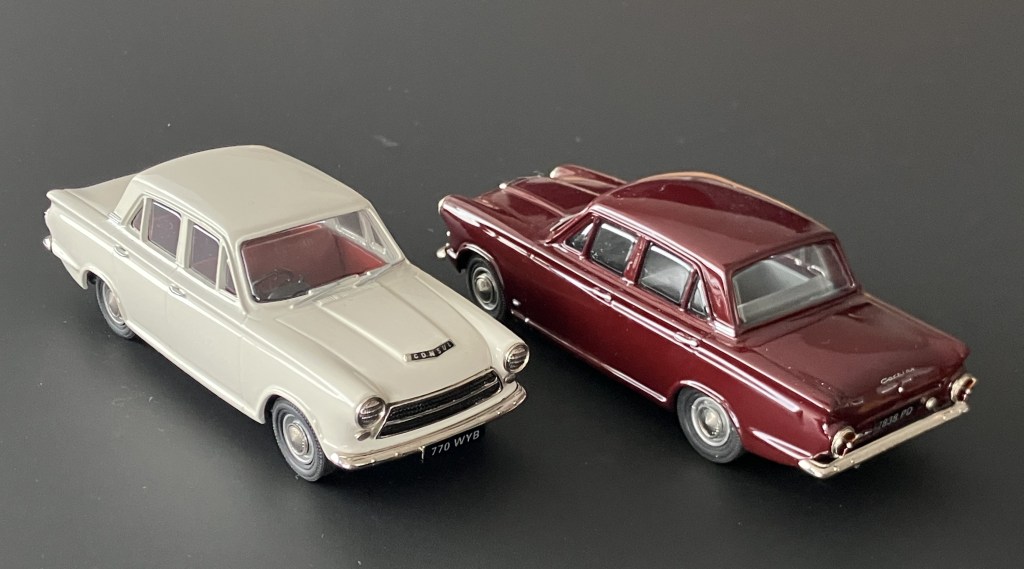
The 1963 Ford Cortina 4-door Sedan became the final model in the Minicar 43 range. Released in autumn 1998, it filled an extremely important gap for Ford collectors, as many manufacturers who had previously modelled the Cortina Mk1 had focused exclusively on the 2-door saloon versions.
The model was exceptionally well executed and featured numerous plated details, including the grille, hubcaps, bumpers, fuel filler cap and the Cortina emblem on the bonnet. Both versions – White with a Red interior and Imperial Maroon – were produced as British right-hand-drive cars.
In 1999, Geir Andreassen stopped commissioning new models. Minicar 43 had always been a hobby project that he developed in his spare time. During the late 1990s, the demands of his architectural career increased significantly, leaving him with little free time. The company gradually ceased operations in 2000, and the last remaining models were sold by 2005.
Today, after retirement, Geir Andreassen continues to collect models, and the collectors’ club also remains active. His passion for automotive history has never diminished, and every year he visits the Retromobile exhibition together with a group of friends.
Many thanks to Geir Andreassen, Trygve Krogsaeter, Pete Kenna and Kevin Bailey for their assistance in writing this article and for providing photographs for illustration. Thanks also to RM Toys Store for permission to use the photographs.
Models by Pathfinder for Model 43
| Number | Model | Released |
| 1 | 1961 Ford Anglia 105E | 1992 |
| 2 | 1962 Ford Consul Classic 2- dr saloon | 1993 |
| 3 | 1968 Ford Corsair 2000E 4-dr saloon | 1994 |
| 4 | 1966 Ford Zephyr Mk4 V6 | 1995 |
| 5 | 1961 Ford Anglia Estate | 1996 |
| 6 | 1970 Ford Cortina Mk2 1600E 4-dr saloon | 1997 |
| 7 | 1963 Ford Cortina 4-dr saloon | 1998 |


great article!!
"Mi piace""Mi piace"