
Seconda parte dell’ampia retrospettiva su Conquest Models, a cura di Fedor Eliseev. Trovate le altre due puntate a questi link: https://pitlaneitalia.com/2026/05/20/the-story-of-conquest-models-part-1/ e https://pitlaneitalia.com/2026/05/27/the-story-of-conquest-models-part-3-1995-2001/
di Fedor Eliseev
1991 became a very important year for the Conquest range. First, four models were released that year: the 1957 Buick Roadmaster 75 4-door Hardtop, the 1954 Pontiac Star Chief Convertible, the 1963 Ford Country Squire, and the 1960 Chevrolet Impala Convertible Top Up.
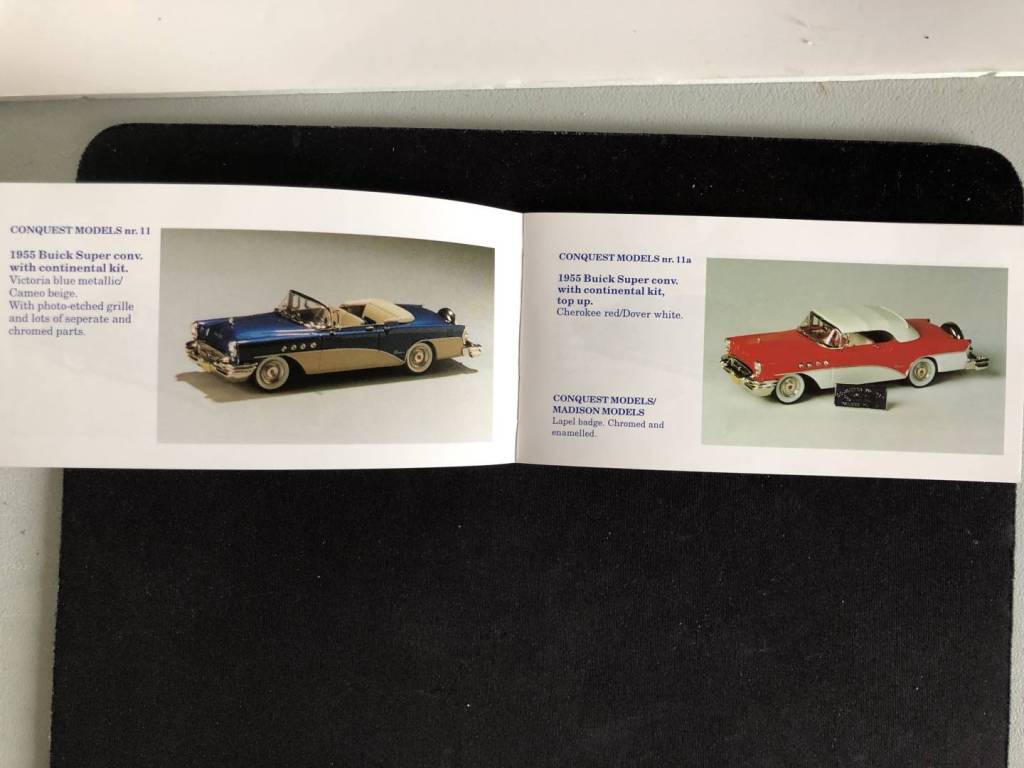
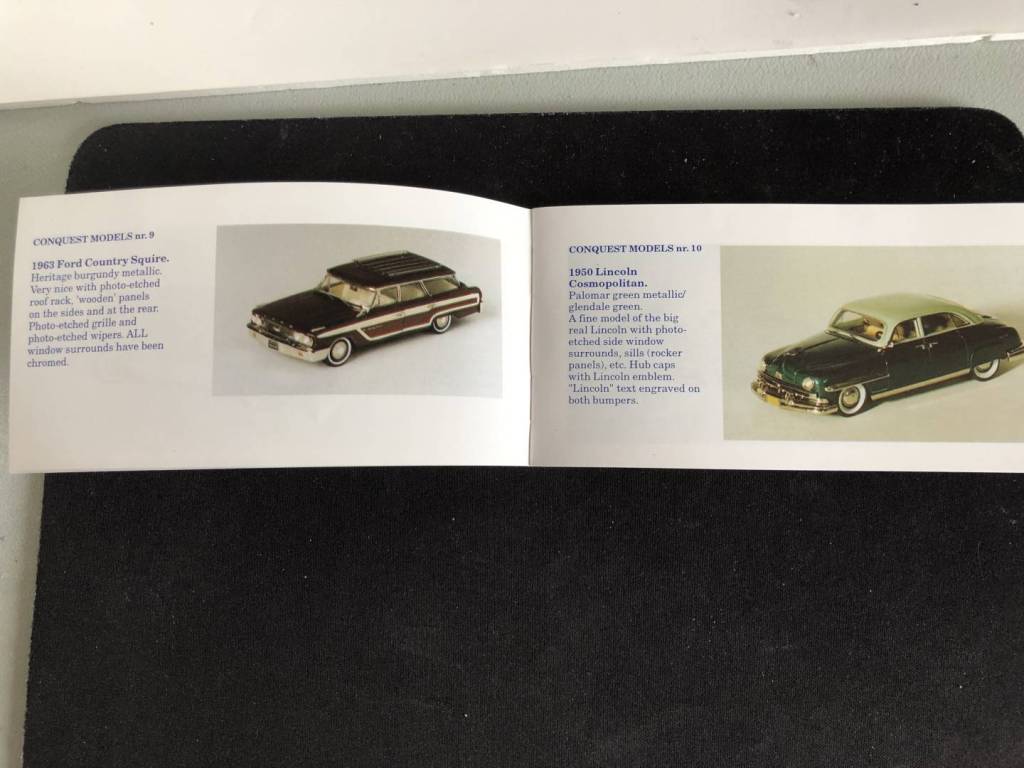
Secondly, accompanied by the enthusiastic collector of Citroën DS models, Marten Boersma, and his girlfriend Eveline, Henk visited the ModeleX show. There they met many people who were well known at the time, as well as several trade customers of Fa. Daimler House. Among the other visitors and participants, Henk met Doug McHard, founder and proprietor of Somerville. Doug used to include leaflets in the boxes of his fine models. These leaflets were a valuable addition because they allowed customers to learn about the current production programme and future releases, encouraging them to buy new models. Marten Boersma persuaded Henk to add a leaflet to his own models as well. Because the Conquest and Madison ranges were growing rather quickly, the leaflet was soon replaced by a catalogue. These small catalogues were updated almost every year. The last one was the 7th edition from 1999, containing 52 pages and measuring 14 × 7 centimetres. As a result, many models were produced repeatedly depending on demand.
Model Auto Review magazine regularly published advertisements for Daimler House, and Henk informed readers about his current and future plans. He also donated several models for prize competitions. By the way, another British magazine, Model Collector, did not write very often about Conquest Madison Models, despite having special white metal review columns.
As for the models of 1991, the additions to the range began with Nr.7, the 1957 Buick Roadmaster 4-door Hardtop. This was the most powerful and luxurious version of the 1957 Buick, which by then had been fitted with an almost completely new body. The body became longer than that of the previous generation and received such features as panoramic front and rear screens and elongated fins. The curved Sweepspear side moulding was enhanced with a red line and three ribs on the rear wings. The front bumper featured massive air turbines, which looked very spectacular.
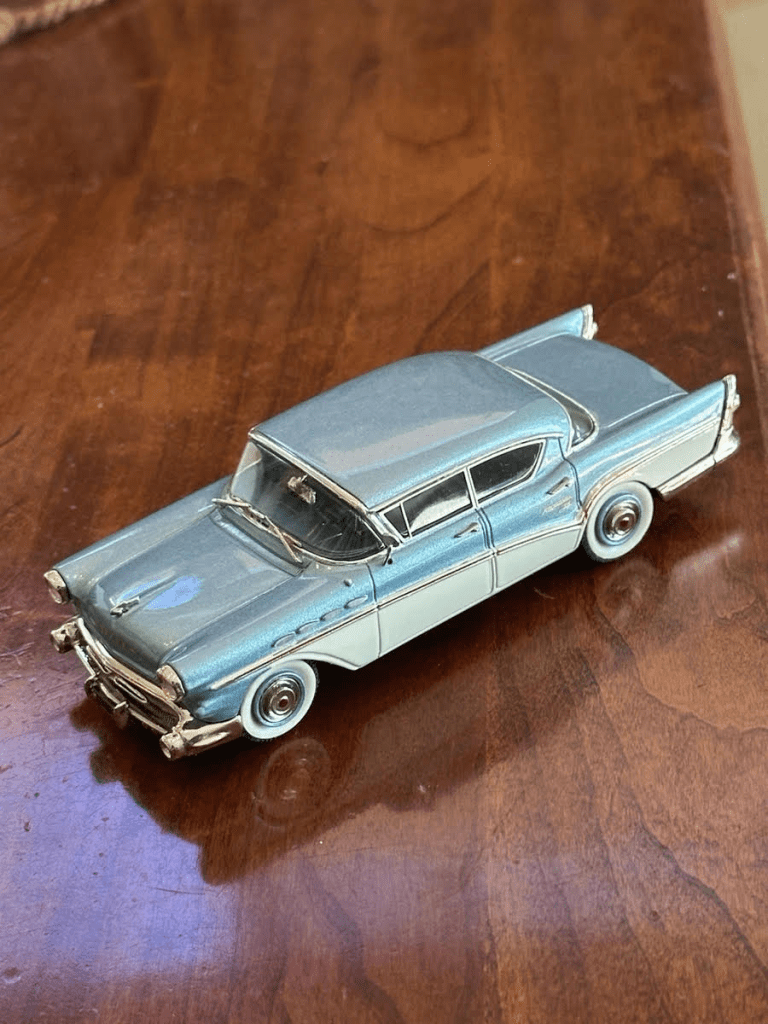
Series 75 was introduced in the middle of 1957. Its main differences from the basic Series 70 were a more luxurious interior, electric operation of the side windows and seats as standard equipment, and a one-piece rear screen instead of one divided into three sections.
Other features remained the same as on the Series 70 models: a 6-litre V8 300 h.p. engine, a 2-speed Twin-Turbine Dynaflow automatic gearbox, and ball-joint front suspension. Customers bought 14,654 Series 75 cars in 1957, which were available in three body styles: Convertible, Hardtop Coupé, and Hardtop Sedan. The latter was modelled by Conquest Models.
This absolutely magnificent model featured a 3-piece instrument panel, a 3-piece front bench seat, 3-piece inner door trim, and, of course, a red line between the side chrome strips. Initially, it was available in two colours: Dover White and Garnet Red Metallic, but a year later Carlsbad Black and the two-tone Biscay Blue Metallic/Dover White were added.
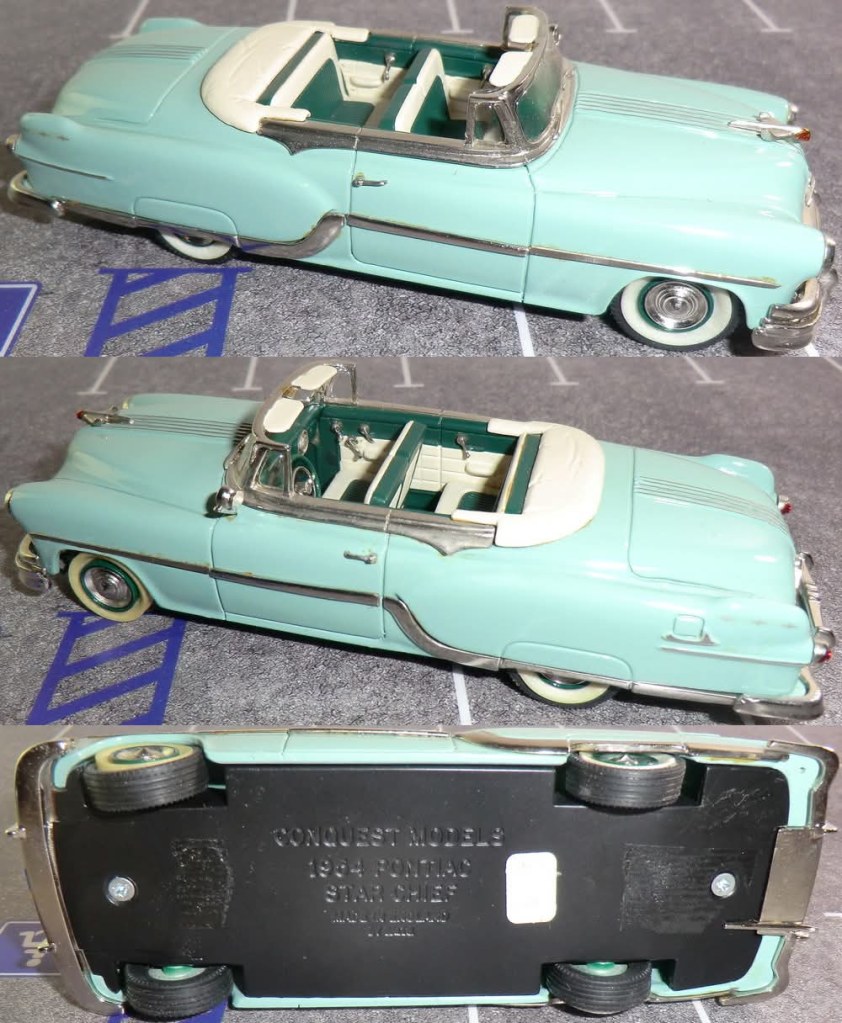
Nr.8, the 1954 Pontiac Star Chief Convertible, represented the most prestigious model of the Pontiac division, based on the Chieftain model. Strictly speaking, this was a long-wheelbase version of the Chieftain built on the same platform. Customers could distinguish the Star Chief from the Chieftain only by its longer wheelbase and the three stars on the fins, but inside it was much better equipped. The car offered such options as electric operation of the windows and seats, power steering, power brakes, and air conditioning, which was offered on Pontiacs for the first time. Two trim variants were available: DeLuxe and Custom.
There was only one engine available for these models: a 4.5-litre inline eight-cylinder producing 122 h.p., along with two types of gearboxes: a 3-speed manual and a 4-speed Hydramatic. With the latter, engine power increased to 127 h.p. In fact, this engine was already obsolete, but GM had decided to introduce the V8 first for Buick and later for Pontiac.
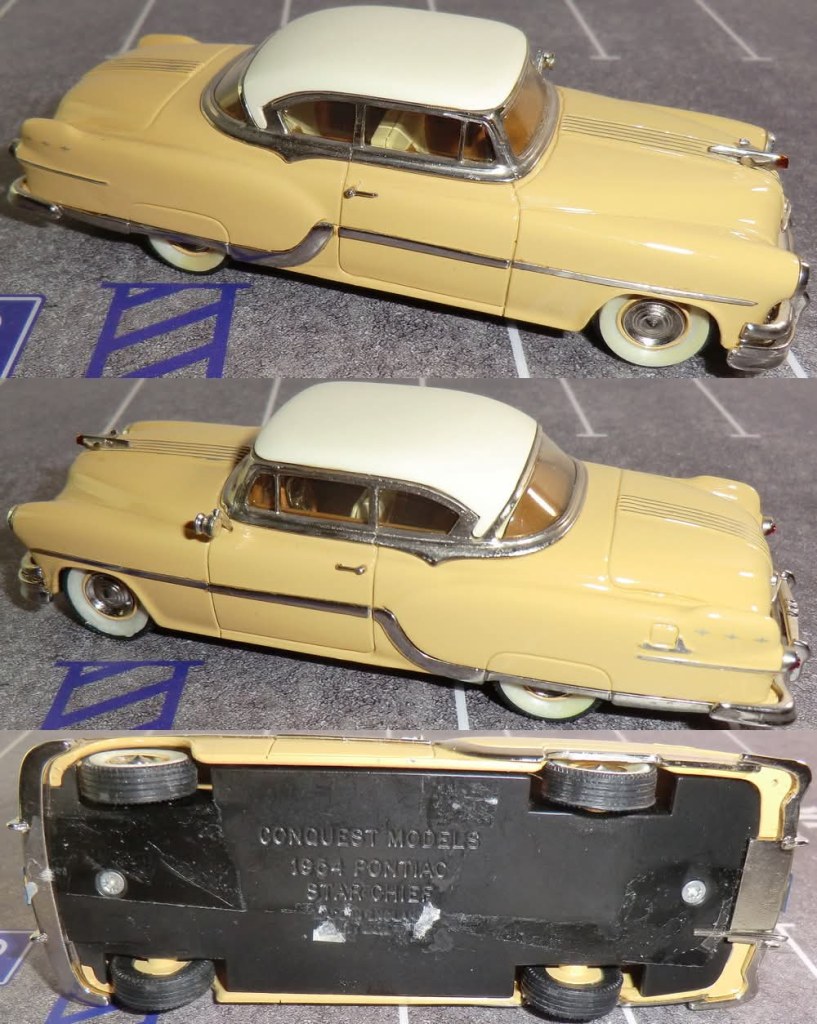
Henk decided to produce the Star Chief Convertible first, and the models were painted in Shannon Green and Arlington Maroon. Three years later he would add Nr.17, the Star Chief Custom Catalina 2-door Hardtop, to the Conquest range. For this model, Maize Yellow/Winter White and Coral Red/Winter White were chosen.
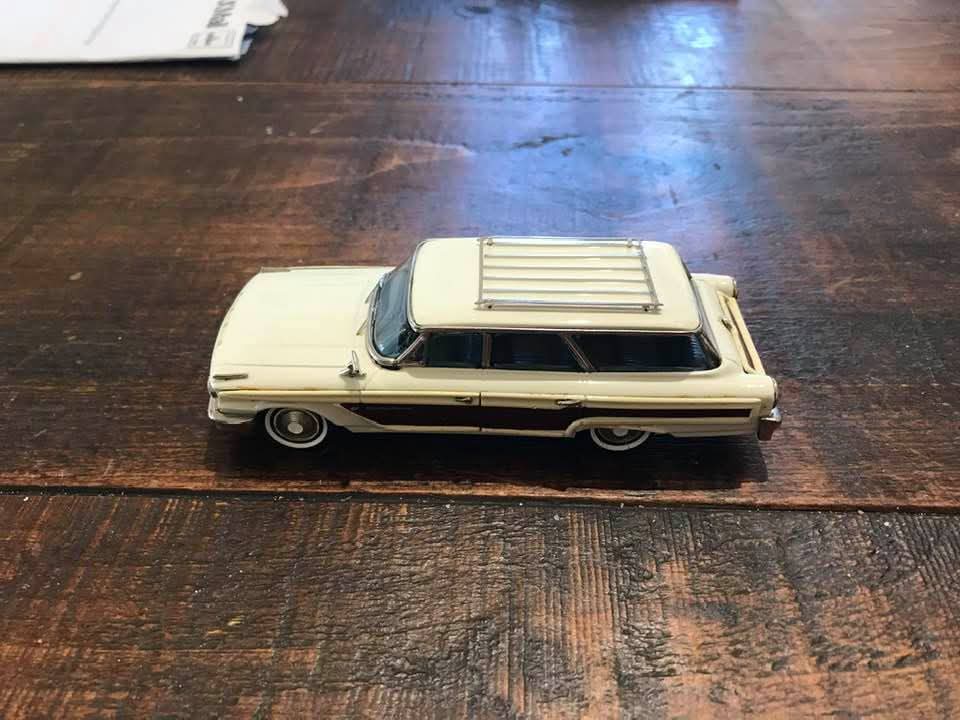
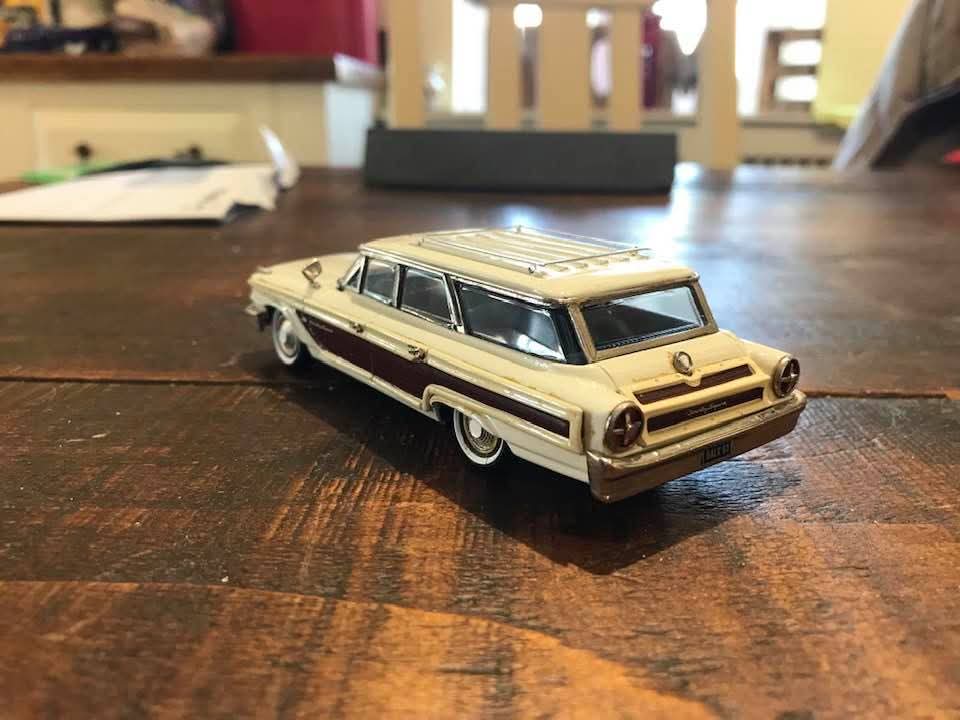
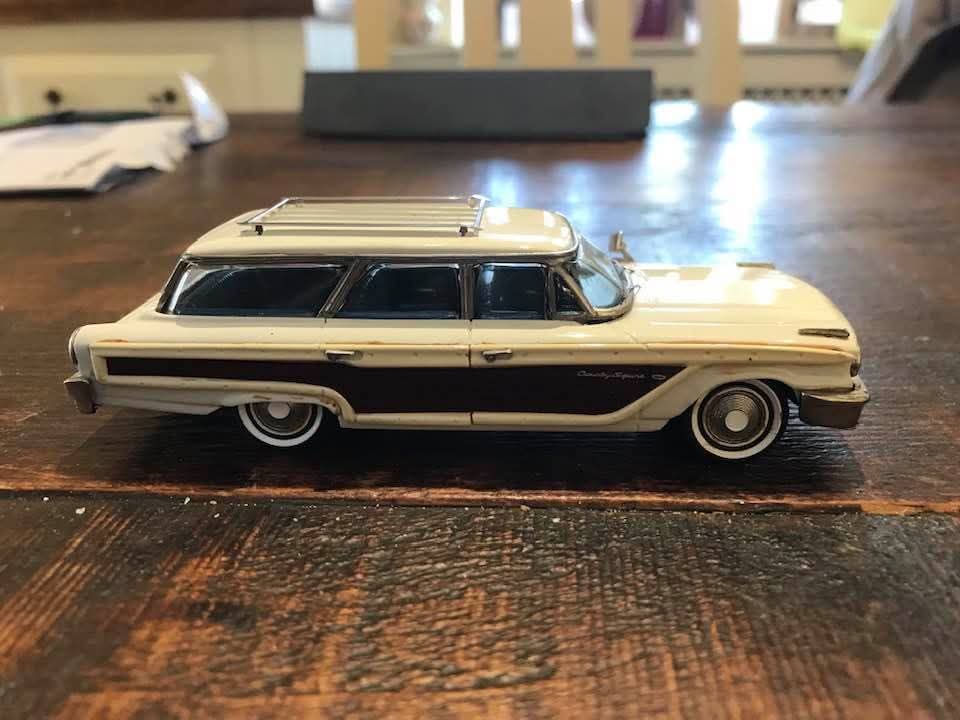
In the previous part, Nr.9, the 1963 Ford Country Squire woody Station Wagon, was briefly mentioned. This model continued the line of the 1963 Galaxie previously modelled by Conquest Models. In fact, by the 1960s the golden age of the woodies had already ended, but in any case cars equipped with imitation wood panelling still looked very attractive. The choice of the estate version was very wise because most manufacturers had never paid attention to this body style. This model also featured a photo-etched roof rack, making it highly realistic. It was painted in Corinthian White or Heritage Burgundy.
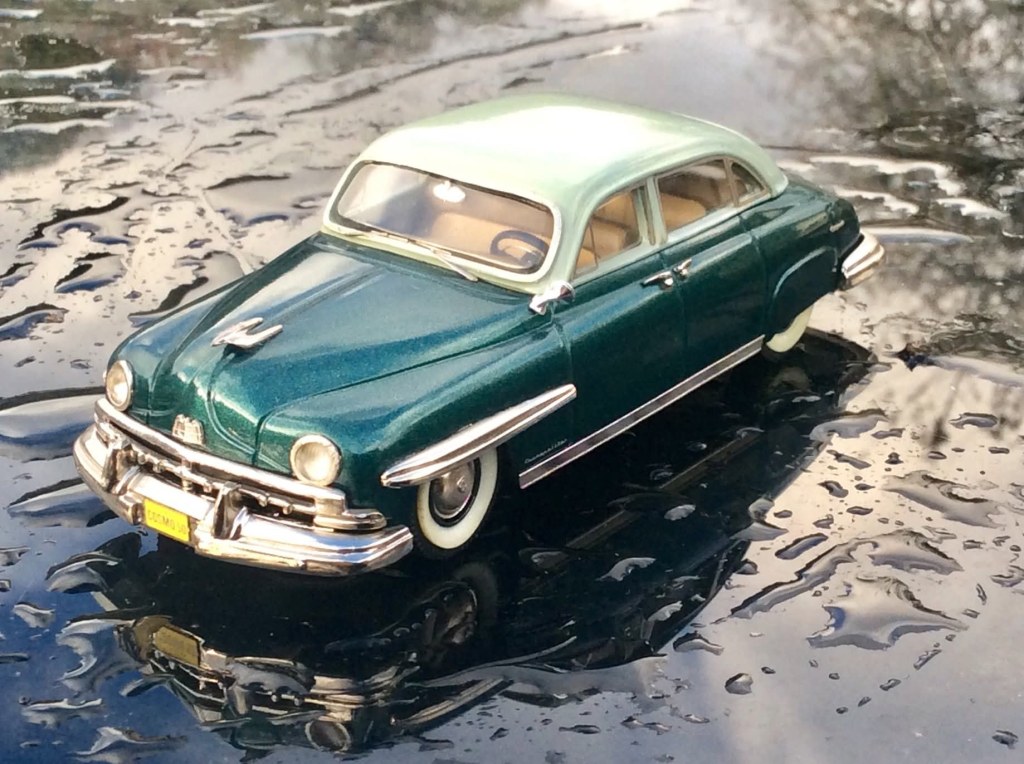
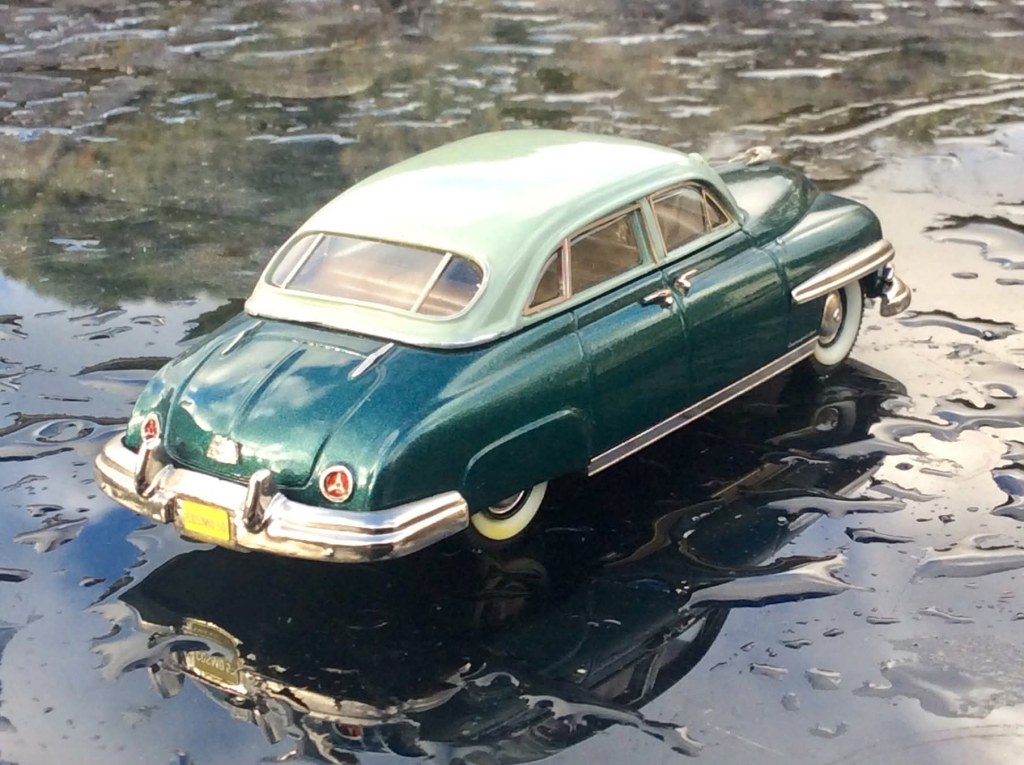
Nr.10, the 1950 Lincoln Cosmopolitan, opened the 1992 model year for the Conquest range. This was an excellent choice for modelling. The Cosmopolitan represented the first new post-war chapter in the history of Lincoln and replaced the obsolete Continental. Released in 1948 for the 1949 model year, it shared a platform with the new Mercury Eight but featured a longer wheelbase. Designed by Eugene Gregorie in pontoon style, it looked remarkable for the late 1940s. The Cosmopolitan became Gregorie’s last project before he left the Ford Motor Company.
The new luxury Lincoln was equipped with a 5.5-litre Flathead V8 producing 152 h.p., replacing the old V12. Most cars had a 3-speed manual gearbox, but a GM Hydramatic automatic transmission was available by special order. The chassis was designed by Earl MacPherson, who created a new independent front suspension for this model.
The exterior and interior featured many chrome elements. The Cosmopolitan range was released in four body variants: 4-door Sport Sedan, Town Sedan (fastback), 2-door Club Coupé, and Convertible.
At the same time, the Lincoln division also produced a standard model in the same style which did not have its own model name. The cheaper models had a divided windscreen, whereas the Cosmopolitan featured a one-piece design.
In 1950 the radiator grille, front bumpers, and dashboard were changed, and the fastback body style was discontinued. That year customers purchased 10,692 cars (8,332 sedans, 1,827 coupés, and 536 convertibles).
In 1951 the design was updated once again, and the following year the model was discontinued.
By the way, the Cosmopolitan became the official car of U.S. President Harry Truman, who ordered several specially prepared cars for the White House.
For his Conquest range, Henk chose the 1950 Sport Sedan. This was the most widespread body style in the Cosmopolitan line-up. The models were painted in very attractive two-tone colour combinations: Palomar Green Metallic/Glendale Green and Nassau Beige Metallic/Carlsbad Tan.
For a long time, the 1950 Lincoln Cosmopolitan by Conquest Models had no alternative until Brooklin released the 1949 Convertible version in 2007, which is now a fine addition, though not a replacement, for collectors. Nowadays resin companies from China produce many models of American cars, but they have not rushed to create a wide range of Cosmopolitans.
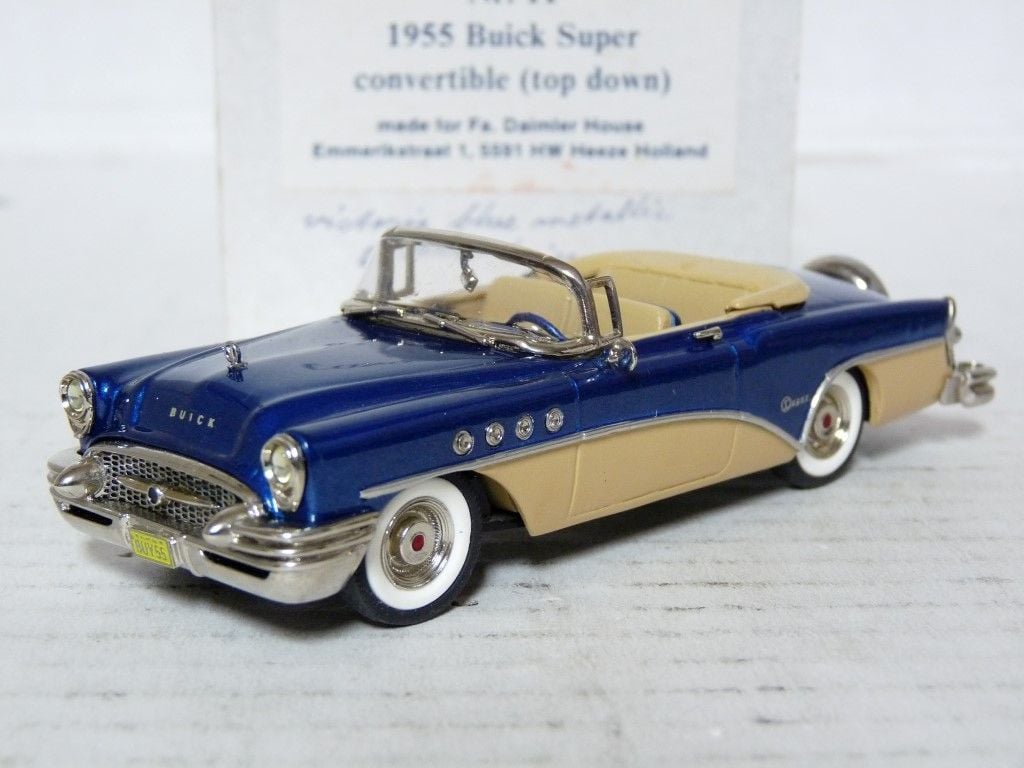
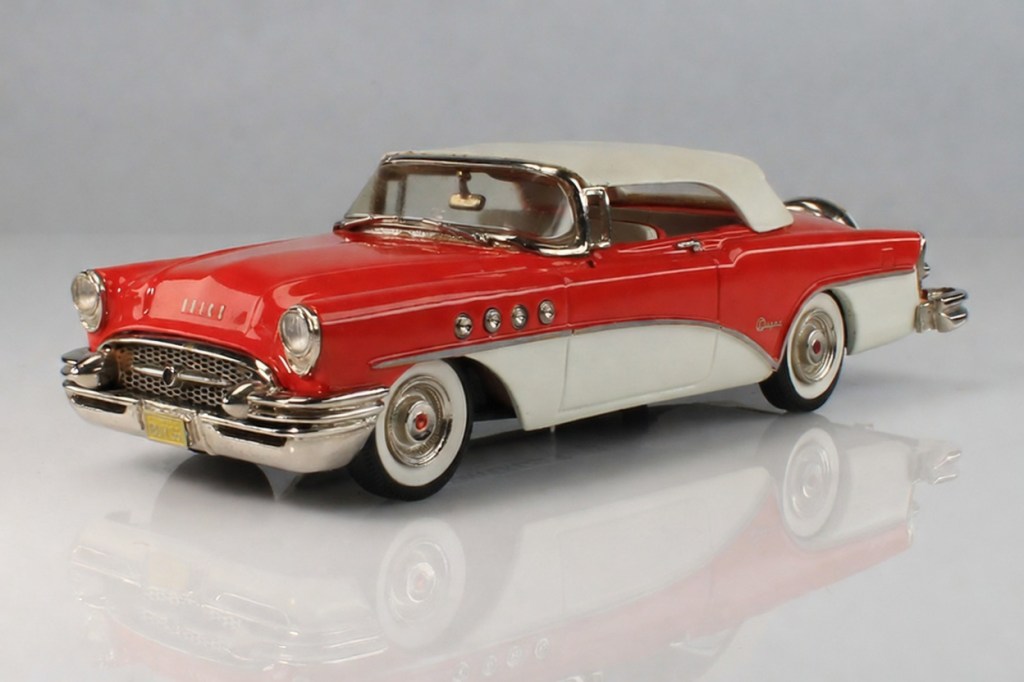
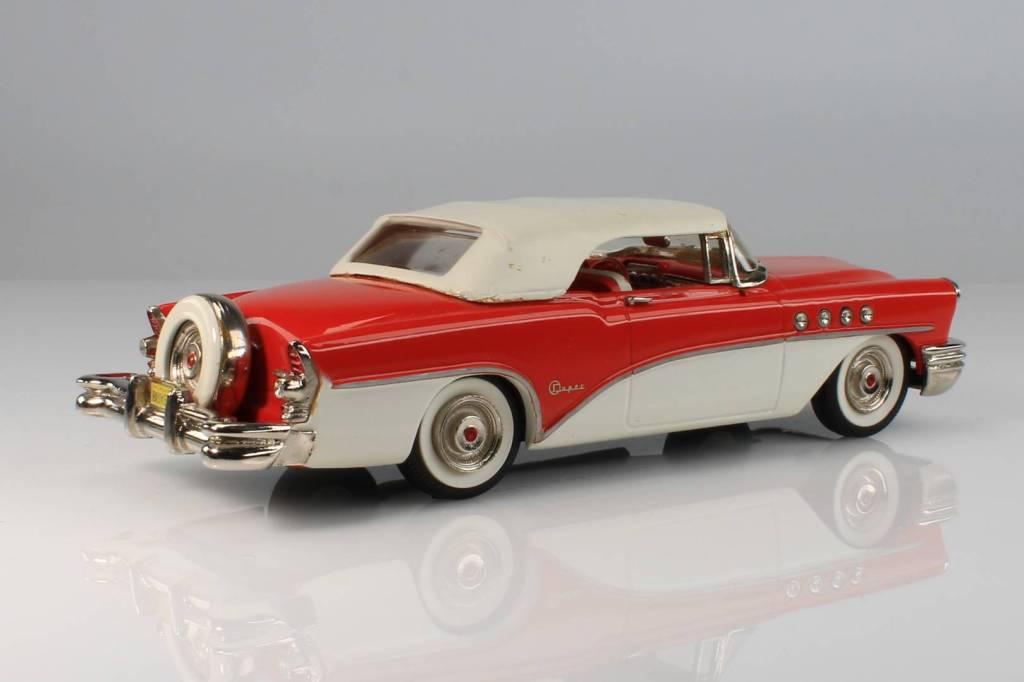
Nr.11 and 11a, the 1955 Buick Super Convertible Top Up and Top Down, were added to the range of 1955 Buick body styles previously begun with Nr.3, the Super Riviera 2-door Hardtop. Initially, Nr.11 was available in Cascade Blue/Temple Grey and Gulf Turquoise/Cameo Beige. A year later Victoria Blue Metallic/Camaro Beige was added. For Nr.11a, Cherokee Red/Dover White was chosen.
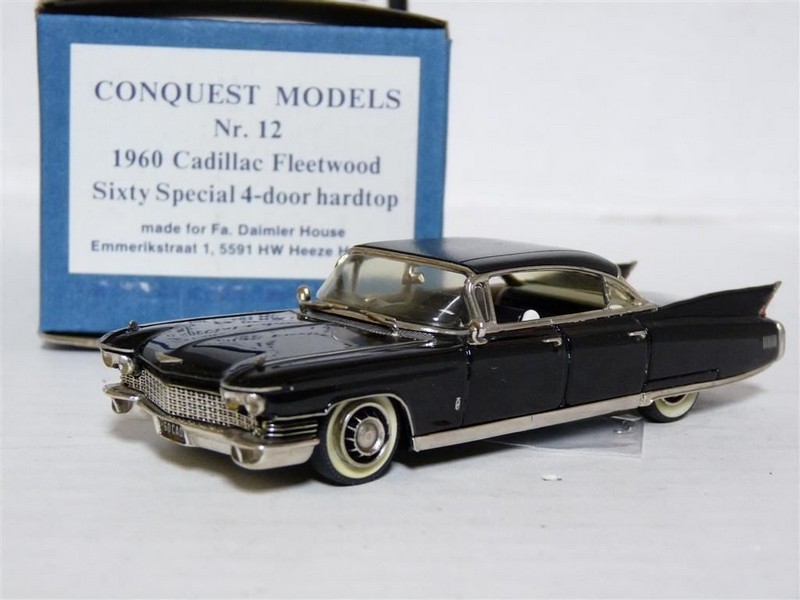
Nr.12, the 1960 Cadillac Fleetwood Sixty Special 4-door Hardtop, represented one of the most stylish and luxurious cars of the 1960s. Since 1938, the Sixty Special name had been used for the long-wheelbase and luxury versions within the Cadillac family. In 1959 the seventh generation of this model was introduced. It featured an absolutely spectacular design with large rear fins and numerous chrome details on both the front and rear sections of the body. The car was equipped with a 6.4-litre V8 producing 325 h.p. and a 4-speed automatic Hydramatic transmission. Innovative air suspension utilizing freon-filled shock absorbers was optional on the Sixty Special series.
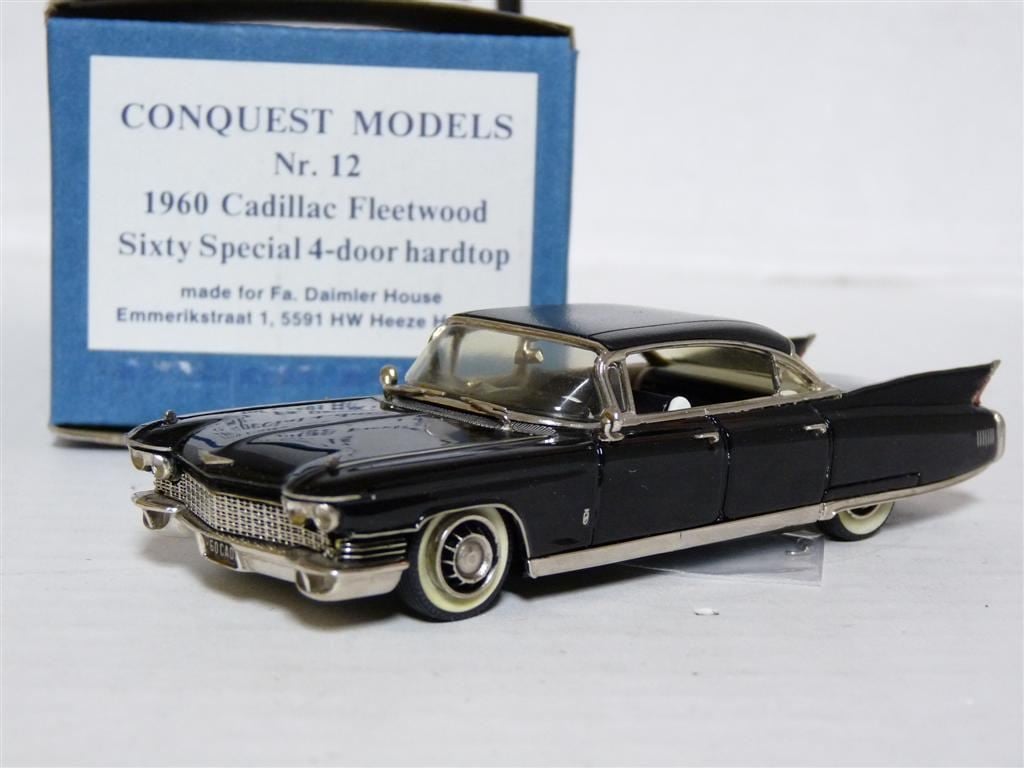
For 1960, the changes included shorter tail fins, cleaner side trim design, and a rear grille similar to that of the Eldorado. The 1959 and 1960 Fleetwood range consisted of the Series 60 Sedan and 4-door Hardtop, as well as the Series 75 Limousine. Henk chose to release a model of the 1960 4-door Hardtop version. It was available in Ebony (Black) and Arroyo Turquoise Metallic.
Nr.13, the 1956 Plymouth Savoy 4-door Sedan, represented one of the most inexpensive cars of its time. Its main customers were average families, and despite its reasonable price this car had a very attractive style, like most American vehicles of that period. In 1955 the second generation of the Savoy, designed by Virgil Exner, was introduced. In the Plymouth range, the car was positioned between the Plaza and the Belvedere, both of which were also named in honour of prestigious hotels.
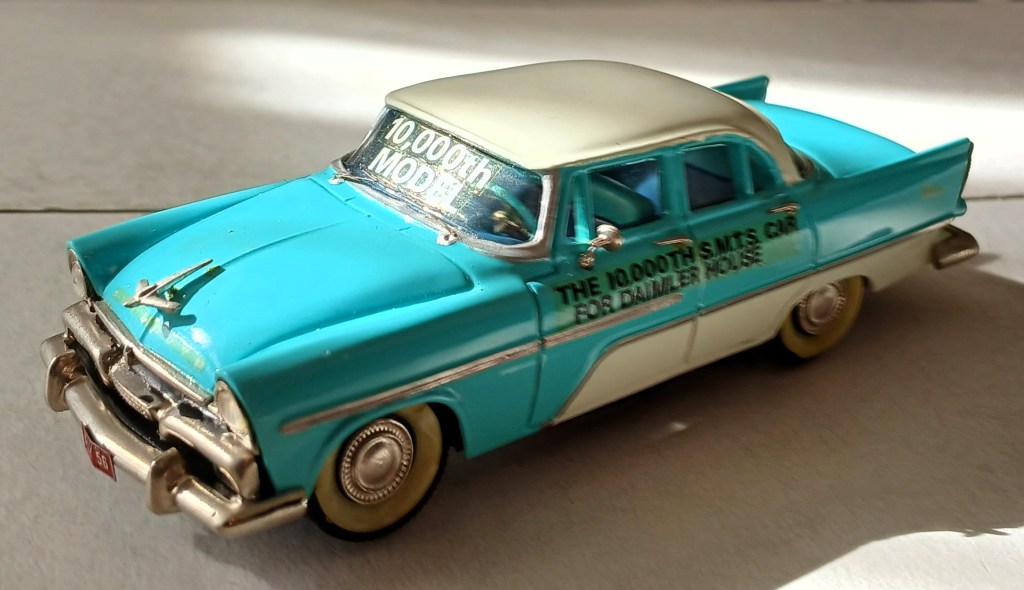
Initially, only two body styles were introduced in the Savoy range: the 2-door Club Sedan and the 4-door Sedan. The following year, the 2-door Sport Coupé Hardtop was added. The power of the basic 3.8-litre 6-cylinder engine was increased from 117 to 131 h.p., while the optional Hi-Fi V8 engines increased from 157 and 167 h.p. to 187 and 200 h.p. By the way, the Savoy was exported to Europe, and these versions received economical 95 h.p. 6-cylinder engines and more powerful V8 engines producing 165 h.p.
The Conquest model was painted in two-tone colour combinations: Turquoise Blue/Eggshell White and Briar Rose/Eggshell White. The 1956 Savoy became the last miniature released in 1992.
For 1993, new releases for the Conquest range consisted of the 1948 Pontiac Torpedo Eight De Luxe Convertible Top Down and Top Up, the 1956 Buick Special Convertible, and the 1957 Ford Thunderbird Hardtop.
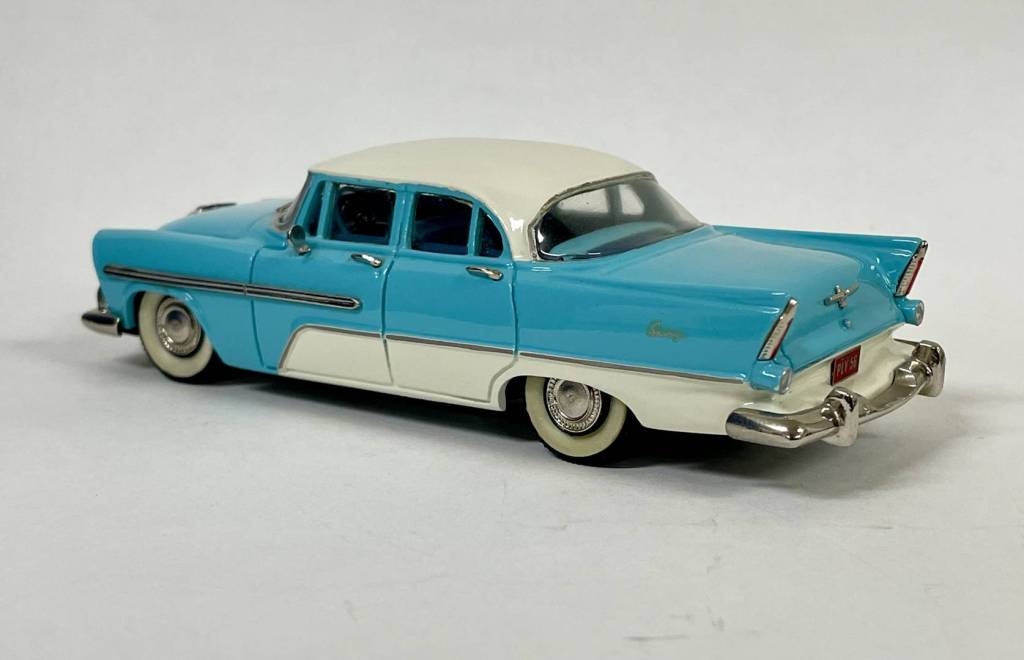
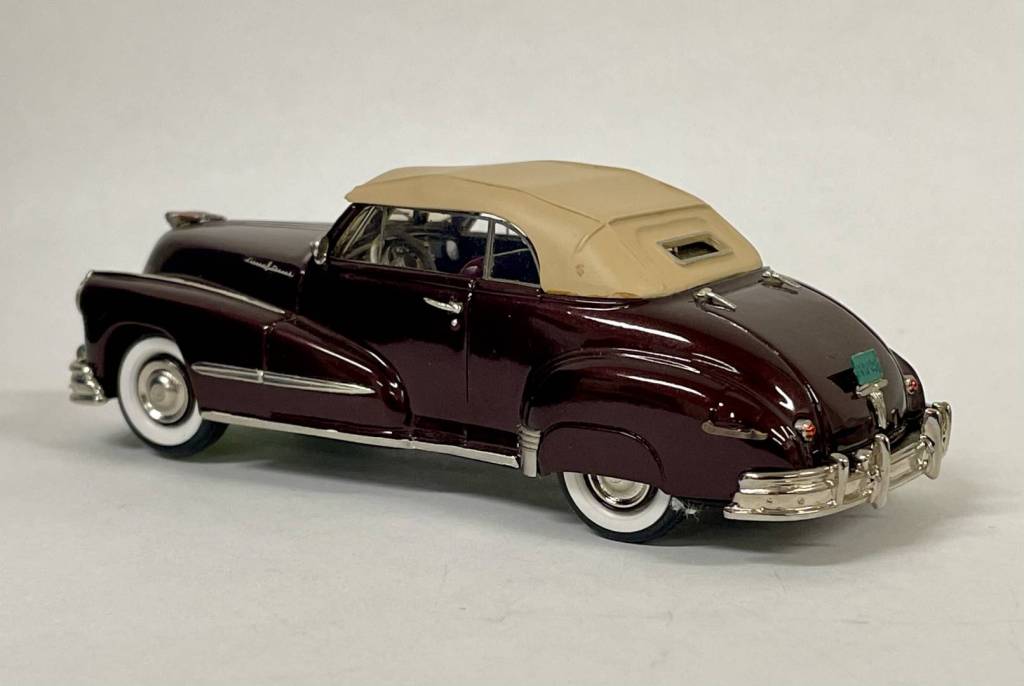
With Nr.14, the 1948 Pontiac Torpedo Eight De Luxe, Henk appealed to collectors of models from the early post-war years. After World War II ended, most manufacturers in the USA resumed production of pre-war cars. Thus, the 1948 Pontiac was in fact based on the 1942 model because production of civilian vehicles had stopped after the attack on Pearl Harbor.
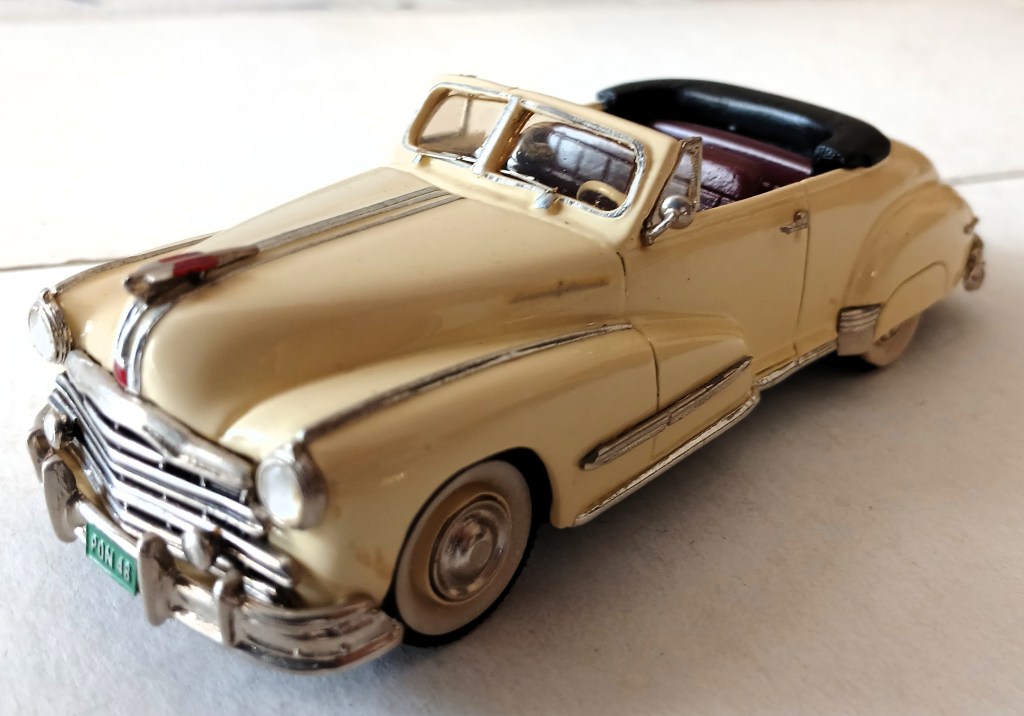
1948 became the final year for the old Pontiacs before they were replaced by the next generation. Initially there were two versions: the Torpedo, based on a short-wheelbase chassis, and the Streamliner, based on a long-wheelbase chassis. The Torpedo was available as a Business Coupé, Sport Coupé, 2-door Sedan Coupé, 4-door Sedan, and Convertible. Streamliner body styles included Coupé, Sedan, and woody estate. The models were equipped with either a 3.9-litre 6-cylinder 90 h.p. engine or a 4.1-litre engine producing 103 h.p. The 1948 version differed very little from the 1947 one: the radiator grille design was altered and the Hydramatic transmission became optional.
Conquest modelled the luxurious Convertible version equipped with the 8-cylinder engine. In fact, in 1948 only this variant was available. Its main exterior features were the side mouldings on the front wings. The Top Down version was painted in Genesee Green Metallic and France Ivory, while the Top Up version came in Blue Lake Blue Metallic and Parma Wine Metallic.
Three years later Henk continued the 1948 Pontiac range by producing the Streamliner woody estate.
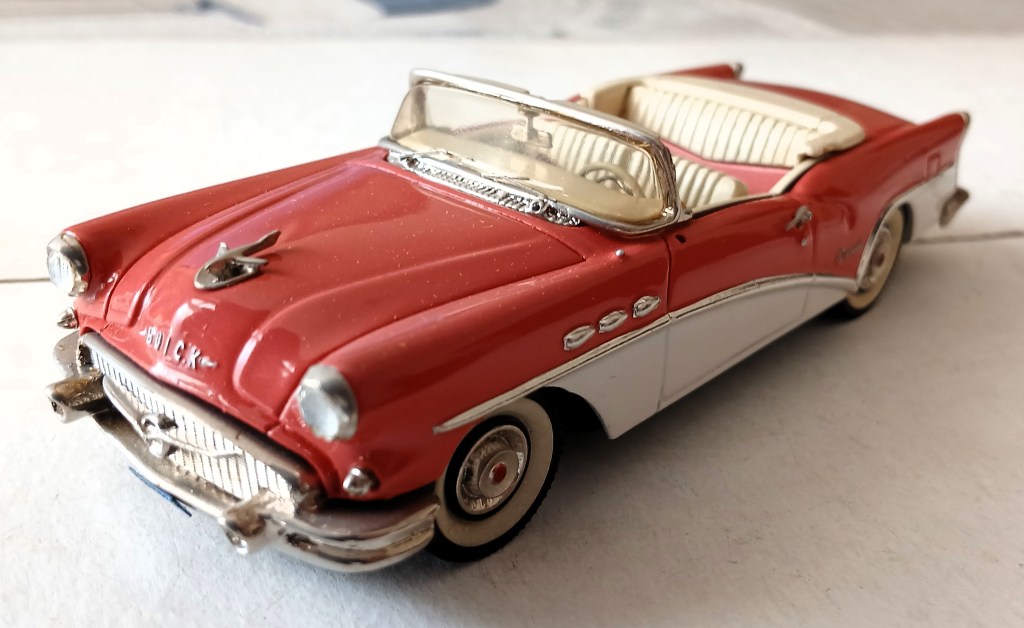
Nr.15, the 1956 Buick Special Convertible, was added to the selection of mid-1950s Buicks in the Conquest range. This model filled a gap between the 1955 and 1957 miniatures previously reproduced by the company. The car had several minor exterior differences from the 1955 version, and the model was painted in Foam Green/Dover White and Tahiti Coral/Dover White.
Nr.16, the 1957 Ford Thunderbird Hardtop, completed a very busy year for the Conquest range in 1993. Strictly speaking, the first-generation Thunderbird was already a rather common subject among die-cast and hand-built manufacturers, but most of them focused on the 1955 and 1956 versions. For example, both had been produced by Brooklin Models.
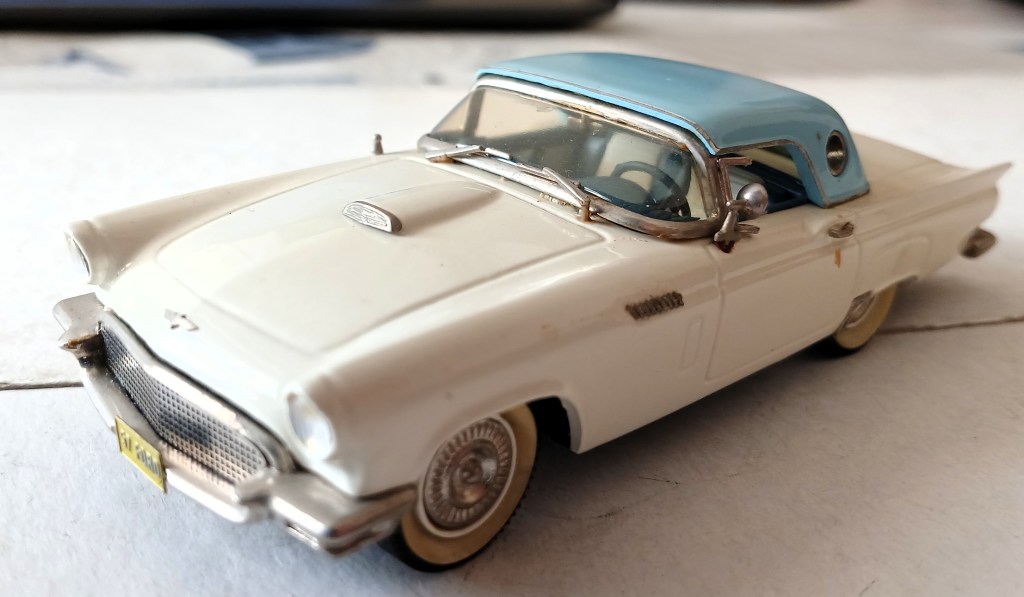
The company from Bath also produced 1957 Convertibles, but not the Hardtop. Thus Daimler House filled this gap and offered collectors a very sophisticated miniature. The history of the Thunderbird is very well known, so there is no need to describe it in detail in this review. The 1957 model became the last of the first generation. It received new front and rear bumpers, an enlarged boot section with an added Continental kit, and a new dashboard featuring a round speedometer. The power of the V8 engines was also increased, with the most powerful version achieving 270 h.p. In 1957, 21,380 customers bought 2-seat Hardtops and Convertibles before they were replaced by the 4-seat personal luxury cars of the second generation. Henk selected two colour combinations for the Hardtops: Flame Red/Colonial White and Colonial White/Starmist Blue. The models proved so successful that, after many customer requests, Nr.28 Roadster was added to the range in 1997. It was painted in Tuxedo Black and Silver Mocha Metallic.
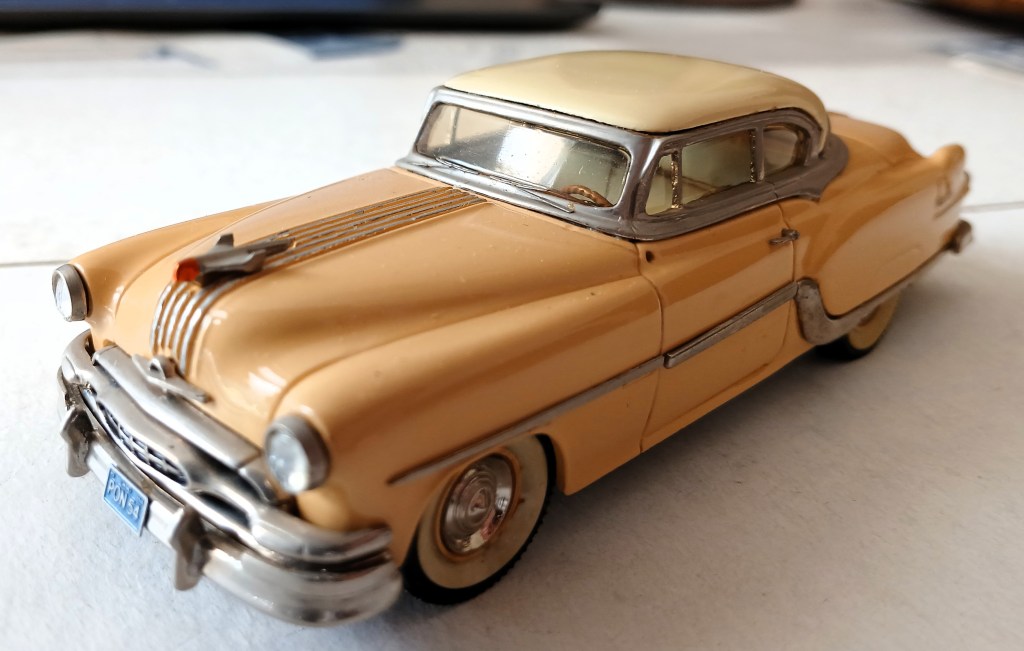
Apart from Nr.17, the 1954 Pontiac Star Chief Custom Catalina, and the 1955 Oldsmobile 98 Holiday, the 1960 Plymouth Fury 4-door Hardtop was released in 1994. Production of Nr.18 was delayed until 1995.
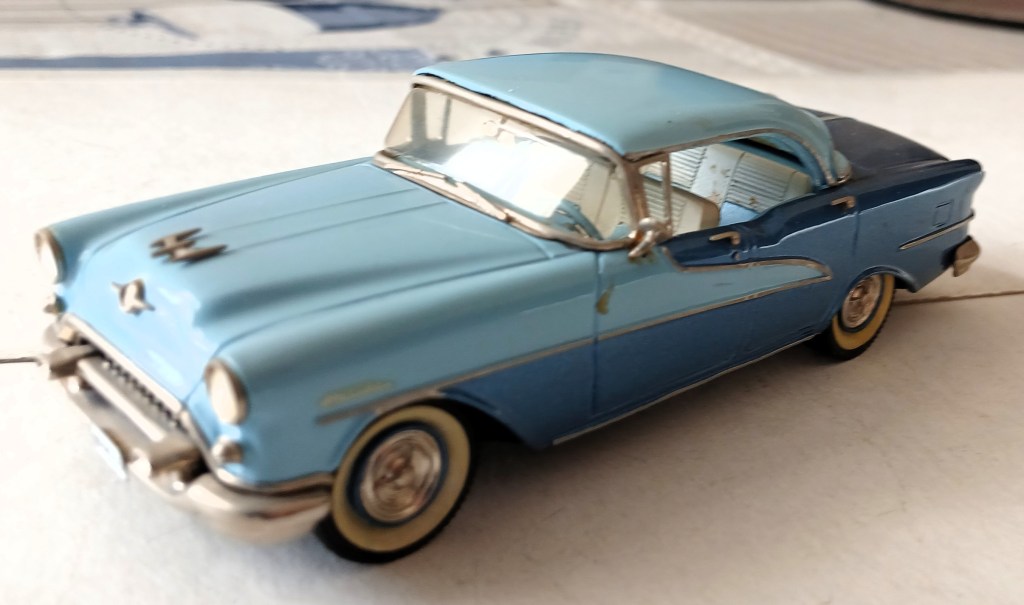
Nr.19, the 1955 Oldsmobile 98 Holiday 4-door Hardtop, was added to the range of mid-1950s Oldsmobiles by Conquest. To avoid duplicating other versions, Henk decided to reproduce the 1955 variant in addition to the 1954 one. This version featured a different radiator grille and several revised trim elements. The colours were Twilight Blue/Panama Blue Metallic, Mint Green/Glen Green Metallic, and an exclusive limited edition in Burlingame Red/Polar White.
Nr.20, the 1960 Plymouth Fury 4-door Hardtop, represented one of the most stylish and unusual cars in the Plymouth range. The first generation, released in 1959, replaced the Belvedere at the top of the line-up. A year later the second generation was introduced. Its main design features were the large tail fins, which disappeared in 1961.
This became the first Chrysler Corporation model with a unibody construction. Other innovations included Chrysler’s ram induction system and a new economical 3.7-litre 6-cylinder engine producing 145 h.p. A selection of V8 engines producing between 230 and 330 h.p. was also available.
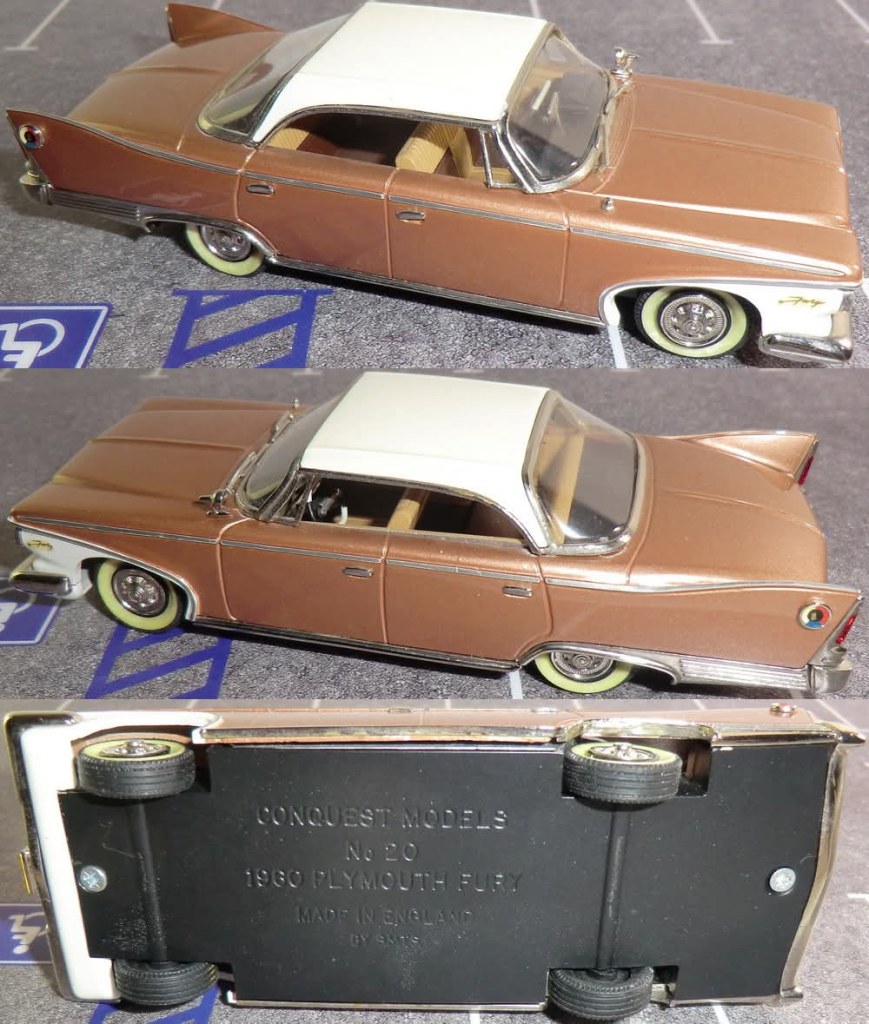
The Fury range consisted of four body styles: 2-door Hardtop, 4-door Hardtop, Sedan, and Convertible. In 1960, customers bought 55,487 Furys. Daimler House chose the 4-door Hardtop, one of the most expensive models in the range. The brass master for Nr.20 was made by Alistair Duncan, who was also known for his short-lived A & S Modelmakers range, in which he produced a selection of 1958 Thunderbirds. For the Plymouth, two colour combinations were chosen: Caramel Metallic/Oyster White and Chrome Green Metallic/Oyster White.
 PITLANEITALIA
2 pensieri riguardo “The story of Conquest Models (part 2: 1991-1994)”