
Terza e ultima parte della storia di Conquest Models, scritta da Fedor Eliseev. Potete ritrovare le prime due puntate ai seguenti link: https://pitlaneitalia.com/2026/05/20/the-story-of-conquest-models-part-1/ e https://pitlaneitalia.com/2026/05/23/the-story-of-conquest-models-part-2/
by Fedor Eliseev
By the mid-1990s, the Conquest and Madison ranges by Daimler House had earned an excellent reputation among collectors of American model cars. Despite the prices, demand was very high. The white metal market was continuing to grow, and Henk used this opportunity to expand his range.
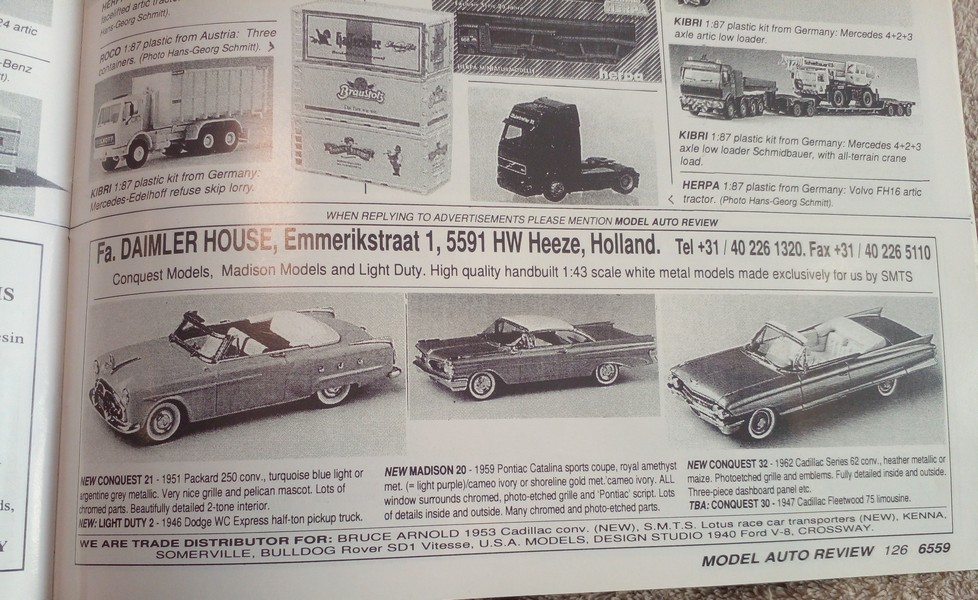
In 1995, he added three new models to the Conquest line: the 1958 Cadillac Fleetwood 75 Limousine, the 1947 Oldsmobile Series 76 Dynamic Cruiser 2-door Club Sedan, and the 1953 Buick Super 2-door Riviera Hardtop. From that time onward, the models were not always released according to the sequence of their catalogue numbers. Thus, the first release of 1995 became No. 18, the 1958 Cadillac Fleetwood 75 Limousine.
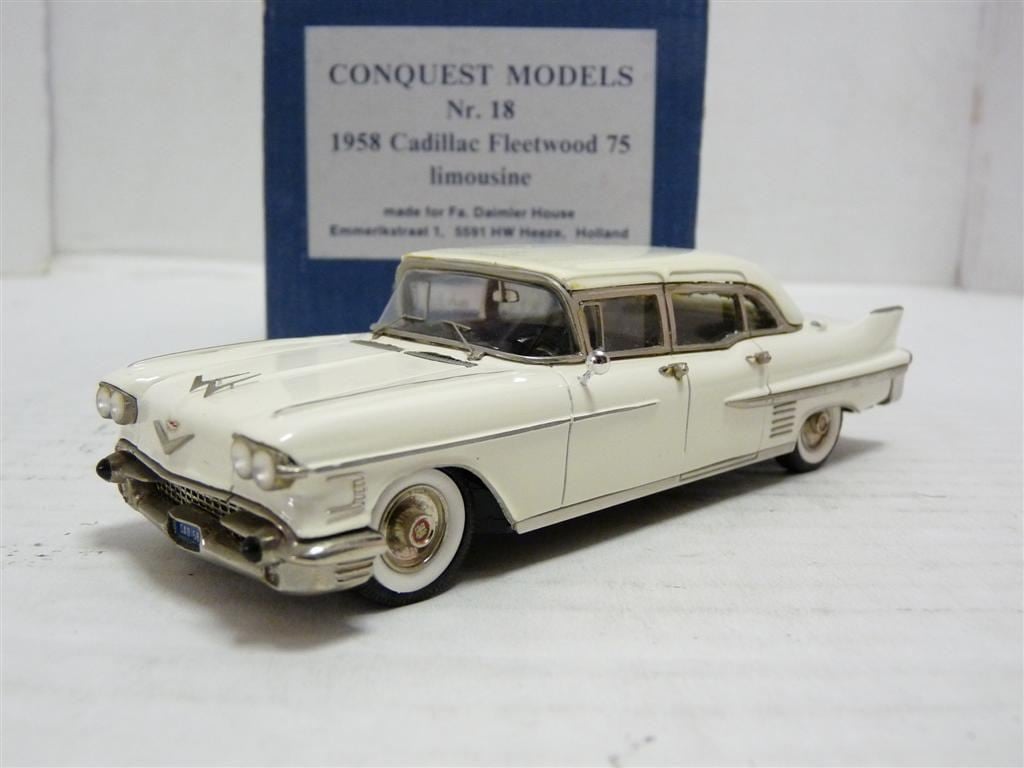
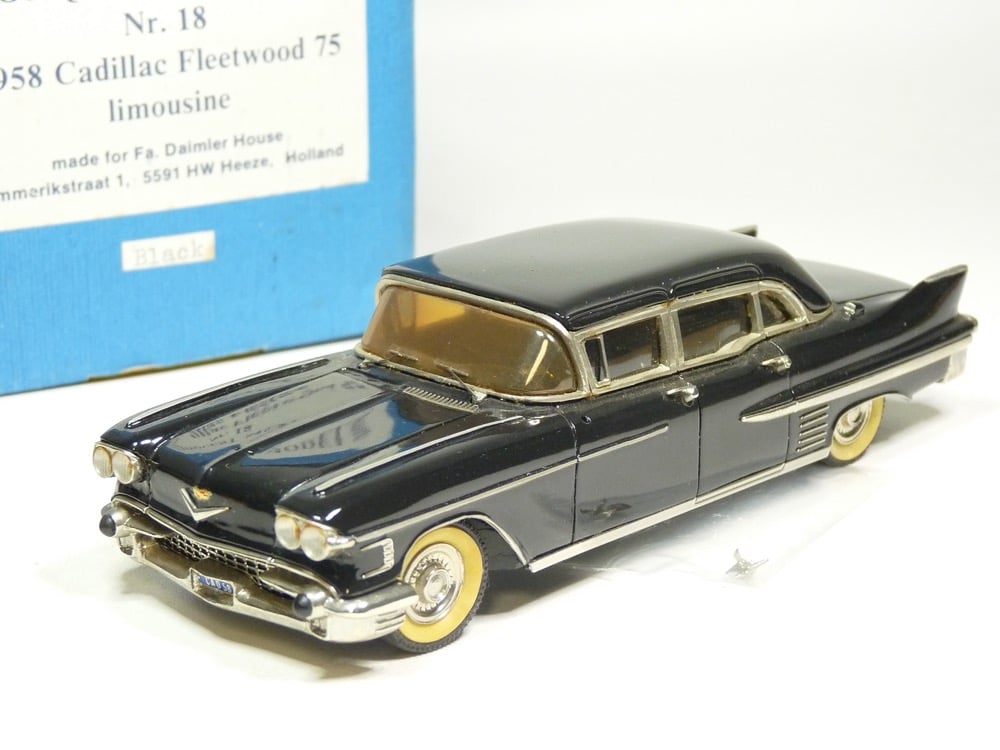
This became the second Cadillac model in the Conquest range after the 1960 Fleetwood Sixty Special and represented its predecessor.
Daimler House modelled the luxurious version of the 1958 range, with a length of 6 metres. It was equipped with a 6-litre V8 335 h.p. engine with three double-barrel Rochester carburettors, a 4-speed Hydramatic transmission, and was based on the X-type frame.
The 1958 range was a further development of the 1957 line. The cars received a newly designed radiator grille and rubber front bumper cones, twin round headlights, chrome mouldings around the front wheels, and a five-stripe chrome moulding on the wheel arches instead of the seven stripes used on the previous model.
Cadillacs were available with the innovative Autronic Eye system, which automatically switched the headlights from low to high beam and vice versa according to road traffic conditions, without any driver intervention.
Unfortunately, 1958 was not a good year for the American economy because Eisenhower’s recession had begun. That is why only 1,500 customers bought the extremely expensive Fleetwood 75 Limousine.
The model by Conquest was available in Camelot Grey Metallic, Alpine White, and Black. Some time later, a very limited version in Maumee Mauve was added. All window surrounds were chromed, while the radiator grille and body ornaments were photo-etched. The interior was equipped with a division window, and an Autronic Eye on top of the dashboard was reproduced. Thus, the 1958 Cadillac became one of the most sophisticated models in the range, consisting of 88 parts.
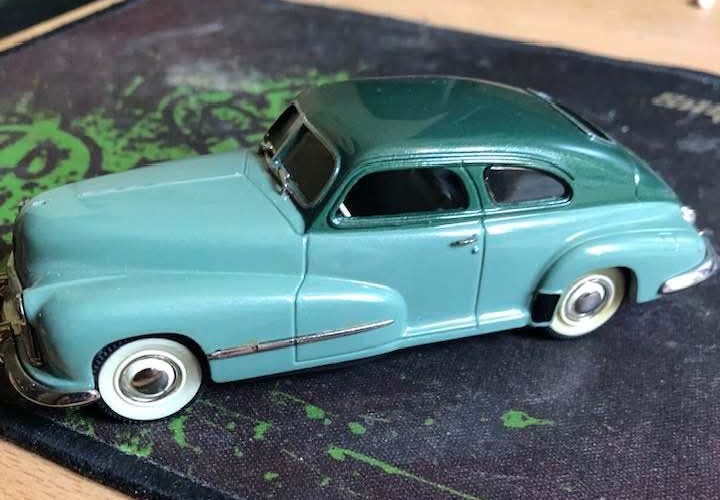
The next release was No. 23, the 1947 Oldsmobile Series 76 Dynamic Cruiser 2-door Club Sedan. With this model, Henk returned to the early post-war years, when new cars were, in fact, pre-war designs.
In contrast to the Cadillac, this Daimler House model reproduced one of GM’s most inexpensive cars. The post-war Oldsmobile range consisted of a three-series line-up: the Series 66 as the most affordable, the middle Series 76/78, and the top Series 98. They were based on the 1941 cars and received minor restyling.
The Series 76/78 was available in two body variants, the 2-door Club Coupe and the 4-door Sedan, and with two engine variants: a six-cylinder for the Series 76 and an eight-cylinder for the Series 78. The cars had a very simple basic specification, and customers could order a radio, plastic steering wheel, clock, and rear-screen wiper as optional equipment. In 1947, options such as two-tone colour combinations and a heater were added. The 76/78 became the most popular series in the early post-war Oldsmobile range. In 1947, 38,000 customers bought the 2-door Club Coupe and about 30,000 bought the 4-door Sedan. Incidentally, they shared many details with the 1948 Pontiac previously modelled for the Conquest range.
No. 23 reproduced the most popular 1947 2-door Club Coupe equipped with a six-cylinder engine and a two-tone colour scheme. It was available in Havana Beige/Pawnee Beige Metallic and Seafoam Green Metallic/Ivy Green Metallic. The brass master was made by Alistair Duncan, who had by then stopped production of his A&S Modelmakers range and focused solely on creating patterns.
No. 26, the 1952 Buick Super 2-door Riviera Hardtop, was the final release for the Conquest range in 1995. This model represents one of the most iconic American cars of the 1950s.
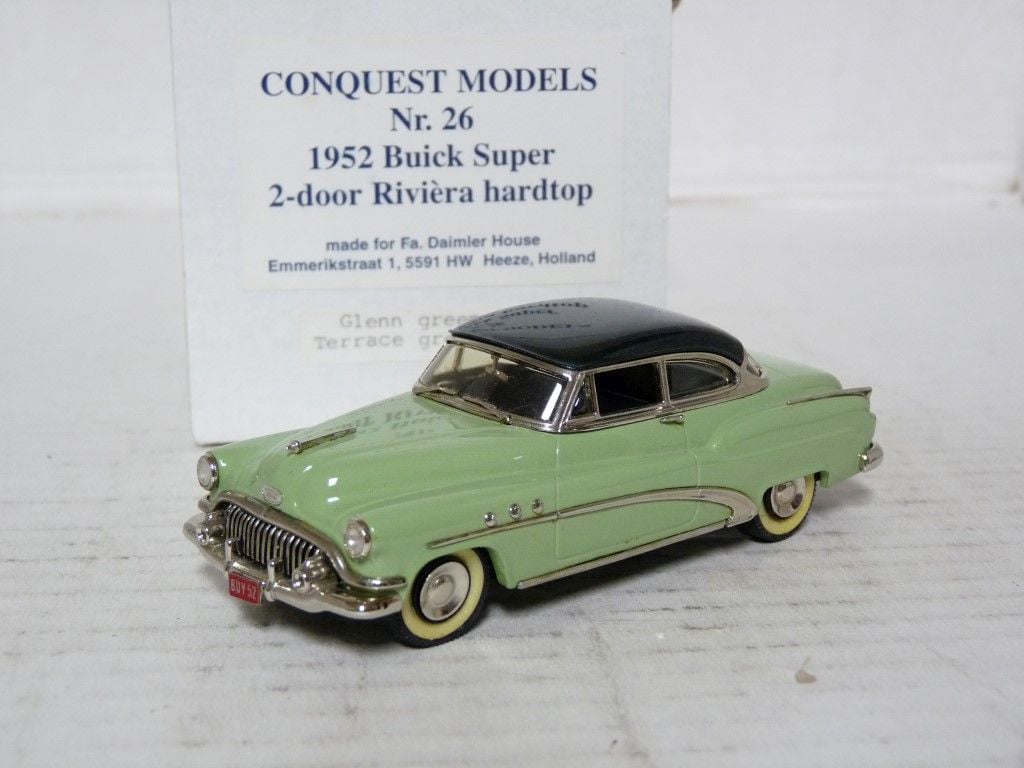
The 1952 Buick line-up consisted of three series. The least expensive was the Special, followed by the Super, while at the top of the range was the Roadmaster with a long wheelbase.
The almost entirely new selection of models featuring the GM B- and C-body types had been introduced in 1949 and modified by 1952. The 1952 Super range was available in four body styles: 4-door Riviera Sedan, 2-door Riviera Hardtop, Convertible, and Estate.
The 1952 models did not differ significantly in design from the 1951 versions. They received a new front bumper, chrome mouldings on the rear wings, and a revised Sweepspear side moulding that no longer followed the rear wheel arch. All Special and Super models had three chrome VentiPorts on each fender, while the Roadmaster had four. This feature indicated that Roadmasters were equipped with more powerful V8 engines.
The 1952 Buick Super had a 4.3-litre straight-eight 128 h.p. Fireball engine, an optional 2-speed Dynaflow automatic transmission, and power steering. About 71,000 customers bought the Riviera Sedan, while around 55,000 chose the Riviera Hardtop.
For the Conquest range, Henk selected the 1952 Super 2-door Riviera Hardtop. Like all Fa. Daimler House models, this one was absolutely spectacular and sophisticated. It featured numerous chrome details and photo-etched “Super” scripts on the rear mudguards. Henk chose three colour combinations: Victoria Maroon Metallic/Sky Grey, Venetian Blue Metallic/Sky Grey, and Glen Green/Terrace Green Metallic.
The 1952 Buick line-up provided an excellent opportunity for modelling other versions. Several years later, Henk added the Roadmaster Estate to the Conquest range and a Super Convertible as a Madison Model.
For 1996, new releases for the Conquest range consisted of the 1948 Pontiac Streamliner Eight de Luxe Station Wagon and the 1956 Buick Century 4-door Estate Wagon.
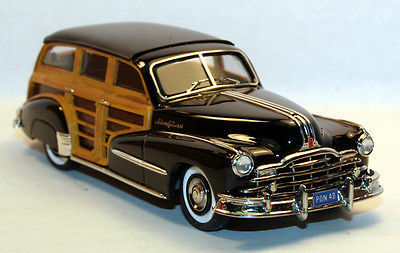
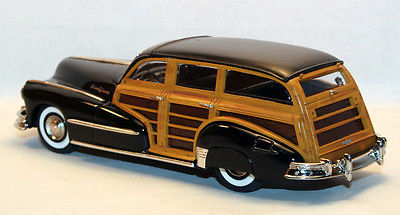
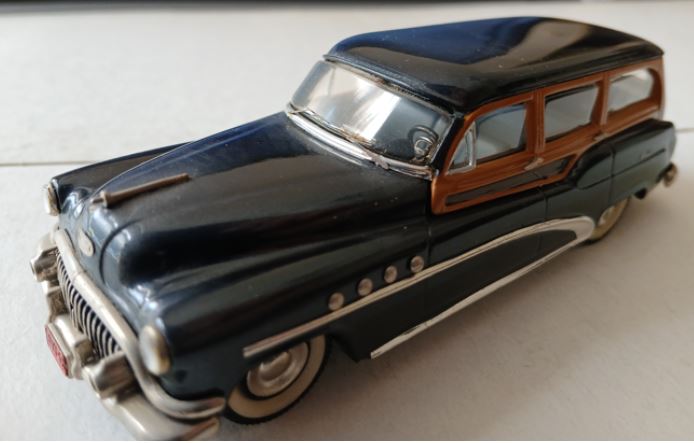
No. 27, the 1948 Pontiac Streamliner Eight de Luxe Station Wagon woody estate, was another model in the range of 1948 Pontiacs previously mentioned in Part 2. The brass master was made by Alistair Duncan, and the models were painted in Parma Wine Metallic or Volunteer Green Metallic with a leathercloth roof and highly realistic wooden panelling.
No. 22, the 1956 Buick Century 4-door Estate Wagon, was added to the range of 1955–57 Buicks previously modelled by SMTS for Fa. Daimler House. In 1954, the Buick division relaunched the Century range after a 12-year absence. The Century was more expensive than the Special but cheaper than the Super. Four body types were available: 4-door Sedan, Riviera Hardtop, Convertible, and Estate Wagon. Estate wagons became increasingly popular during the 1950s as more and more families moved to the suburbs.
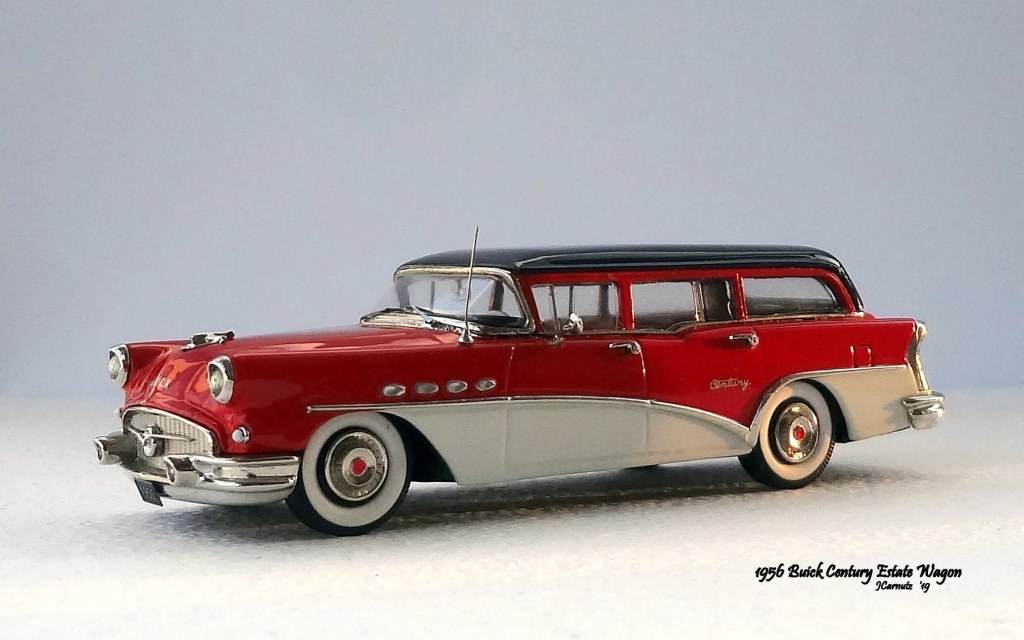
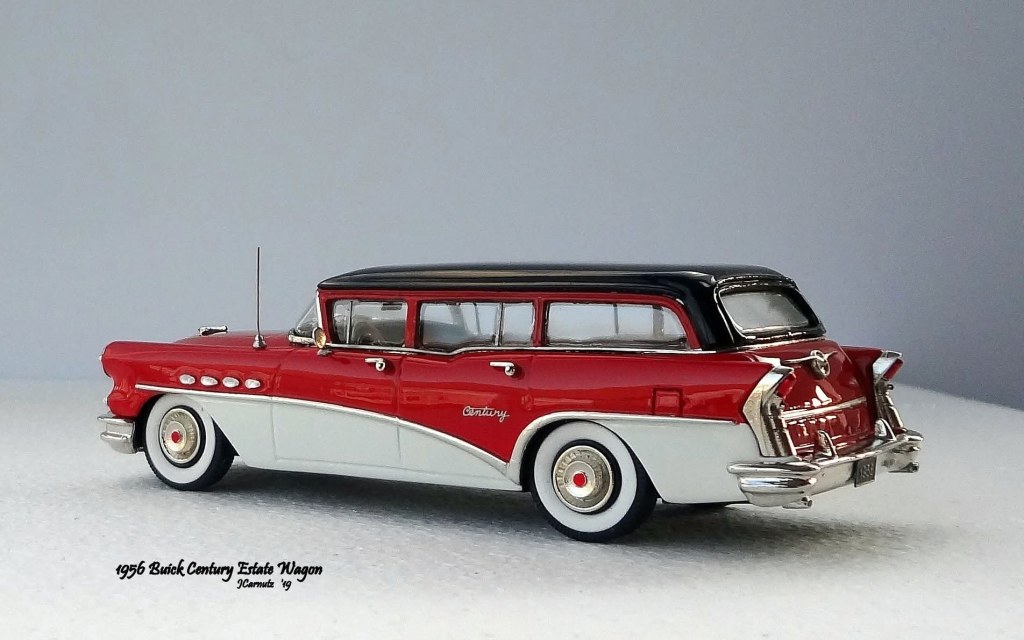
In 1956, Buick’s top-of-the-line station wagon was the Century 4-door Estate Wagon. Only 8,160 units were produced that year, although this was not a poor result for this body style.
The Conquest models were painted in very attractive three-tone colour schemes: Seminole Red/Dover White body with Carlsbad Black roof, or Cadet Blue/Dover White with Colonial Blue Metallic roof.
Henk decided to further develop the Buick estate wagon theme with the next model, No. 29, the 1957 Buick Century Caballero Hardtop Wagon. This became the first release for 1997.
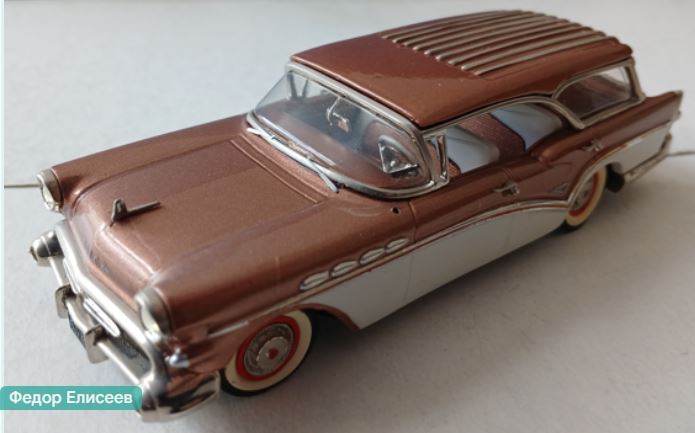
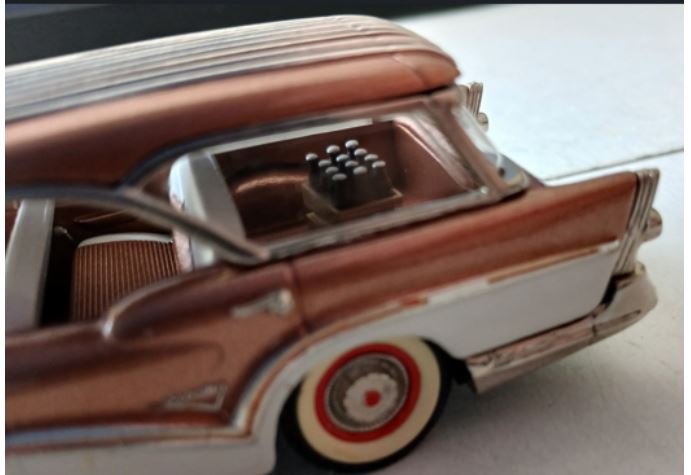
Nr.29 comes with a beer rack with on the rear seat
This car became one of the most expensive and beautiful estate wagons on the American market. It introduced a new concept of the elegant sporting estate, in contrast to the utilitarian character of traditional estate wagons. “Caballero” means “Duke” in Spanish, and naturally this car was among the most expensive in the 1957 and 1958 Buick range. It was equipped with a 6-litre V8 300 h.p. engine, Dynaflow transmission, and a luxurious interior. Sadly, 1957 was not a good year for the Buick division because of Eisenhower’s recession, and only 10,186 customers purchased this car that year.
The Conquest model was painted in Red Metallic/White, Black/White, or White/Beige. A crate of beer was placed behind the rear seat.
With the next release, No. 25, the 1962 Cadillac Fleetwood 60 Special 4-door Hardtop, Henk continued the range of GM’s top marque that had begun with the 1960 and 1958 models. No. 25 reproduced the successor to No. 12 in the Conquest range.
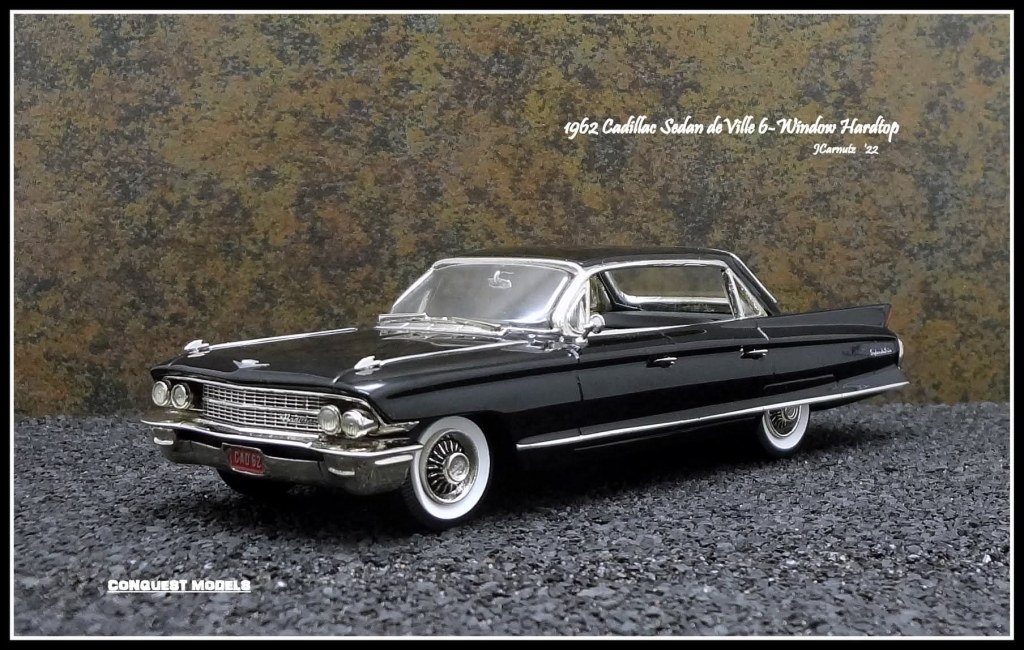
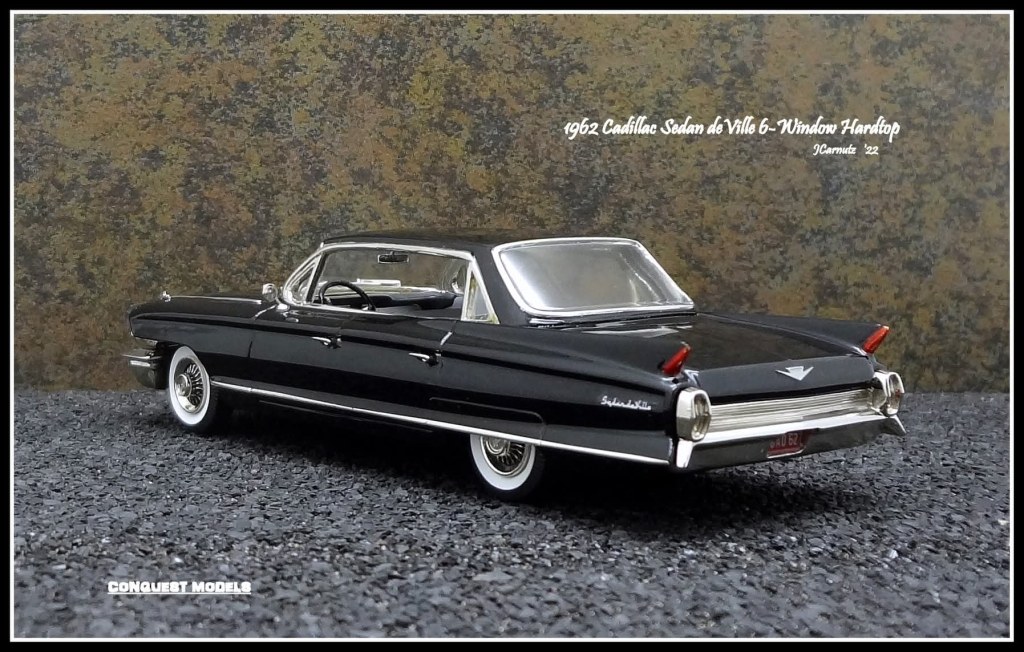
There were no significant differences between the 1961 and 1962 models. The latter received a revised radiator grille, minor trim changes, and downsized tailfins.
The 1962 Sixty Special Cadillacs were equipped with a 6.4-litre V8 325 h.p. engine complete with a four-barrel Rochester carburettor and a 4-speed Hydramatic transmission. As an option, the boot lid could be opened or closed with electric power assistance.
The body range consisted of a Sedan and a Hardtop for the 60 Series and a Limousine for the 75 Series. About 13,500 units were sold in 1962.
The brass master of the 1962 Cadillac Fleetwood 60 Special was professionally created by Alistair Duncan. Henk chose two colours for these models: Special Pompeian Red Metallic and Driftwood Beige Metallic.
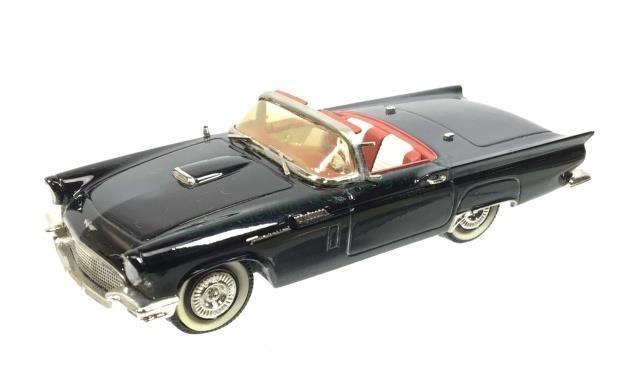
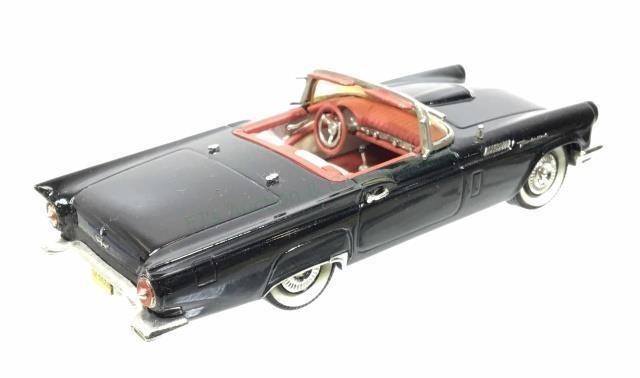
No. 28, the 1957 Ford Thunderbird Roadster, was previously mentioned in Part 2. It was painted in Tuxedo Black or Silver Mocha Metallic.
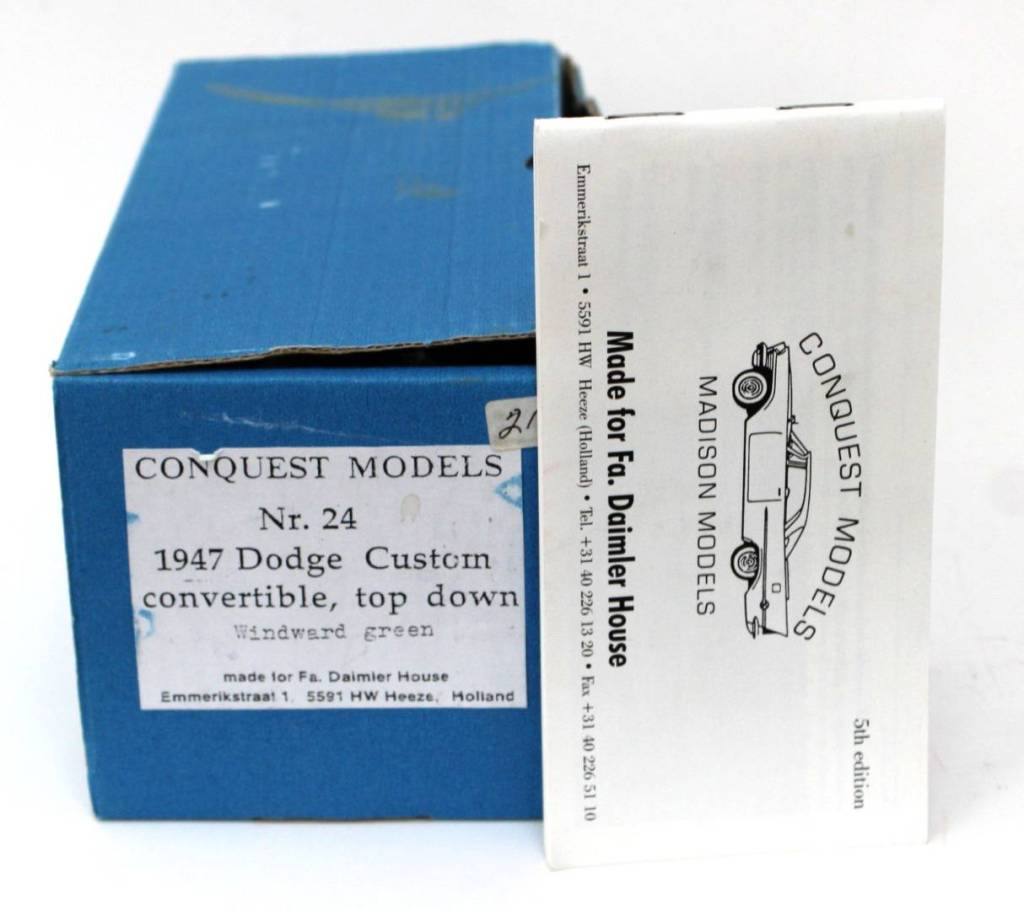
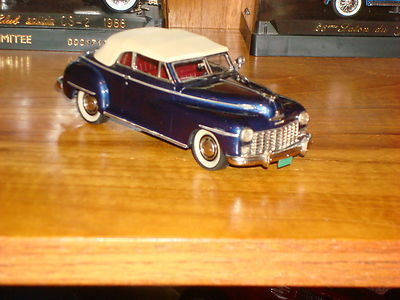
No. 24, the 1947 Dodge Custom Convertible Top Down, and No. 24a, the Top Up version, became the final releases of 1997.
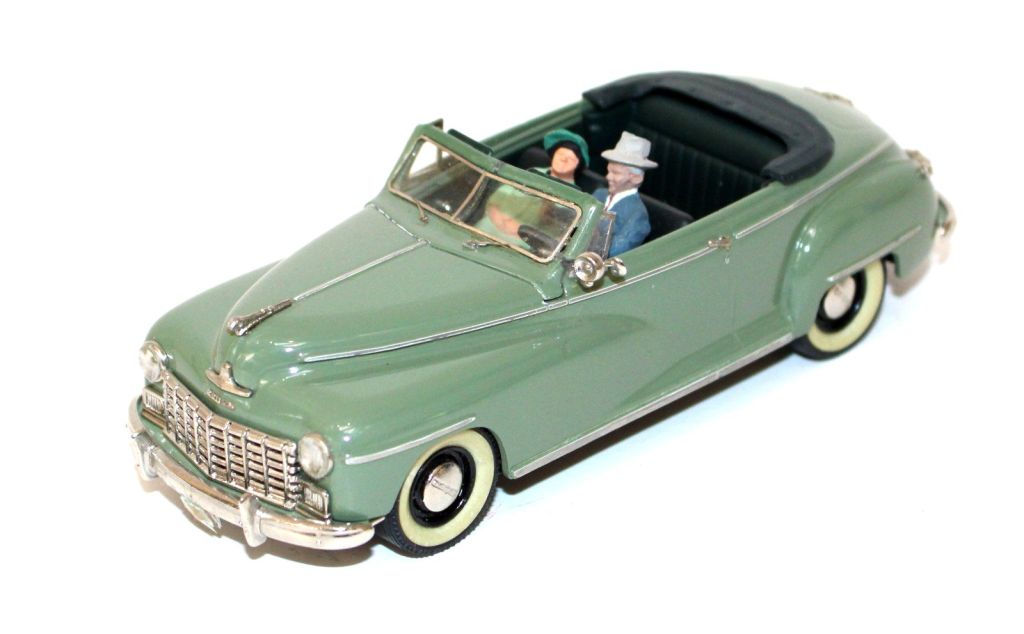
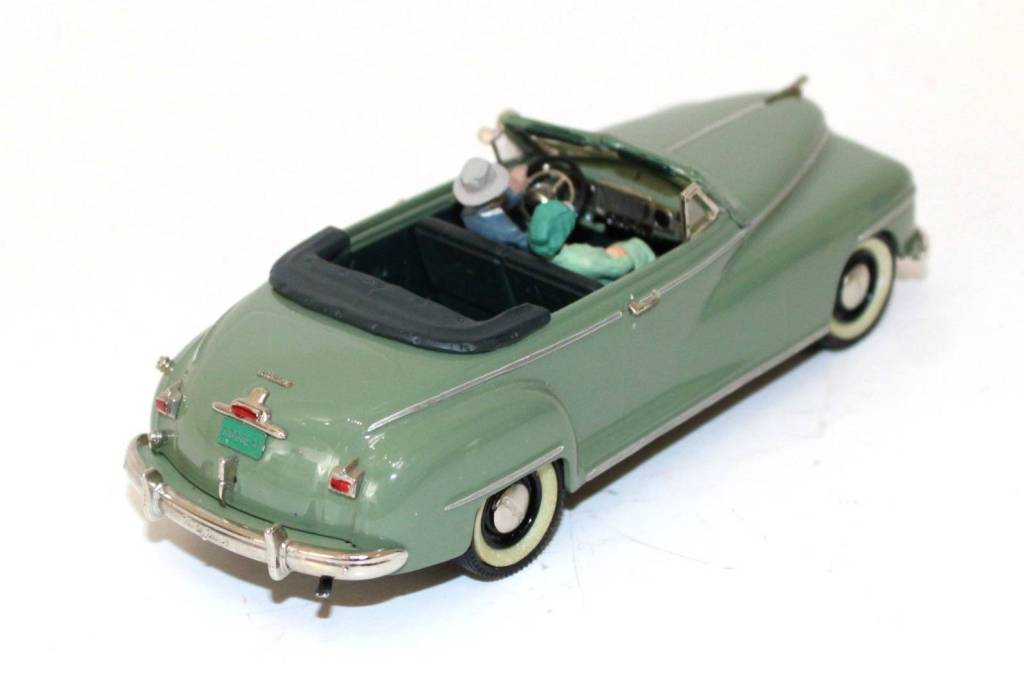
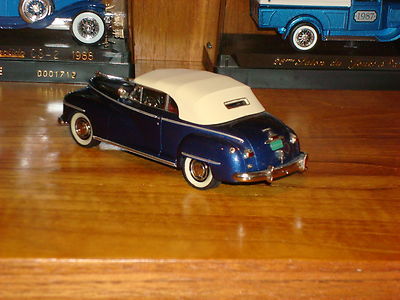
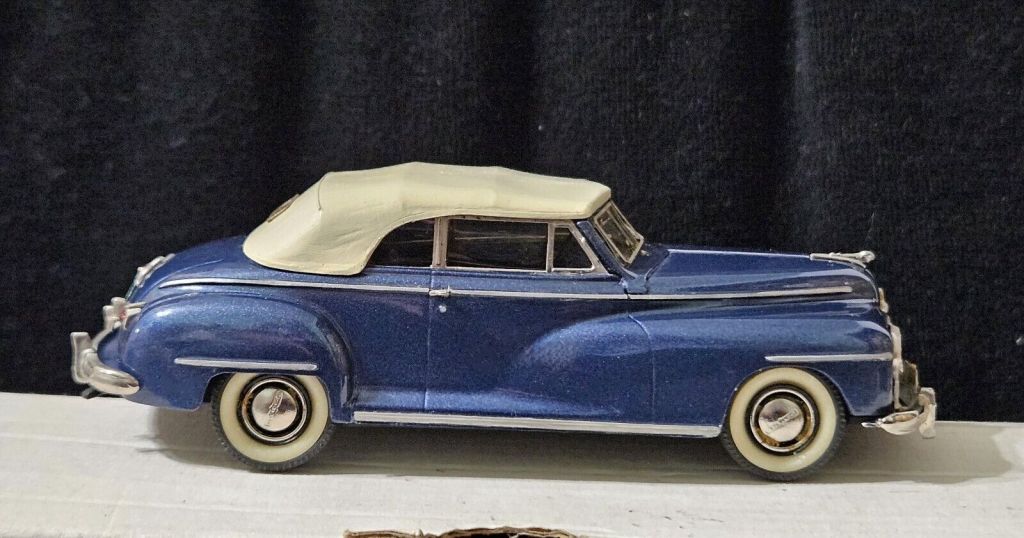
The Dodge D24 line-up was based on the pre-war 1942 car. These full-size cars were produced from 1946 until early 1949 without any significant changes.
There were two series of D24 models: the basic DeLuxe and the more luxurious Custom. All cars were equipped with a 3.8-litre six-cylinder L-head 102 h.p. engine and a 3-speed manual gearbox. Fluid Drive transmission was optional equipment.
Custom variants featured chrome window surrounds, twin electric windscreen wipers, and a more comfortable interior. The body range consisted of 4-door six- and seven-seat Sedans, a 4-door Sedan Town, a 2-door Club Coupe, and a 2-door Convertible.
Henk selected the Convertible version for his Conquest range and reproduced it in both Top Down and Top Up variants. The brass masters were made by Ian Playfoot.
No. 24 Top Down was painted in Windward Green or Panama Sand (Cream), while No. 24a Top Up was painted in Lullaby Blue Metallic.
In 1998, Henk added four models to the Conquest range: the 1951 Packard 250 Convertible, the 1962 Cadillac Series 62 Convertible, the 1957 Imperial Crown Convertible, and the 1957 Imperial Crown 2-door Hardtop.
No. 21, the 1951 Packard 250 Convertible, had been planned for release several years earlier, and at last the model became available. The main purpose of the 250 Series was to provide Packard with both a hardtop and a convertible car in its range.
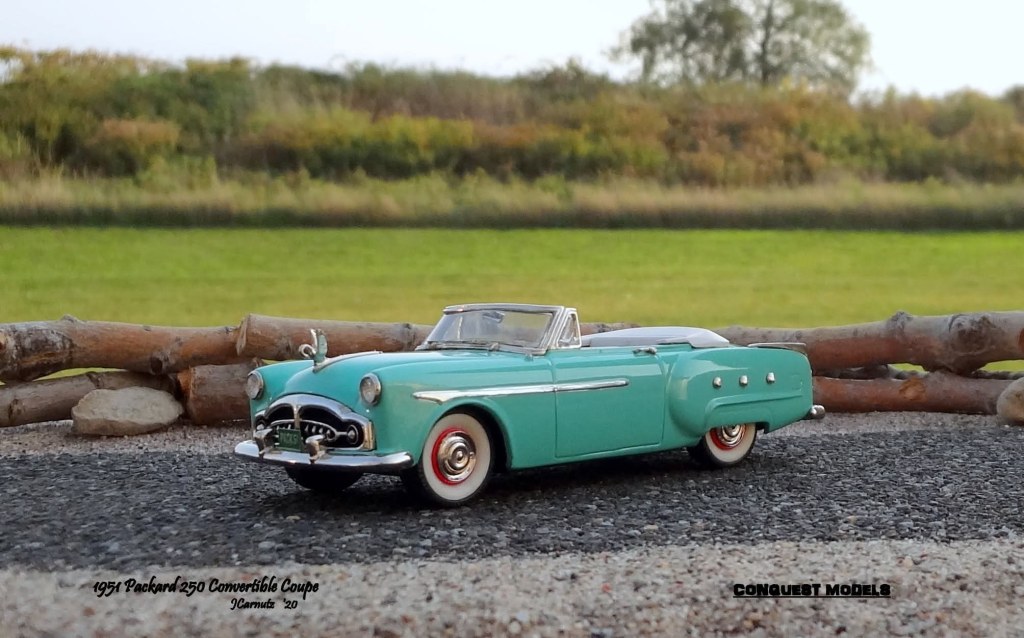
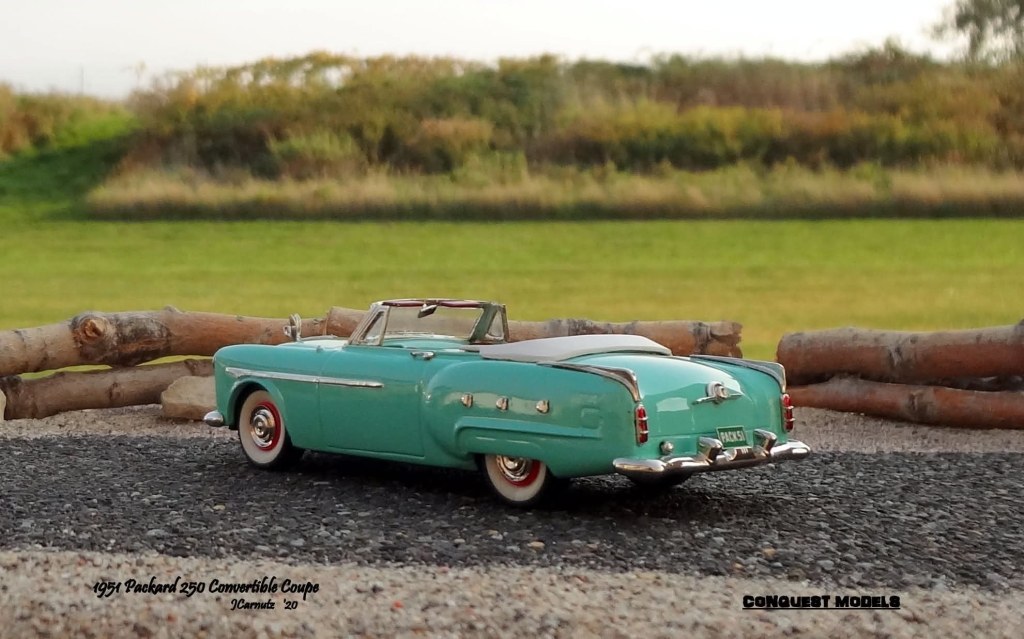
The Packard 200, initially released in 1950, was the most affordable model in the range and competed with Oldsmobile and Mercury. Based on a short-wheelbase chassis, it was designed by John Reinhart in the same style as the more luxurious 300 and 400 Patrician series. The 200 Series featured fewer chrome parts than the senior cars, a smaller rear window, and tail lights consisting of three sections.
The 250 Series included two exclusive body styles: a Convertible and a Mayfair Hardtop. They were equipped with a more powerful 5.4-litre straight-eight 150 h.p. engine borrowed from the 300 Series, an optional 2-speed Ultramatic transmission, power steering, and power-assisted Easamatic drum brakes. Compared with the standard Packard 200, the 250 Series also received additional design features such as a chromed cormorant hood ornament, a revised radiator grille, and three VentiPorts on each rear wing. In 1951, 4,640 customers purchased convertibles and hardtops.
Henk modelled both versions of the 1951 250 Series. Under the Conquest brand, he released the Convertible variant, while the Mayfair Hardtop was added to the Madison range. No. 21 Convertible was painted in Turquoise Light or Argentine Grey Metallic and featured a beautifully detailed two-tone interior. Naturally, the pelican mascot was reproduced with the highest level of accuracy.
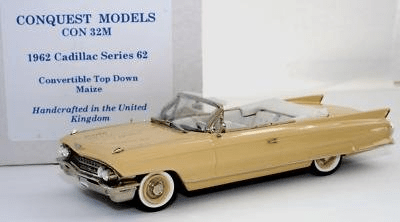
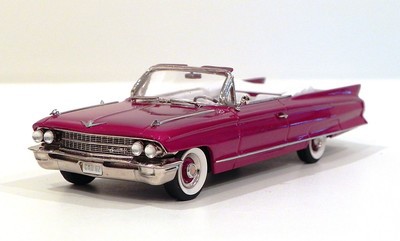
No. 32, the 1962 Cadillac Series 62 Convertible, was added alongside the 1962 Cadillac Fleetwood 60 Special 4-door Hardtop. The mid-range 62 Series in 1962 was available in several versions: 2-door and 4-door Hardtops and a 2-door Convertible. The latter was reproduced in the Conquest range. For this model, Henk chose two colour variants: Heather Metallic and Maize.
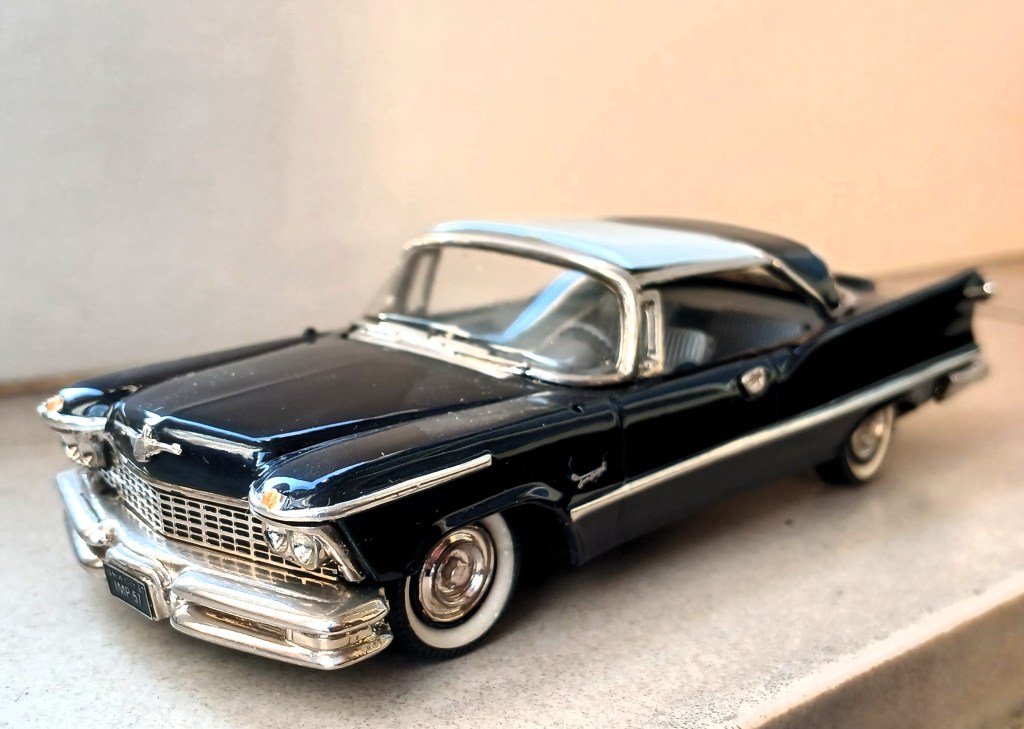
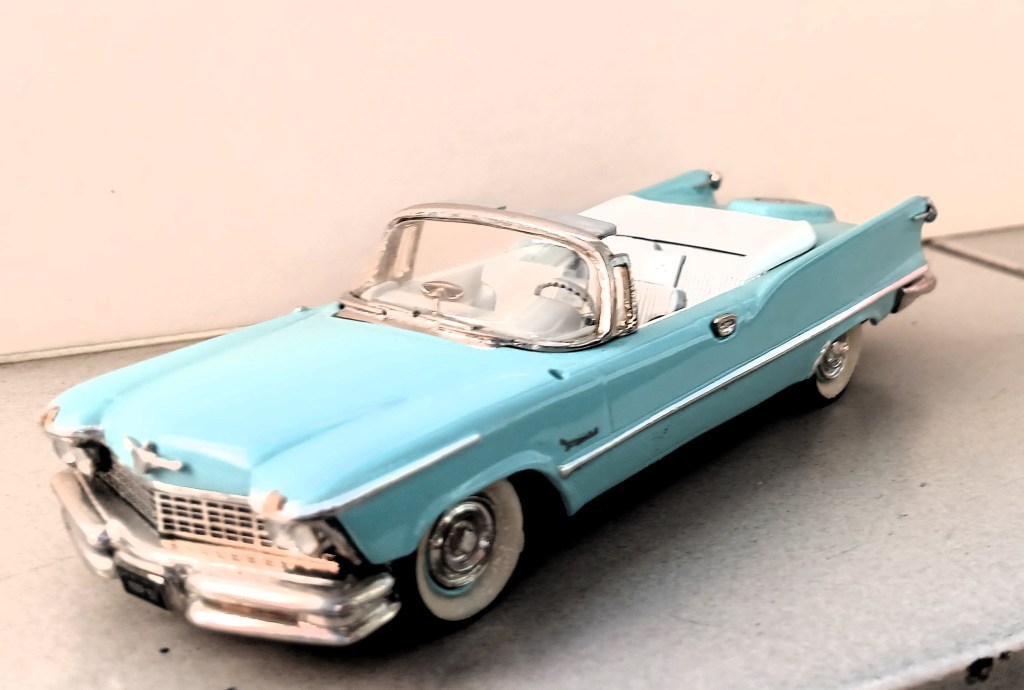
The next two models, No. 33, the 1957 Imperial Crown 2-door Hardtop, and No. 34, the 1957 Imperial Crown Convertible, allowed collectors to expand the range that had begun with No. 6 (see Part 1).
No. 33 was painted in Seafoam Aqua or Sunset Rose, while No. 34 was finished in Sovereign Blue Metallic/Mist Grey or Copper Metallic/Desert Beige. Both models featured two-tone interiors.
No. 30, the 1947 Cadillac Fleetwood 75 Limousine, was released in 1999 and continued the range of GM’s top offerings. After producing models from the 1950s and 1960s, Henk turned to early post-war Cadillacs to represent the development of the marque during the 1940–1960 period.
After World War II, Cadillac relaunched its pre-war cars designed in 1941. The Series 60 Special and Series 75 were the most prestigious and therefore received Fleetwood bodies. All cars in the 75 Series were equipped with a 5.7-litre V8 150 h.p. engine, a 3-speed manual gearbox, and independent front suspension. For 1947, the line-up received chrome stainless-steel running boards and a chrome body strip. The limousine version was the most expensive, although the company produced only about 1,000 units in 1947.
Initially, the 1947 Cadillac Fleetwood 75 Limousine model was made in resin by Bruce Arnold for his private collection in 1996. A couple of years later, Henk bought the pattern and asked SMTS to rework it for white-metal production. As a result, this magnificent model was added to the Conquest range. Two colour combinations were available: Gunmetal Grey Metallic and Antoinette Blue (Dark Blue).
Another model released in 1999 was No. 35, the 1952 Buick Roadmaster Station Wagon, which continued the line-up of 1952 Buicks begun with No. 26, the 2-door Riviera Hardtop.
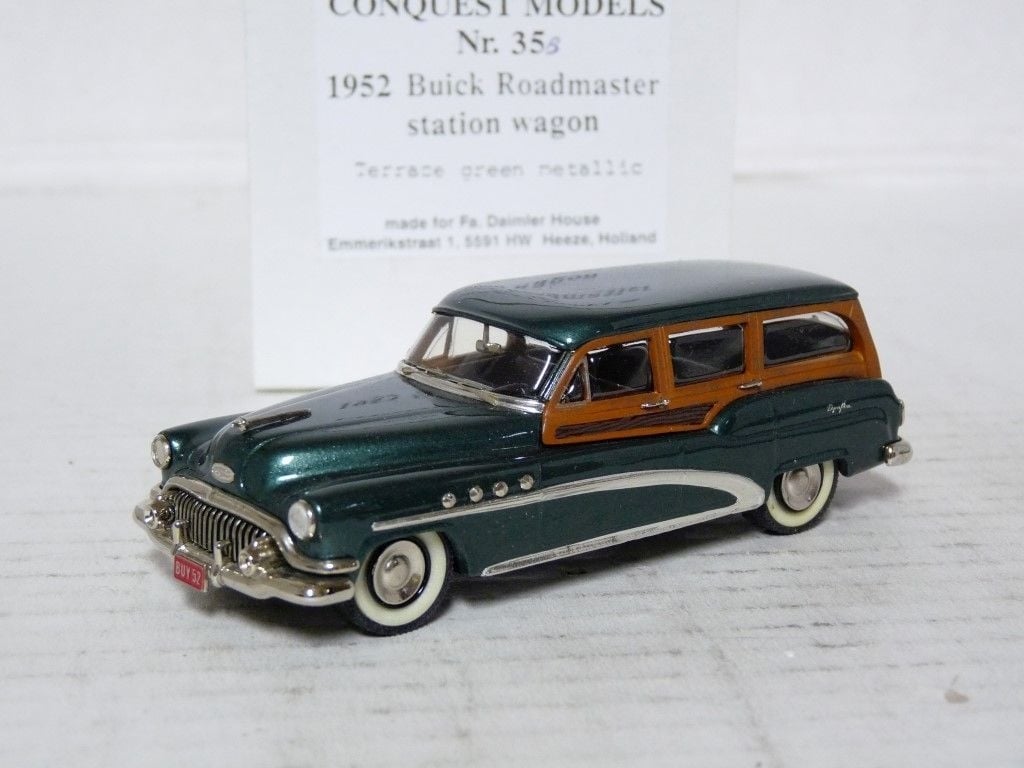
The Roadmaster was Buick’s most impressive range and had a longer wheelbase compared with the Super range. Another distinguishing feature was the presence of four VentiPorts on each front mudguard instead of the three used on the Special and Super. The Buick Roadmaster line-up consisted of a Riviera Sedan, Riviera Hardtop, and Station Wagon.
Henk preferred the Station Wagon, Model 79R, which became No. 35. This six-passenger woody estate was the most expensive model in the 1952 Buick range. The vehicle was equipped with a 5.3-litre straight-eight 170 h.p. engine fitted with an Airpower four-barrel carburettor and Dynaflow automatic transmission. Only 359 units were built in 1952.
The model was available in Victoria Maroon Metallic, Terrace Green Metallic, and Imperial Blue Metallic (Dark Blue Metallic).
In the millennium year 2000, three models were added to the Conquest range: the 1955 Studebaker President Speedster, the 1947 Chevrolet Stylemaster 4-door Sedan, and the 1949 Frazer Manhattan 4-door Sedan.
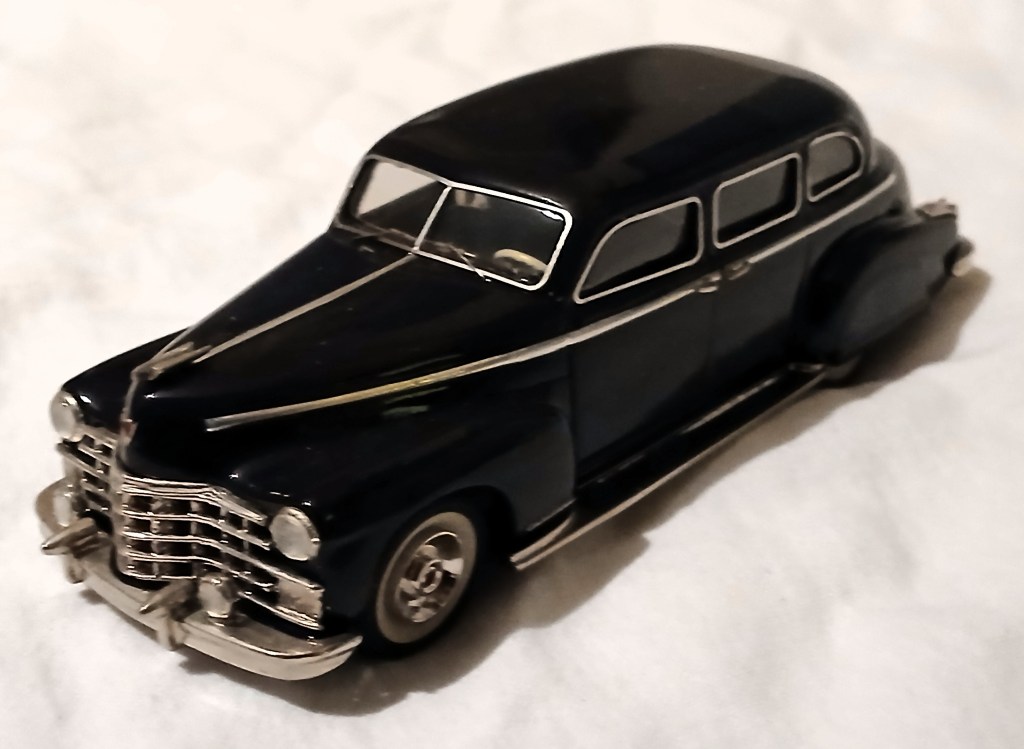
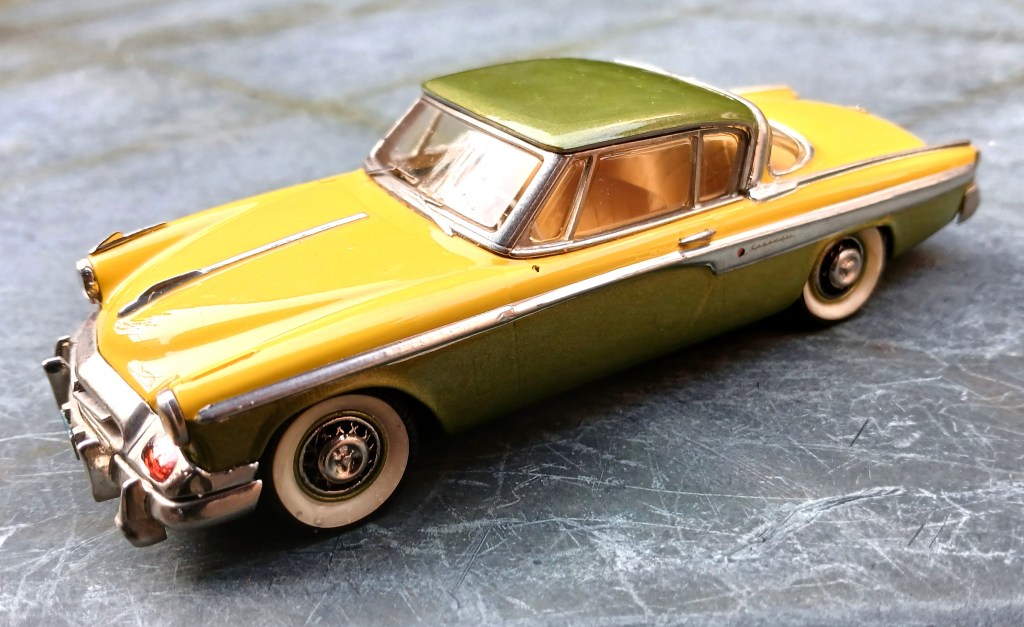
No. 31, the 1955 Studebaker President Speedster, became the second model by an independent manufacturer in the Conquest range after No. 21, the 1951 Packard 250 Convertible. By the mid-1950s, the Big Three – GM, Ford, and Chrysler – had conquered the majority of American car sales, while independent manufacturers such as Studebaker, Packard, Hudson, Nash, and Kaiser-Frazer struggled to continue and respond to the challenge. Unfortunately, they lacked sufficient resources, and under those conditions bankruptcy became inevitable. Despite these difficulties, the independent companies still released many interesting models, and Henk was so impressed by some of them that he decided to reproduce several cars in the Conquest and Madison ranges.
The 1955 Studebaker President Speedster was the most impressive and expensive model in the range, replacing the Commander. The President line-up consisted of a 4-door Sedan, Coupe, and Hardtop Coupe.
The Speedster was an exclusive variation of the Hardtop Coupe. The company built 20 pre-series cars to test public reaction, and after receiving approval, production began.
The President Speedster was equipped with a 4.2-litre V8 185 h.p. engine, a 3-speed manual gearbox with overdrive or a 3-speed automatic transmission, a twin exhaust system, power steering, and servo-assisted brakes. The cars received exclusive two- and three-tone colour schemes, wire wheels, gold emblems, additional chrome trim, and a special chrome strip above the rear windscreen. Only 2,215 units were produced during several months of 1955 before the Speedster was replaced by the Hawk.
The brass pattern of the 1955 Studebaker President Speedster was created by Ian Playfoot. The model featured many details such as chromed wheels resembling wire wheels, extensive chrome trim, and a finely detailed interior, making it absolutely spectacular and sophisticated. Henk selected two of the most beautiful three-tone colour schemes: Sun Valley Yellow/Hialeah Green Metallic/Shasta White and Shasta White/Pimlico Grey Metallic/Coraltone.
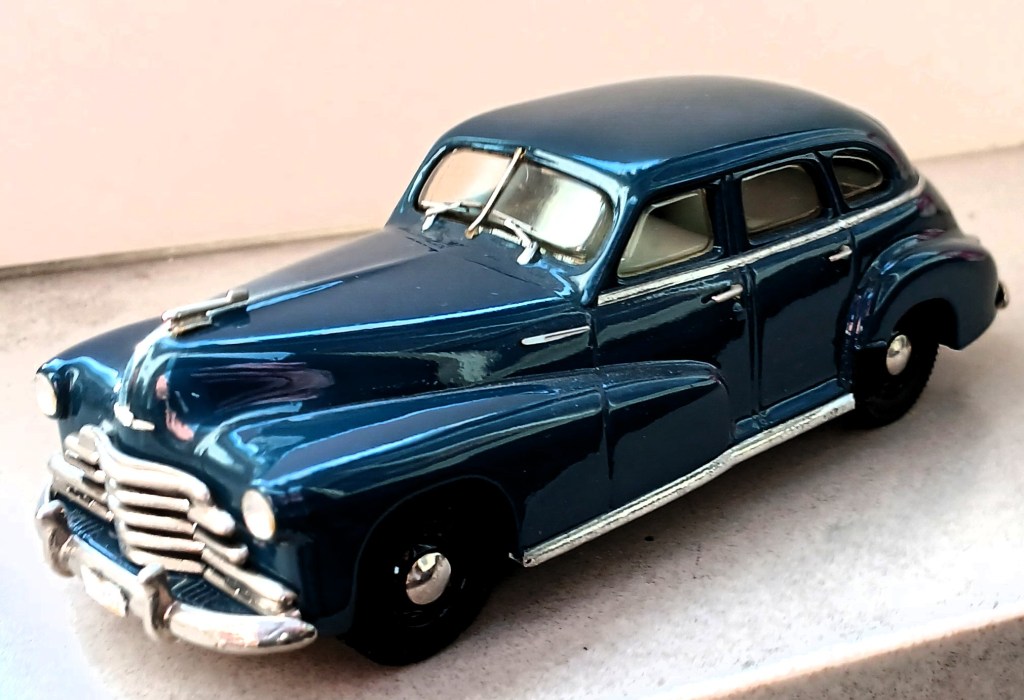
No. 37, the 1947 Chevrolet Stylemaster Sport Sedan, represents one of the most inexpensive early post-war cars on the American market. In 1946, the Chevrolet division resumed production of the 1942 models and changed their names. The junior model became the Stylemaster instead of the Master DeLuxe, while the mid-range became the Fleetmaster instead of the Special DeLuxe. For more demanding customers, the Fleetline range was also available. All cars were based on the same chassis and equipped with a 3.5-litre six-cylinder 90 h.p. engine.
The Stylemaster line-up consisted of a 4-door Sport Sedan, 2-door Town Sedan, 2-passenger Business Coupe, 5-passenger Town Coupe, and Sedan Delivery van.
The 1947 model-year cars received a redesigned radiator grille, a new dashboard, and revised emblems. The Stylemaster was the least expensive model in the Chevrolet range, although it was not as popular as the Fleetmaster. In 1947, 193,000 customers bought them.
SMTS reproduced the 4-door Sport Sedan for the Conquest range. It became an excellent companion to the 1946 Stylemaster by Goldvarg and allowed collectors to display the two models side by side and observe the differences between the 1946 and 1947 versions.
The miniatures were painted in Oxford Maroon Metallic or Battleship Grey Metallic.
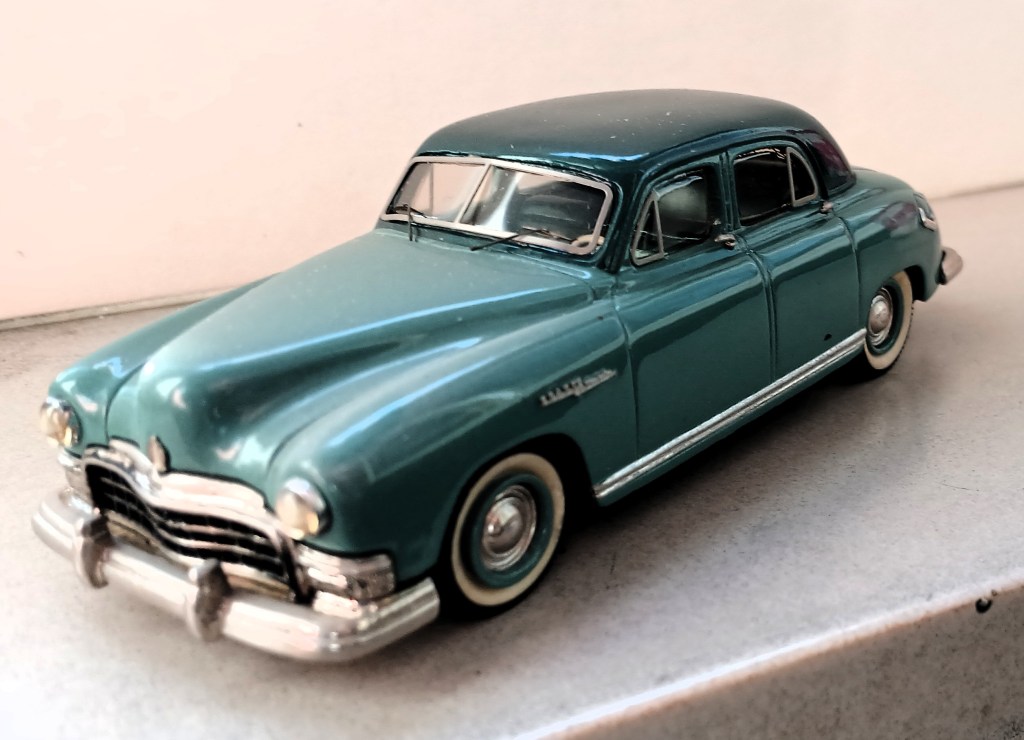
No. 36, the 1949 Frazer Manhattan 4-door Sedan, represents one of the forgotten yet fascinating chapters of automotive history. In 1945, Henry Kaiser and Joseph Frazer established the Kaiser-Frazer Corporation based on the former Graham-Paige company. Frazer became its manager and general director, while Kaiser provided the financial backing.
Kaiser, who favoured innovation, was working on an absolutely revolutionary front-wheel-drive sedan, but the project proved too difficult to realise. Therefore, Frazer proposed building two cars based on the same design: one under the Frazer brand and the other under the Kaiser brand.
In 1947, the Frazer Manhattan 4-door Sedan and Kaiser Special 4-door Sedan were introduced.
Both cars belonged to the upper-medium luxury segment and competed with brands such as Mercury and Dodge. The pontoon-style bodies were initially designed by Howard Darrin, with later input from the technical department of the Kaiser-Frazer Corporation. Compared with the other post-war cars, which were mostly revised pre-war designs, they looked highly modern and attractive. The cars were equipped with a 3.7-litre six-cylinder 100 h.p. Continental engine, a 3-speed manual transmission, and independent front suspension.
The Frazer was positioned as the more luxurious version and was available in two trim levels: Standard and Manhattan. Customers could not choose between body types, as only a 4-door Sedan was offered.
Without any doubt, the new Kaiser and Frazer models were highly innovative cars during the second half of the 1940s. At the same time, however, the company was unable to offer more powerful V8 engines and automatic transmissions, which would soon appear on cars from competing manufacturers. As a result, sales declined significantly after 1948.
In an attempt to improve the situation in 1949, the Frazer Manhattan was upgraded. It received a redesigned Cadillac-style radiator grille, new tail lights, and chrome side mouldings. Engine power increased from 100 to 112 h.p., and the gearbox could be equipped with an optional overdrive. A 4-door Convertible was also added. Unfortunately, it was extremely difficult to compete with the Big Three, and only 8,200 customers bought the 4-door Manhattan in 1949.
Henk decided to reproduce both cars: the 1947 Kaiser Special 4-door Sedan for the Madison range and the 1949 Frazer Manhattan for the Conquest range. Interestingly, the brass patterns were made by Bruce Arnold, who was primarily known as a Cadillac enthusiast. Incidentally, Bruce also created for Henk a pattern of the 1941 Plymouth, which was never released.
The 1949 Frazer Manhattan models were painted in Doeskin/Cardinal (Beige/Dark Red) or Ocean Spray Green Metallic/Blade Green Metallic. Released in late 2000 and produced during 2001, Nos. 36 and 37 became the final models in the Fa. Daimler House Conquest range. No. 38, the 1959 Pontiac Bonneville Custom Safari Station Wagon, never entered production.
In 1996, Henk returned to his Märklin hobby and spent a great deal of time building an impressive railway layout. He also began collecting locomotives and even sold most of his model collection. He considered discontinuing the Conquest, Madison, and Light Duty ranges by the turn of the century. However, demand remained sufficiently strong, and Henk eventually decided to stop only when the euro replaced the Dutch guilder in 2002.
Daimler House continued to sell enough models but stopped introducing new releases in 2001 and instead reissued previous items from 2002 until 2004. An interesting question concerns how many units of each model were produced. Henk recalls that between 1987 and 2004, SMTS produced approximately 24,000 units of all Conquest, Madison, and Light Duty miniatures. This means that, on average, around 200–250 units of each model were built, although some models were produced in considerably larger numbers.
In late 2004, Dave Kirkel, founder and proprietor of the Route 66 store, contacted Henk and ordered a large batch of models. Henk then offered Dave the opportunity to produce models under his own account. Thus, in early 2005, Route 66 acquired all rights to the Conquest and Madison names, along with all brass patterns of the American car models. SMTS continued production for Route 66, and a couple of years later Dave released the first almost entirely new casting. He remains active today, and I hope to write about his contribution to the Conquest and Madison ranges in future articles.
In 2005, Henk van Asten opened a model train shop at his home in Heeze. Thus, his hobby of collecting locomotives also became a business. By that time, he was semi-retired, and the shop was open only 12.5 hours per week, spread over three afternoons.
In 2012, Henk began collecting Dinky Toys again and now owns quite a sizeable collection. Later, he also started selling Dinky Toys in his shop, which now mainly deals in second-hand items.
At 79 years of age, Henk van Asten continues to remain active. Drawing upon his experience, Henk wrote a book about Dinky Toys titled Encyclopedia of British Dinky Toys 1934–1964, Passenger Cars, a hardcover A4-format volume containing 491 pages and 2,375 photographs. The book is still available, and if you are a fan of Dinky Toys, you have an excellent opportunity to purchase it directly from him and expand your knowledge.
Many thanks to Henk van Asten for answering my questions and for his patience. We wish him all the best and sincerely appreciate his contribution to the model-collecting hobby. In future articles, I hope to review other Daimler House ranges such as Madison Models, the Conquest Models European Series, and Light Duty.
| Catalogue number | Model | Released |
| Nr.1 | 1954 Oldsmobile Starfire 98 Convertible | 1987 |
| Nr.2 | 1960 Chevrolet Impala Convertible Top Down | 1988 |
| Nr.2a | 1960 Chevrolet Impala Convertible Top Up | 1991 |
| Nr.3 | 1955 Buick Super Riviera 2-dr Hardtop | 1989 |
| Nr.4 | 1963 Ford Galaxie 500 XL Hardtop | 1990 |
| Nr.4a | 1963 Ford Galaxie 500 XL Convertible | 1990 |
| Nr.5 | 1954 Oldsmobile 98 Holiday 2-dr Hardtop | 1990 |
| Nr.6 | 1957 Imperial Crown 4-dr | 1990 |
| Nr.7 | 1957 Buick Roadmaster 75 4-dr Hardtop | 1991 |
| Nr.8 | 1954 Pontiac Star Chief Convertible | 1991 |
| Nr.9 | 1963 Ford Country Squire “woody” Station Wagon | 1992 |
| Nr.10 | 1950 Lincoln Cosmopolitan 4- dr sedan | 1992 |
| Nr.11 | 1955 Buick Super Convertible with continental kit Top Down | 1992 |
| Nr.11a | 1955 Buick Super Convertible with continental kit Top Up | 1992 |
| Nr.12 | 1960 Cadillac Fleetwood Sixty Special 4-dr Hardtop | 1992 |
| Nr.13 | 1956 Plymouth Savoy 4-dr Sedan | 1992 |
| Nr.14 | 1948 Pontiac Torpedo Eight de Luxe Convertible Top Down | 1993 |
| Nr.14a | 1948 Pontiac Torpedo Eight de Luxe Convertible Top Up | 1993 |
| Nr.15 | 1956 Buick Special Convertible | 1993 |
| Nr.16 | 1957 Ford Thinderbird Hardtop | 1993 |
| Nr.17 | 1954 Pontiac Star Chief Custom Catalina 2-dr Hardtop | 1994 |
| Nr.18 | 1958 Cadillac Fleetwood 75 Limousine | 1995 |
| Nr.19 | 1955 Oldsmobile 98 Holiday 4-dr Hardtop | 1994 |
| Nr.20 | 1960 Plymouth Fury 4-dr Hardtop | 1994 |
| Nr.21 | 1951 Packard 250 Convertible | 1998 |
| Nr.22 | 1956 Buick Century 4-dr Estate Wagon | 1996 |
| Nr.23 | 1947 Oldsmobile Seried 76 Dynamic Cruiser 2-dr Club Sedan | 1995 |
| Nr.24 | 1947 Dodge Custom Convertible Top Down | 1997 |
| Nr.24a | 1947 Dodge Custom Convertible Top Up | 1997 |
| Nr.25 | 1962 Cadillac Fleetwood 60 Special 4-dr Hardtop | 1997 |
| Nr.26 | 1952 Buick Super 2-dr Riviera Hardtop | 1995 |
| Nr.27 | 1948 Pontiac Streamliner Eight De Luxe Station Wagon woody | 1996 |
| Nr.28 | 1957 Ford Thunderbird Roadster | 1997 |
| Nr.29 | 1957 Buick Century Caballero Hardtop Wagon | 1997 |
| Nr.30 | 1947 Cadillac Fleetwood 75 Limousine | 1999 |
| Nr.31 | 1955 Studebaker President Speedster Hardtop | 2000 |
| Nr.32 | 1962 Cadillac Series 62 Convertible | 1999 |
| Nr.33 | 1957 Imperial Crown 2-dr Hardtop | 1999 |
| Nr.34 | 1957 Imperial Crown Convertible | 1998 |
| Nr.35 | 1952 Buick Roadmaster Woody Estate | 1999 |
| Nr.36 | 1949 Frazer Manhattan 4-dr Sedan | 2000 |
| Nr.37 | 1947 Chevrolet Stylemaster 4-dr Sedan | 2000 |


2 pensieri riguardo “The story of Conquest Models (part 3: 1995-2001)”